Tacos, burritos, and quesadillas are all popular Mexican foods and ones we enjoy eating every chance we get, but if you’re looking to add another to your repertoire, you may want to try fajitas. Sizzling and flavor-rich, fajitas are typically made with strips of grilled meat (most often skirt steak), peppers, and onions, served on a flour or corn tortilla.
If, however, you are cutting back on your meat, or simply looking for a healthier, lower-calorie option, vegetarian fajitas can be every bit as tasty, but a whole lot healthier than their beefy cousins. How many calories are in a vegetarian fajita? That will depend on how you prepare your veggies, the amount of oil used in the preparation, and which veggies you choose. For example, vegetable fajitas topped with slices of avocado will have more calories than ones made with a mix of veggies minus the avocado topping. Calorie counts can vary from around 250 per serving to 450 calories or more. But, whatever preparation method you use, vegetable fajitas are so good!
5 Ways to make veggie fajitas even better
Use these tips and tricks to make the most delicious veggie fajitas.
1. Cut your veggies the right way
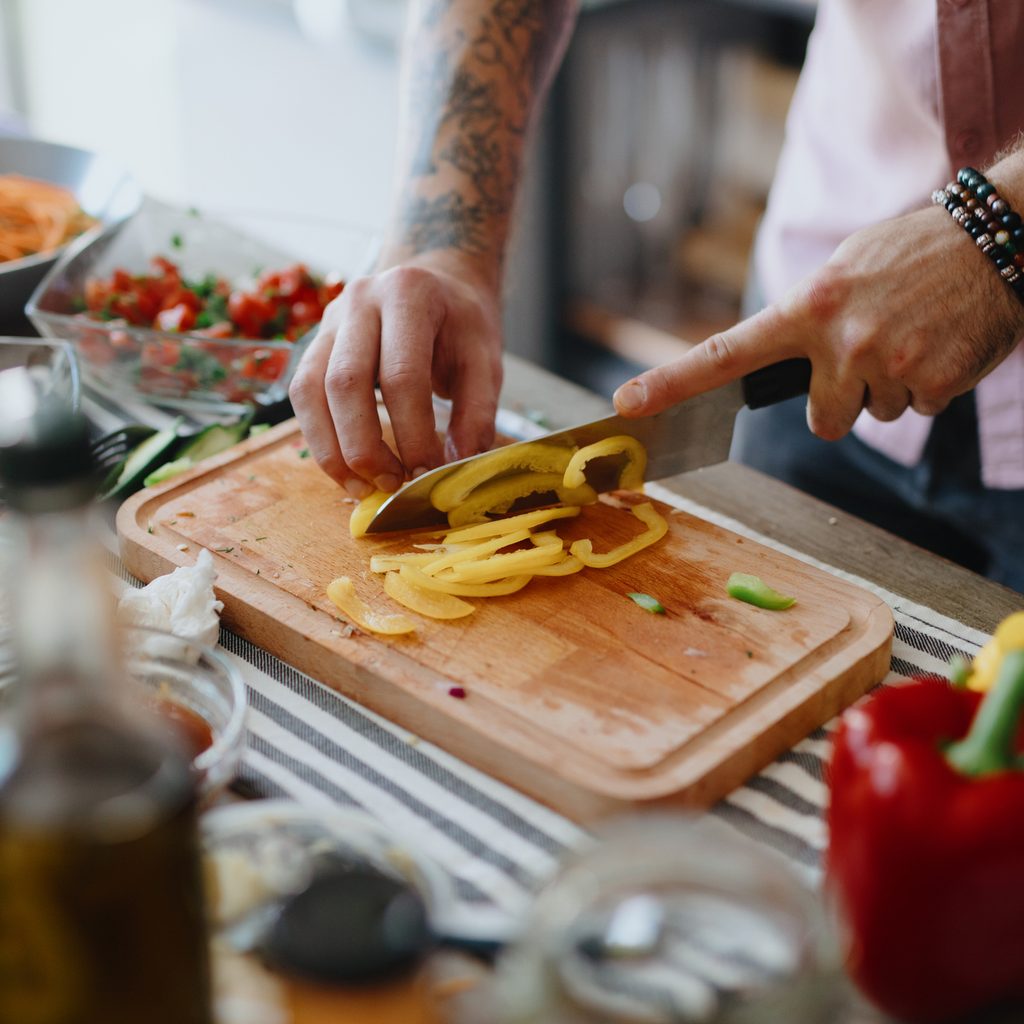
There’s no quicker way to ruin your fajita experience than to have your veggies spilling out of the tortilla while you’re trying to take a bite. Too small and they will fall out on the way to your mouth, too big and it will be hard to bite. So, how do you cut vegetables for fajitas?
For bell peppers and onions, decide between slices or rings. Both are commonly used in fajitas, although we think that slices are easier to maneuver when trying to eat. Mushrooms work best when cut into quarters rather than sliced, and for any other vegetables you decide to use, try to keep their size somewhat consistent for the best fajitas.
2. Pan roast your veggies
Not only will it keep the mess to a minimum — only one pan to clean up — but it’s also super easy to make. Simply cut up your veggies, drizzle with a bit of olive oil, add some Mexican spices, salt, and pepper, and pop the whole pan in the oven.
3. Add some unexpected veggies to the mix
On top of the basic fajita veggie duo of peppers and onions, there’s a bounty of vegetables just begging to be added to your fajita recipe. Consider mixing things up with green beans, asparagus, portobello mushrooms, chopped broccoli crowns, or whatever other veggies you have on hand.
4. Sauce it up
Top off your fajitas with the perfect sauce. Of course guacamole, hot sauce, or salsa can always get the job done, but why not try something a little different by making a homemade fajita sauce that can be used as both a sauce and a marinade (especially on those days when you are adding some meat or seafood to your recipe).
5. Add the perfect side dishes
Man (or woman) cannot live on fajitas alone, which is why having the right side dishes can turn good fajitas into a great fajita meal. Looking for ideas? Read on.

What is good to serve with fajitas?
If fajitas are your main course, you’ll need the perfect side dish. Here are some of our favorites — and each and every one is vegetarian, too!
Rice
You can never go wrong with a rice side dish, and we have a trio of options that work perfectly with your veggie fajitas!
- Mexican rice: Forget boring steamed rice. This flavorful rendition has tons of taste and takes less than an hour to make.
- Black beans and rice: Give your white rice a Latin flair with some black beans and green bell peppers, flavored with lime, cilantro, and cumin for a truly outstanding fajita side dish.
- Spanish rice: With the same flavor profile as fajitas, Spanish rice sets off your meal to perfection. With tomatoes, bell peppers, onions, chili powder, and green chiles, Spanish rice can really spice up your meal.
Mexican street corn
A street snack staple in Mexico and the perfect side to serve with your vegetable fajitas, it starts with simple corn on the cob that gets slathered with mayonnaise, sour cream, chili powder, and cotija cheese. Toss it on the grill for a taste bud treat you absolutely have to try.
Corn salad
Not into eating corn off the cob? Serve up a bowl of fresh corn salad with tomatoes and cilantro. It’s the perfect salad and is just as good using canned corn as it is using fresh.
Salad
You can never go wrong with a side salad. Pair your fajita dish with some chopped romaine lettuce, sliced tomatoes, and some crunchy veggies, and whip up a cilantro-lime vinaigrette dressing that will help to balance the fiery spiciness of your fajitas.
Guacamole
An essential for any Mexican feast, guacamole will bring your fajitas to a whole new level. Whether it’s a dollop on the top of the fajita, or a bowl served on the side with chips or raw veggies, you can never go wrong with guacamole.
Salsa
Guacamole goes hand in hand with salsa! Before you even think about jarred salsa, don’t! It’s so much better to make it yourself and all you’ll need are some tomatoes, onions, and cilantro.
Refried beans
This rich, creamy dip makes a great addition to your fajita meal, and is packed with nutritious protein, too!
Roasted potatoes
Potatoes are always a good side dish, but for fajitas, you’ll want to roast them with a bit of taco seasoning and chili powder and finish them with a dollop of sour cream and a sprinkle of shredded cheese.
Eating vegetables doesn’t need to be boring. Whip up some vegetable fajitas, add a few well-chosen side dishes, and you’ll have the whole family begging for more vegetables!


