In the search for the perfect crowd-pleasing, family-favorite comfort food, few things compare with lasagna. Traditionally made with layers of pasta, ground beef, sauce, and cheese, it’s relatively easy to prepare and is great for putting together ahead of time to bake and enjoy for a busy weeknight dinner.
If you’re in the mood to satisfy your family’s hunger and tastebuds in a delicious way, use these useful tips and you’ll be making authentic homemade lasagna in no time.
The 411 on lasagna
“Lasagne,” with an “e” at the end, is the plural word that refers to the actual pasta noodles used in the cheesy, saucy recipe we call “lasagna,” an Italian staple dating back to the Middle Ages. The various regions of Italy each have their own unique spin on this pasta classic, with the variety from Naples featuring local sausage, fried meatballs, and hard-boiled eggs served layered with ricotta and mozzarella and topped with a meaty ragu sauce. In Bologna, the lasagne pasta is green, thanks to spinach or other green vegetables mixed into the dough. Some modern variations eliminate the meat entirely and use sautéed vegetables and tomato sauce within the warm layers. The one thing that is consistent with all lasagna recipes is that they are ultimately baked in the oven.
Despite the wonderful layers of flavor and textures, lasagna is relatively easy to make; however, there are four common mistakes you should try your best to avoid:
- Overcooked pasta: When boiling noodles, lean toward undercooking them a bit — just four to five minutes should do — since they will be cooked a second time when baked in the oven.
- Clumpy noodles: After the pasta has been cooked, resist dumping it into a colander to drain, as it will become a clumpy mess very quickly. To avoid that, after draining, lay each noodle flat on an oiled baking sheet or between layers of parchment paper until you’re ready to start assembling your lasagna.
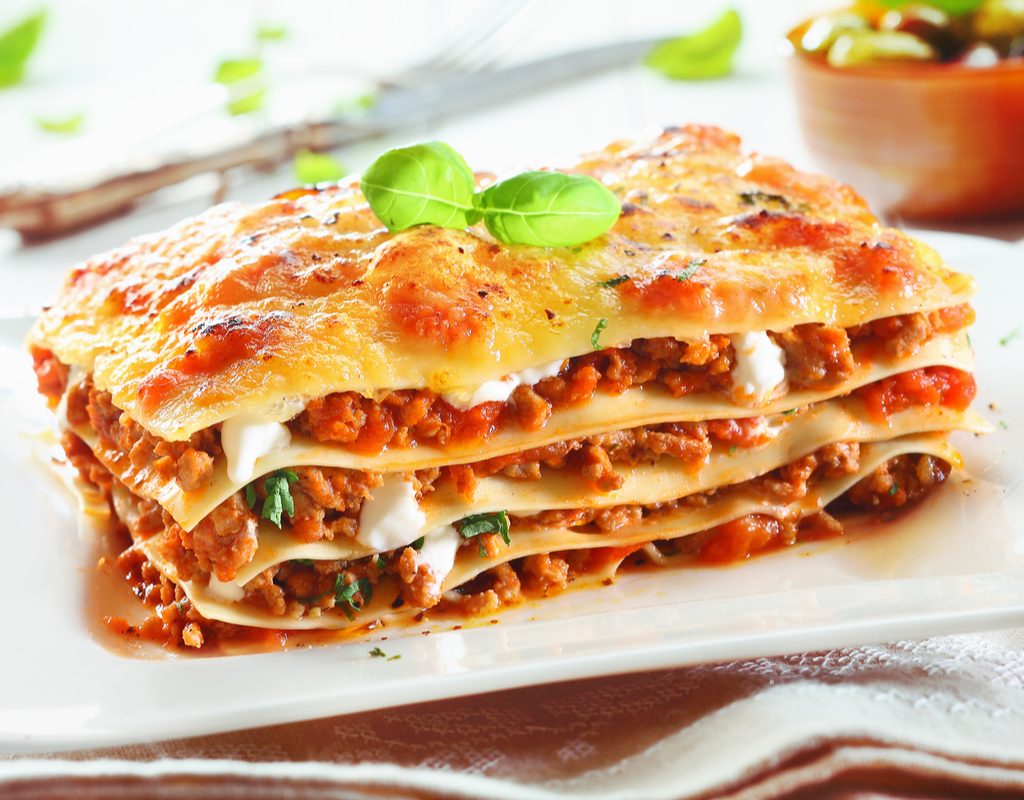
- Skimping on layers: Anything less than three layers simply isn’t lasagna, so be sure to use a pan deep enough to allow for a minimum of four layers.
- Forgetting to cover while baking: Leaving your lasagna uncovered in the oven will result in a dry lasagna (and no one likes a dry lasagna). To prevent drying, cover the tray with foil and remove halfway through the baking process so the top can brown.
A few lasagna FAQs
Do you have to cook lasagne noodles before baking?
No. You can opt to use no-boil lasagne noodles, which go into the pan uncooked and will soften and cook in the oven. Or, you can skip boiling your regular lasagne pasta by following the advice of this recipe and adding 1/4 cup of hot water around the inside edge of the baking dish and then tightly covering it with double layers of heavy-duty aluminum foil.
What do you put down first in lasagna?
Always start with a layer of your sauce in a lightly greased baking dish, then a layer of noodles, followed by ricotta cheese, and mozzarella cheese. Repeat the entire process and finish with a final layer of sauce and mozzarella cheese.
Which is better for lasagna, cottage cheese or ricotta?
It’s really a matter of personal preference, as both types of cheese can be used for lasagna. Cottage cheese is lumpier and wetter than ricotta and has more sodium, but its main advantage over ricotta is that it is lower in fat and calories.
How many layers are best for lasagna?
To really get all the gooey, cheesy, saucy goodness out of lasagna, the optimal number of layers is four.
Extra easy lasagna recipe with just 5 simple ingredients
This recipe is not just easy, it’s super easy. You don’t even need to cook the noodles — and handling hot, slippery lasagna noodles is the hardest part of any lasagna recipe. Speedy? Yes, but it’s also delicious and destined to earn rave reviews from the whole family. The recipe calls for jarred tomato sauce, but you’re more than welcome to whip up a pot of homemade sauce if you have the time and want to up your lasagna game.
With just five ingredients — ground beef, pasta sauce, lasagna noodles, ricotta cheese, and shredded mozzarella — you’ve created a tasty, hearty weeknight meal that’s so good you’ll want to make a double batch and freeze the second one to enjoy another day!
Whether you opt for the typical meaty tomato sauce or switch things up with the addition of vegetables, béchamel sauce, or aromatic pesto, lasagna is a favorite that can be adjusted to suit any culinary taste or cooking skill level.