Whether you enjoy shopping in bulk or want to save money during your weekly grocery run, Costco provides a unique retail experience unlike any other. From the megalithic warehouse of goods and the plethora of bulk items to stock your pantry to the samples of its latest products and its astounding customer service, Costco is a superstore that has seen incredible success and popularity.
But how does Costco make money? Today, we’re taking a closer look at the Costco business model and the company’s financial data.
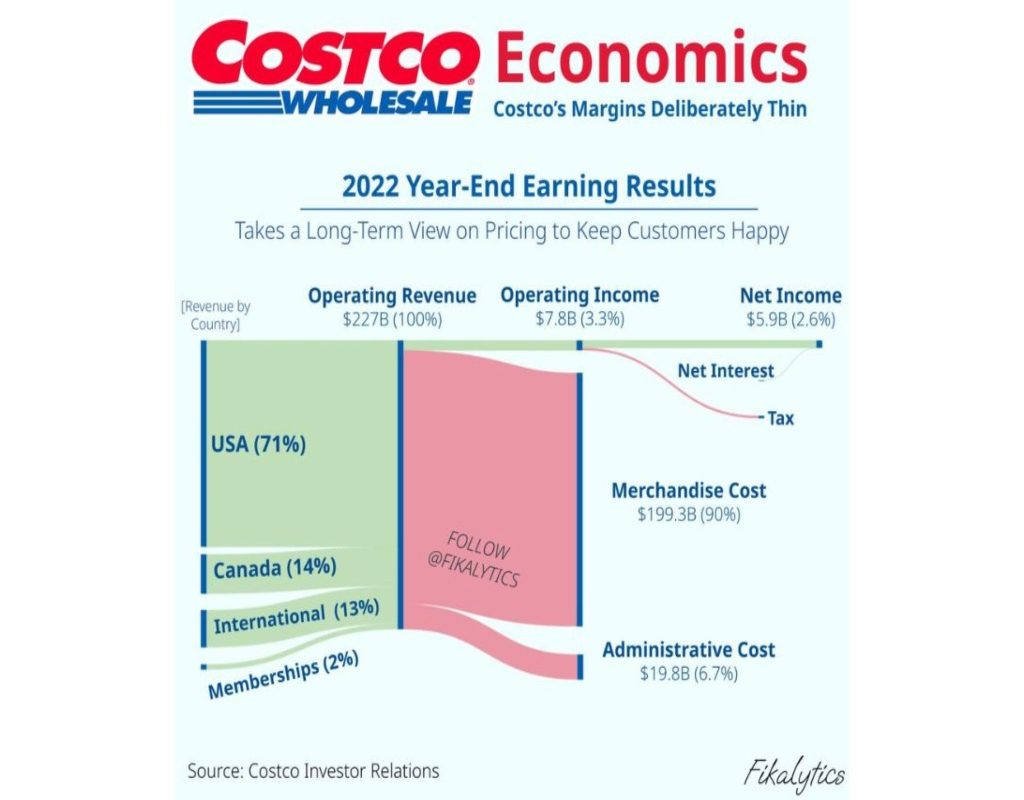
A small percentage of profit comes from merchandise
Costco celebrated the end of its 2022 fiscal year with a net sales increase of 16%. However, Costco doesn’t make the majority of its net income from merchandise sales. As you can see in the chart above, which came from this Reddit post, Costco has $199.3 billion in merchandise costs and $19.8 billion in administrative fees. From Costco’s annual report, we can see that after all expenses are accounted for, the company makes only a small percentage of profit from its merchandise sales alone. So how does Costco make money?
Memberships are the key reason for Costco’s success
Memberships are the main contributor to Costco’s running success. While the chart above shows memberships account for 2% of Costco’s revenue, it’s important to keep in mind that this club model offers something more valuable than profit alone. It allows the company a greater sense of security.
Costco’s unique membership model creates customer loyalty. Consumers can opt into a Costco membership and pay a yearly fee, starting at around $60. This helps Costco have a steady stream of loyal consumers who continue to shop at its stores.
While other large retailers like Walmart have to worry about continued merchandise sales growth, Costco can rely on its memberships and loyal customer base of returning buyers. Since many consumers value the ability to buy products in bulk for more affordable prices, it’s easy to see why people continue to come back to this superstore.

Costco doesn’t spend a lot on advertising
Another interesting thing you’ll note from the chart above is that Costco doesn’t have any advertising costs listed. Instead, Costco relies on word-of-mouth advertising, meaning avid customers part of the Costco membership tell their friends and families about the amazing deals they’re finding during their weekly grocery run. This allows new members to sign up daily if they’re interested in finding similar bargains.
Costco does spend money on coupons and member advertisements, but it’s virtually nothing compared to the advertising expenses of Costco’s competitors. According to Investopedia, “Walmart spent $3.2 billion on advertising in 2021. Target spent more than 2% of its revenue on marketing.”
With little to no advertising costs, Costco can instead focus on growing its membership and using that income to sell merchandise for lower prices than its competitors. This model has led to Costco’s financial success and consumer popularity. As the company continues to expand, new members are joining each day for the bulk supplies to stock up their pantries.