  1. Home
  2. Hacks & How-to's
  3. Style
  4. News

Get that perfect Christmas tree aesthetic with these easy gift-wrapping hacks

How to wrap a gift: Make wrapping a breeze this year with these easy tricks

Add as a preferred source on Google

If you’re anything like me, you love to give a gift but hate the thought of wrapping it. It takes time, patience, and can get tedious if you cut a piece too small or the gift is odd-shaped; never mind if you run out of tape (or patience). Gift wrapping can be made much easier if you have a couple of tricks up your sleeve to make it fun and easy. Luckily, the Redditors at the r/lifehacks subreddit agree, and posted this video with a few simple tips that will make wrapping presents easier.

Here are a few ways to deal with some of the gift-wrapping challenges we all face during the holiday season.

Paper too short

If you have a gift and notice you cut your paper too short to meet around the sides, take the box and rotate it diagonally. Then, grab each corner of the paper and bring it up to meet in the middle. Bring each side up and tape it (they won’t align exactly, but they will cover the entire box). Turn it over and stick a bow on top, and suddenly the too-short paper worked expertly.

Easier opening

If you want to make a gift easier to open for, say, a little kid or grandparent, cut a piece of gift wrap and place tape down the middle affixed to the back side of the paper, leaving a little extra tape sticking out of one side. Wrap the gift as you normally would, and when you turn it over, you’ll see the bit of tape sticking out. All the recipient needs to do is pull backward on the tape, and it opens right up! Zero fuss or mess.
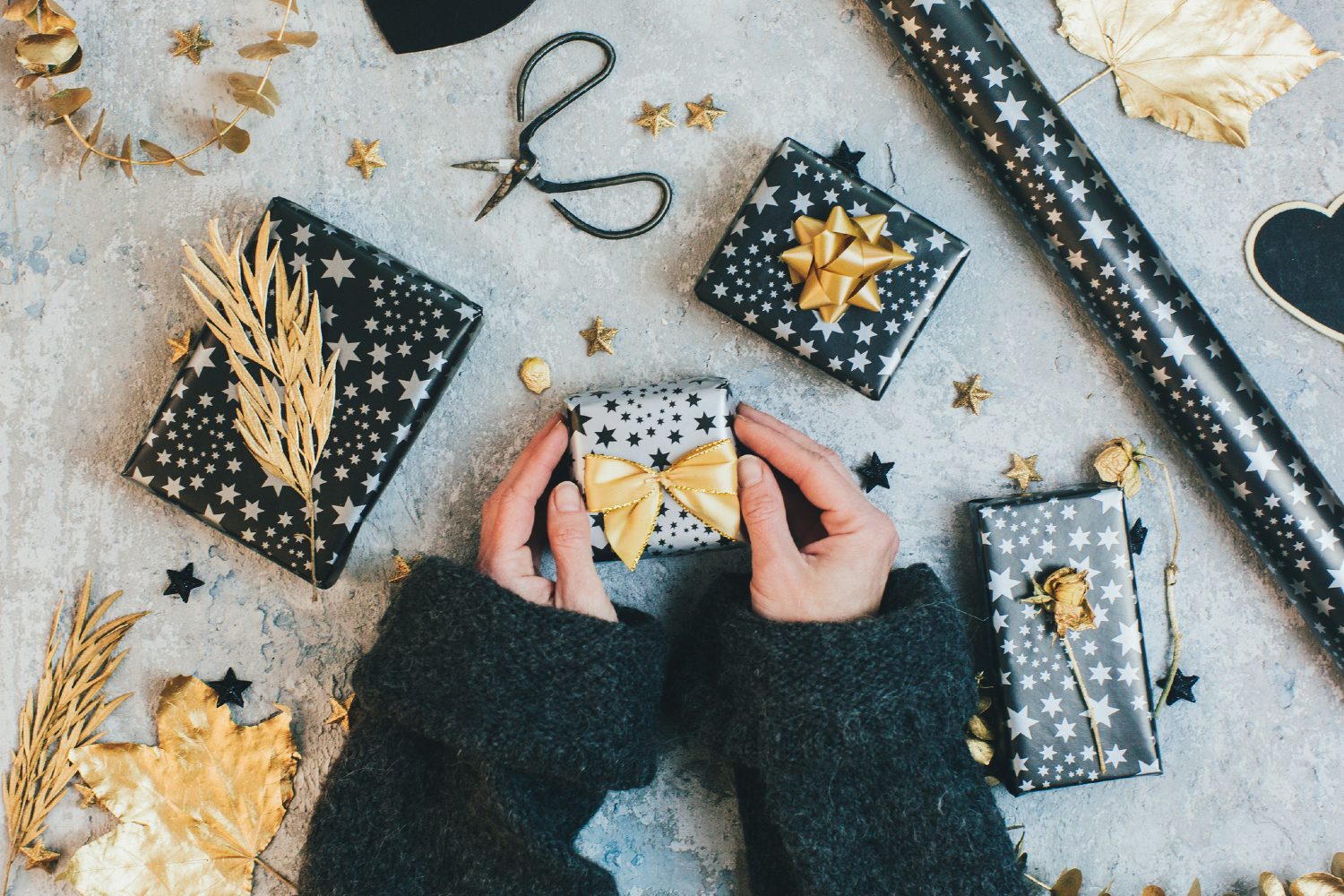
Person wrapping gifts with bows.
Image used with permission by copyright holder

Using ribbon as a handle

If you’ve always wanted to use ribbon but can’t seem to make it work, wrap three sides of a gift, leaving the fourth side (end) longer than the other end. Lay out a piece of ribbon and begin folding the paper over the ribbon until it’s flush with the wrapped box. Fold over each end towards each other and tie the ribbon together to form a gorgeous handle. It’s like a built-in gift bag!

Closing a gift bag

Gift bags are super easy vessels to give a gift, but they don’t stay closed, so hiding your present can be a challenge. An easy way to ensure no one sees your gift before you present it is to grab the end of the ribbon or string handle from the inside of the bag. Gently thread it through the holes on the opposite side of the bag, and repeat the same on the other side. Now, pull the half circles created on either side of the bag, and it closes completely—no peeking again.

These hacks are so easy that you’ll wonder why you didn’t think of them yourself. We promise this will lead to a much less anxiety-inducing gift-wrapping session this year for everyone involved.

Julie Scagell
Former Author
The Easiest Way to Set the Table
Cutlery, Fork, Spoon

Have you ever wondered why the fork sits on the left and the knife on the right? Or why Europeans eat “Continental style,” holding the fork in their left hand and the knife in their right, while Americans cut, switch hands, and then eat? It turns out there’s a reason for all of it, and once you understand the history, setting the table suddenly feels far less mysterious. Before beautifully layered place settings and Pinterest-worthy tablescapes, dining was far more practical. Medieval feasts were less about etiquette and more about survival. Plates were often shared, forks were nonexistent, and eating with your hands was the normal standard. Tables were filled with trenchers (pieces of bread used as plates), and the idea of “proper placement” simply didn’t exist.

By the mid-to-late 1800s (around 1860–1870), European dining evolved again as meals began to be served in courses. This shift introduced what became known as the Russian style of dining, where utensils were laid out intentionally and used from the outside in. The fork stayed in the left hand, the knife in the right, and the table itself began to reflect structure, rhythm, and order. This approach eventually became the “Continental style” still used across much of Europe today.

Read more
5 tips to de-clutter your kitchen for the holidays
kitchen holiday

'Tis the season for holiday gatherings, which means your kitchen needs to be organized to avoid unnecessary stress. Here are some handy tips to follow.

1. Refresh your fridge and freezer

Read more
Color Drenching: The bold hue movement that is sticking around in 2026
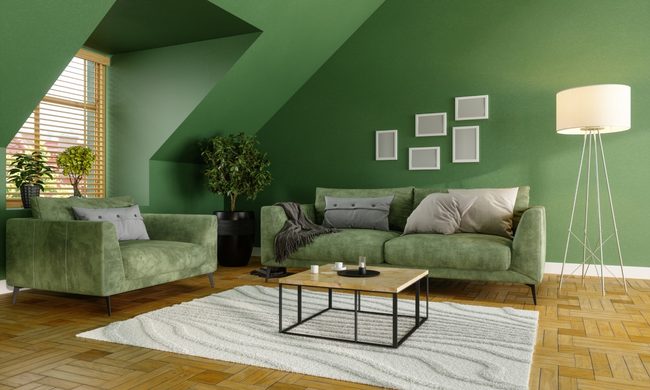
Green living room walls with velvet green sofas

What is color drenching?Color drenching is an interior design trend where a single color is used on every surface in a room. This includes walls, trim, doors, and even the ceiling, creating a cohesive and immersive atmosphere. The technique can make a small room feel larger or a spacious room feel cozier, and it often extends to furniture, radiators, and cabinetry for a bold, unified effect.

While the term color drenching is relatively new, the concept has deep roots in design history. The look can be traced to historic European interiors where monochromatic schemes added depth and luxury. Even in the Victorian era, richly saturated jewel tones were often used in grand spaces such as libraries and parlors. It reappeared during the 1960's and 1970's as well. Designers have long understood that a single, enveloping hue can create a striking sense of mood and continuity.

Read more