  1. Home
  2. Hacks & How-to's
  3. Evergreens

21OAK may earn a commission when you buy through links on our site.

Cellar advice: The many creative ways to store your wine at home

Need a clever way to store your wine without breaking the bank? Here are some fine ideas

Add as a preferred source on Google

We’ve heard the story before. You’ve got a bunch of wine, but you’re not sure how to store it. Renting a wine locker is expensive, building a proper European-style cave system is unrealistic (for most), and simply keeping bottles upright in boxes takes up space and isn’t the proper way to store your liquid assets. Don’t worry, we’ve got some great ideas.

Perhaps you’ve already improved your home bar or put some wine barrels to work as great home decor. Now, it’s time to organize those bottles in a way that will allow you to show them off to friends and age them to perfection. And while we all wish we could afford this, let’s work on more realistic ways to cellar those bottles of merlot and chardonnay.

Wine bottles in a wine rack
Image used with permission by copyright holder

Build a wine rack

You don’t need much beyond some spare wood for this option. If you don’t have the saws or time for rounded cuts to house the bottles, you can create little raised borders to keep them in place (like bumpers). And if you’re not in the mood to build, thrift stores often have these pre-made wine storage racks (wood or metal) for dirt cheap.

Install shelves or holders

Floating wine shelves are a cool way to present your bottles, plucked straight from great restaurants. You can also get individual holders like this and set them up as you wish. This is a great way to use space you might have overlooked, like crawl spaces and beneath staircases.

Use wooden wine crates

European wineries made wooden crates famous, often branding them with their logos and using them to ship multiple bottles overseas. These crates are easy on the eye and stack nicely, meaning you can collect them and use them to store your precious bottles. Many come with wooden placeholders for orienting your bottles accordingly and if not, you can always just plug in something soft as a good divider (foam, cloth, or your old wine corks).

A wooden wine crate
Image used with permission by copyright holder

Trick out a wine fridge

There are a number of great wine fridges out there these days that are both affordable and don’t take up too much space. An easy hack to consider, if you have the space, is to hide the little refrigerator. In other words, back it into a wall so the door is flush with the wall, making it appear to be a built-in appliance (and therefore all the fancier and sleeker looking).

Use packaging inserts

This is perhaps the least sexy option, but it’s also the easiest. Plus, if you’re simply looking to store the wine (and not really show it off), this is all you need. Just hold on to all of those cardboard inserts you get with every wine delivery and use them to create stacks where you have space. The bottles will nestle into each other nicely, three across. Make sure you do the wine a favor and create this impromptu cellar somewhere dark and cool, like a basement or temperature-controlled closet.

Now you know how to store wine. Next stop, cracking a bottle and enjoying what’s inside.

The Easiest Way to Set the Table
Cutlery, Fork, Spoon

Have you ever wondered why the fork sits on the left and the knife on the right? Or why Europeans eat “Continental style,” holding the fork in their left hand and the knife in their right, while Americans cut, switch hands, and then eat? It turns out there’s a reason for all of it, and once you understand the history, setting the table suddenly feels far less mysterious. Before beautifully layered place settings and Pinterest-worthy tablescapes, dining was far more practical. Medieval feasts were less about etiquette and more about survival. Plates were often shared, forks were nonexistent, and eating with your hands was the normal standard. Tables were filled with trenchers (pieces of bread used as plates), and the idea of “proper placement” simply didn’t exist.

By the mid-to-late 1800s (around 1860–1870), European dining evolved again as meals began to be served in courses. This shift introduced what became known as the Russian style of dining, where utensils were laid out intentionally and used from the outside in. The fork stayed in the left hand, the knife in the right, and the table itself began to reflect structure, rhythm, and order. This approach eventually became the “Continental style” still used across much of Europe today.

Read more
Color Drenching: The bold hue movement that is sticking around in 2026
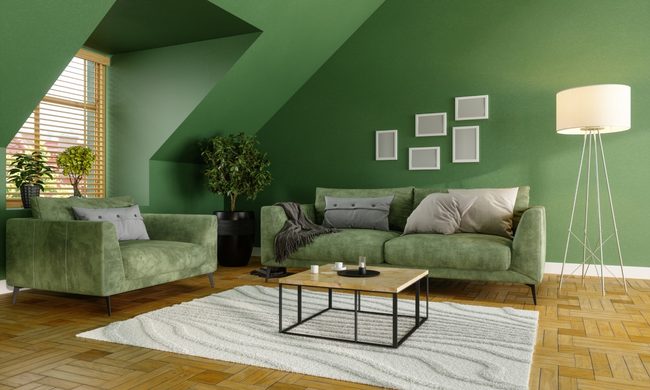
Green living room walls with velvet green sofas

What is color drenching?Color drenching is an interior design trend where a single color is used on every surface in a room. This includes walls, trim, doors, and even the ceiling, creating a cohesive and immersive atmosphere. The technique can make a small room feel larger or a spacious room feel cozier, and it often extends to furniture, radiators, and cabinetry for a bold, unified effect.

While the term color drenching is relatively new, the concept has deep roots in design history. The look can be traced to historic European interiors where monochromatic schemes added depth and luxury. Even in the Victorian era, richly saturated jewel tones were often used in grand spaces such as libraries and parlors. It reappeared during the 1960's and 1970's as well. Designers have long understood that a single, enveloping hue can create a striking sense of mood and continuity.

Read more
Houseplants: Which ones thrive in your home all year long?
Snake plant

So which plants can handle winter? For homes that tend to be cooler, hardy plants like Snake Plants (Sansevieria), Cast Iron Plants, and ZZ Plants (Zamioculcas zamiifolia) are ideal. The good news is that all three can handle temperature drops and limited sunlight. The Cast Iron Plant, for example, can thrive in conditions as low as 50 degrees Fahrenheit.

While not quite as hardy, other low-maintenance favorites include Pothos (Epipremnum), Spider Plants, Ferns, and Heartleaf Philodendrons. These do well in shadier, low-light spots and require minimal care.

Read more