With its light tan rind and bright orange flesh, butternut squash is one of the most popular winter squash varieties. It has a distinctive pear shape and pleasantly sweet flavor that’s conducive to baking, sautéing, or pureeing. This season, maximize this squash’s flavor and versatility with these must-try recipes.

How to cook butternut squash
The most difficult part of preparing squash is cutting it. The hard rind and globular shape can be challenging to slice, but as long as you work carefully and use sharp knives, you can get the job done quickly and cleanly.
- Cut the squash in half lengthwise, keeping your fingers out of the way.
- Scoop out the seeds and strings. If you’d like, you can save and roast the seeds for a delicious and crunchy snack.
- Place the squash on a cookie sheet, rind side down.
- Roast in the oven at 375°.
The cook time depends on your recipe. If you’re planning on cubing the squash, partially roast it until it becomes easier to cut. Start checking around the 20-minute mark to see if it has softened. Allow it to cool before peeling and cubing.
To puree the squash for use in soup, ravioli, or pies, roast it for about an hour or until it’s fully soft. You’ll know it’s done when you can easily pierce the flesh with a fork. Allow the squash to cool enough so you can handle it without burning your skin. Scoop out the flesh and place it in a food processor, blender, or immersion blender until it’s smooth and lump-free. Since butternut squash has a high water content, drain or strain the puree before using it.
5 must-try butternut squash recipes
Butternut squash ravioli
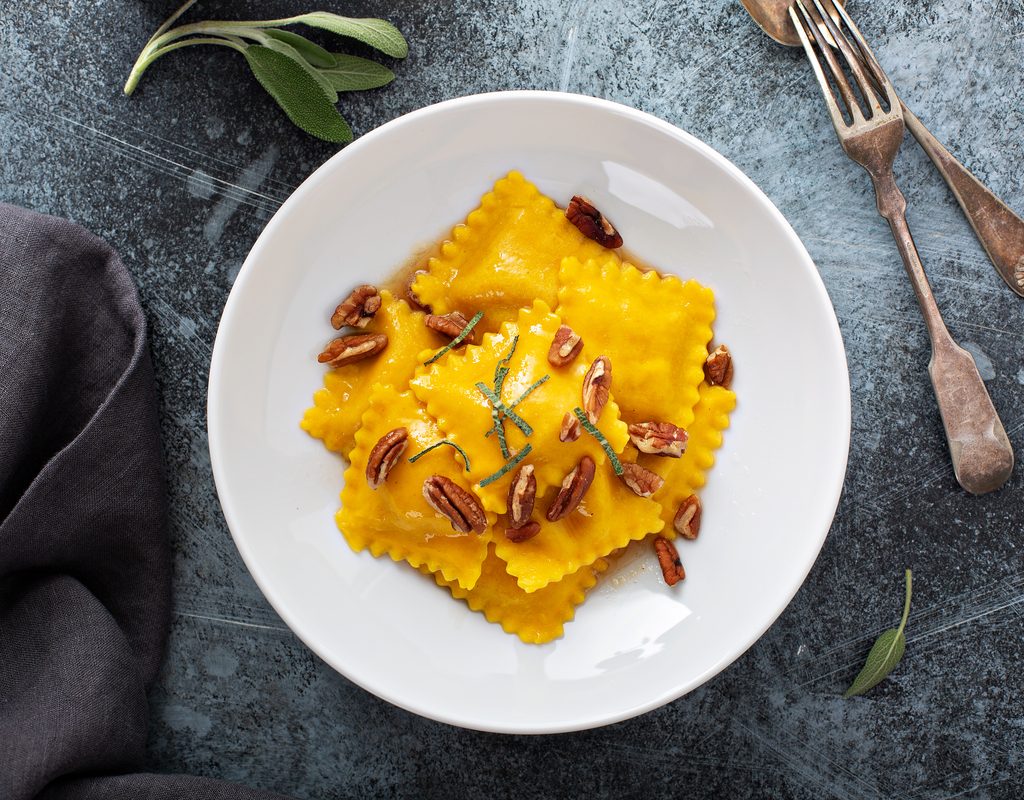
Butternut squash ravioli is practically synonymous with autumn. It’s everything we love about comfort foods all rolled into one mouthwatering pasta pillow. Though it’s always fun to make the pasta from scratch, you can save yourself some time and energy with this recipe since it calls for using pre-made wonton wrappers.
The pureed butternut squash filling is mouthwatering and so easy to make. Paired with a buttery sauce and fragrant with fresh sage and thyme, it’s pure heaven.
Butternut squash soup
This recipe is a fresh take on a classic cold-weather favorite. Of course, the butternut squash is the star ingredient, but this recipe includes an array of other vegetables for a richer, thicker soup that’s loaded with nutrients and flavors.
With less than 30 minutes of prep time and 45 minutes for simmering, you can create a truly flavorful soup in just over an hour. Add a fresh salad and some crusty bread to pull together a hearty meal the whole family will love.
Roasted butternut squash
Looking for a simple-to-make side dish that will really wow your family? Look no further. This recipe delivers roasted butternut squash that is incredibly tender and finished with a caramelized crunch. Add in some maple syrup, cinnamon, and rosemary for a sweet side dish that’s perfect for Thanksgiving.
This quick recipe takes only 1o minutes to prepare and 30 minutes to roast, so it’s a quick and easy dish to make and serve with roast chicken, turkey, ham, prime rib, or any of your favorite proteins.
Butternut squash risotto
This creamy risotto dish takes just a half of one butternut squash, but it certainly doesn’t skimp on flavor. In addition to the squash, this recipe also calls for arborio rice, chicken or vegetable broth, chopped onions, white wine, butter, freshly grated Parmesan cheese, and snippets of fresh chives.
The trick with making risotto is constant stirring, which is a fairly labor-intensive process, but it will result in restaurant-quality risotto at home. For the best results, add a little arborio rice at a time so it can absorb the liquid slowly. Stir frequently, and continually monitor it to prevent overcooking. All your hard work will be worth it when you’re left with a dish that will be a hit at autumn dinner parties.
Butternut squash pie
Pumpkin pies are classic but we encourage you to mix up your fall desserts this year with a butternut squash one instead. The filling will be quite similar to pumpkin pie texturally, but the inherent sweetness of butternut squash adds a lighter flavor that plays well with the brown sugar and cinnamon. Once you’ve made the puree, just add a few aromatic seasonings and drop it into a store-bought pie shell for a crowd-pleasing seasonal dessert.
Whether you pick your squash from your own garden or out of the aisles at your local grocery store, you shouldn’t have any trouble grabbing a fresh one to celebrate the harvest season. Whether roasted or pureed, served as a main course or side dish, butternut squash is always delicious, nutritious, and surprisingly easy to work with. Enjoy everything the fall has to offer this year and indulge in all the best seasonal treats.


