You may have heard the terms “Sheetrock” and “drywall” used interchangeably. But are they the same? The short answer is no. While all Sheetrock is drywall, not all drywall is Sheetrock.
Here, we’ll discuss the similarities and differences between Sheetrock vs. drywall to help you gain a better understanding of the two.
What is drywall?
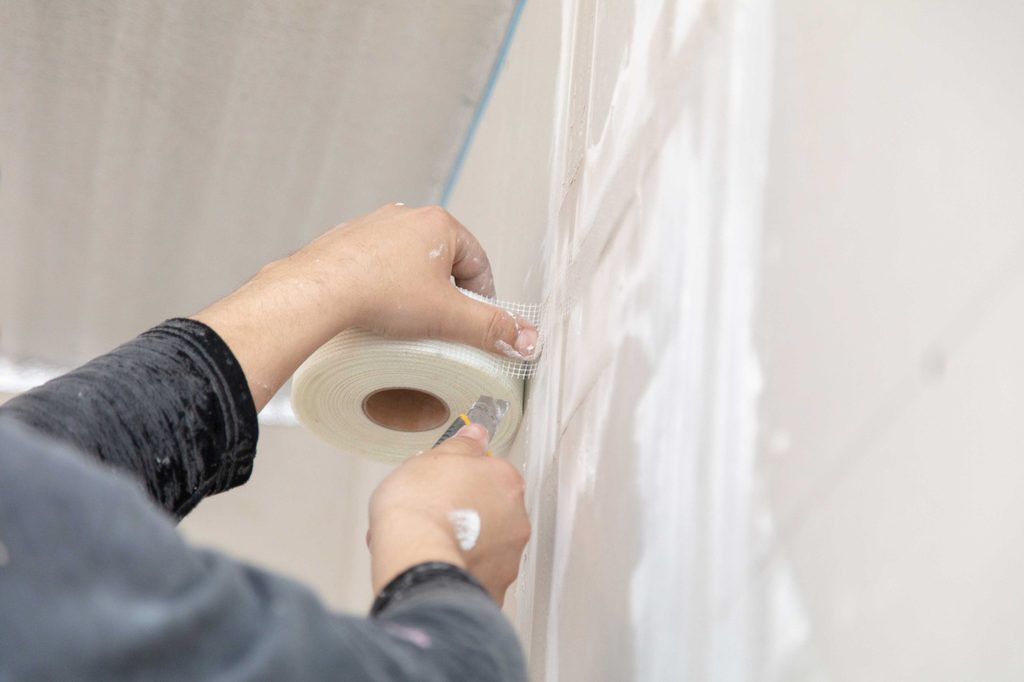
Drywall replaced plaster as the primary building material for internal walls and ceilings during the mid-1900s. Drywall contains dried gypsum powder compressed into large sheets between thick paper. This creates a drywall board that’s installed in many interiors, from residential to commercial builds.
Drywall is installed via screws to the studs to give interior walls and ceilings a smooth, flat surface. This makes drywall a wonderful base for painting or adhering wallpaper to decorate the home.
Today, drywall is one of the most common additions to any modern build since it’s easy to install, cost-effective, and widely available for many people. There is a variety of drywall brands, each with its own unique chemical compositions, meaning that drywall can range from low to high quality, depending on the brand you choose. Additionally, while drywall is pretty hardy for most interior purposes, some brands pay extra attention to mold, moisture, and fire resistance.
The average cost of drywall per square foot is around $0.50 and can range from as low as $0.40 to a high of $0.70. Of course, this depends on the brand, your location, and any additional perks of the drywall you choose.

What is Sheetrock?
It’s fair to say that all Sheetrock is drywall, but not all drywall is Sheetrock. Sheetrock is a type of drywall, similar to how Kleenex is a type of tissue or how Q-tip is a type of cotton swab. However, Sheetrock gained a lot of popularity, which prompted the usage of its brand name to become colloquially interchangeable with “drywall.”
Sheetrock is a high-quality drywall brand with various drywalls to choose from. Some Sheetrock can be moisture-resistant, fire-resistant, and even sound-dampening. Like other brands of drywall, Sheetrock can be used for walls and ceilings of both residential and commercial properties. And due to its fantastic quality, it’s a go-to in many construction projects.
However, because of its popularity, quality, and variety, Sheetrock is often more expensive than other drywall brands.

How Sheetrock and drywall are similar but not the same
How they are similar
- Sheetrock is a brand of drywall.
- Can be used in home construction interchangeably (though quality will differ with other types of drywall)
How they differ
- Sheetrock is a higher-quality drywall.
- Sheetrock contains a unique chemical compound, while other drywall compositions vary.
- Sheetrock is made by the United States Gypsum (USG) Corporation. Drywall is manufactured by several companies.
Are there different types of drywall?
Yes. There are different types of drywall depending on your needs. Here are the most common options when getting specialty drywall.
- Whiteboard. This is also referred to as “regular drywall.”
- Soundproof drywall. This type of drywall includes an additional viscoelastic polymer layer for more sound control.
- Ceiling drywall. This is also known as sag-resistant drywall and is specialized for ceilings.
- Moisture- and mold-resistant drywall
- Fire-resistant drywall
Thickness and size of drywall
Drywall comes in various sizes and thicknesses, depending on the needs of the project.
Thickness
The thinner the drywall, the more prone it is to bending or breaking. Interior walls often require a sturdier drywall unless you’re working with curves. Also, sag-resistant drywall is the standard for ceilings.
Here is what you need to know about the various drywall thicknesses.
- 1/4 inch is best for repairing existing walls or working with curved walls
- 3/8 inch can also be used for repairs or curved walls
- 1/2 inch drywall is the most commonly used for building interior walls
- 5/8 inch is a sturdier drywall that has reduced sagging, making it ideal for ceilings
- 3/4 inch drywall is best for soundproofing
Size
Depending on the scope of your project and the space you’re working with, you’ll have to determine which standard size is best for you. Of course, you can always cut drywall to size to fit your needs, but these are the most common sizes in which drywall sheets are sold.
- The standard drywall sheet is sold in 4-by-8-foot sections. The 4-foot width is ideal for covering four wall studs with 1/16-inch space in the center or across three ceiling joists with 24 inches in the center. The 8-foot height matches the standard height of ceilings in the U.S.
- 2-by-2-foot drywall boards are good for drywall repairs and small patches.
- 4-by-10-foot drywall is sold for spaces with walls that are 10 feet in height.
- Likewise, 4-by-12-foot drywall boards are meant for walls 12 feet in height.
Drywall and Sheetrock are similar but not quite the same. While Sheetrock is a type of drywall, it’s important to remember that it is a brand name, meaning not all drywall is Sheetrock. Thankfully, both Sheetrock and other brands of drywall can perform the job you need for your build. Just remember to consider the type of project you are pursuing and the quality of drywall you need before purchasing any drywall boards.