
Smart technology — particularly for the home — continues to hit the market with a splash. We don’t just have smart handheld devices anymore. We now have smart security systems, smart robot vacuums, and even smart kitchen appliances. However, when it comes to your front door security, which is safer when it comes to traditional keys vs. keyless entry smart locks?
To answer this question, the biggest factor to consider is who will be requiring access to the door. The next factor is what kind of climate and weather conditions are common in your area. Finally, the last question you need to ask yourself is: What does your budget look like for this project? We’ll help you navigate the pros and cons of each access option so you can be confident in your family’s safety at home.

Traditional keys: Old faithful has some inconvenient drawbacks
Lots of people will only trust a traditional lock-and-key setup, but it’s not the perfect solution for your home for several reasons. All in all, giving people access to a traditionally locked door comes with some drawbacks.
Con: Easily lost or stolen
When you have multiple family members or residents accessing your home or apartment building, standard key locks can be a bit of a nuisance. Multiple copies of keys need to be made and distributed, and these keys can easily be lost or damaged. This inevitably leads to keys needing to be replaced. There may even be instances where you’ll want to replace the door locks if you think a lost key poses a security risk.
Con: Bulky and less convenient
We’ve all been there. Having a big, heavy key ring with multiple keys is certainly inconvenient and can make you feel like a prison warden. A bulky set of keys is not only annoying to carry around, but it’s also been said that the weight of such bulk hanging from your car’s ignition can damage switch parts on the inside. Bulk on your keyring certainly has some expected and unexpected downfalls.
Con: Less ease of operation
Unlocking and operating the front doorknob with a traditional key isn’t always an easy feat. When you’re bringing in groceries or carrying large items, it can be downright infuriating to try to get the key in the lock, the lock turned, and the door opened while balancing your load in one arm. Aside from this irritation, trying to unlock a door with an old or corroded lock, or even trying to get in the house at night when visibility is low, can be a struggle.
Pro: Reliable in all conditions
While issuing and using traditional keys isn’t always the most convenient, and we’ve gone over many of the cons above, the reliability of a traditional lock and key is one of its biggest advantages. A standard lock doesn’t depend on power or the internet, and it isn’t impacted by extreme temperature or weather. The lock and key method isn’t one of the oldest forms of security for nothing.
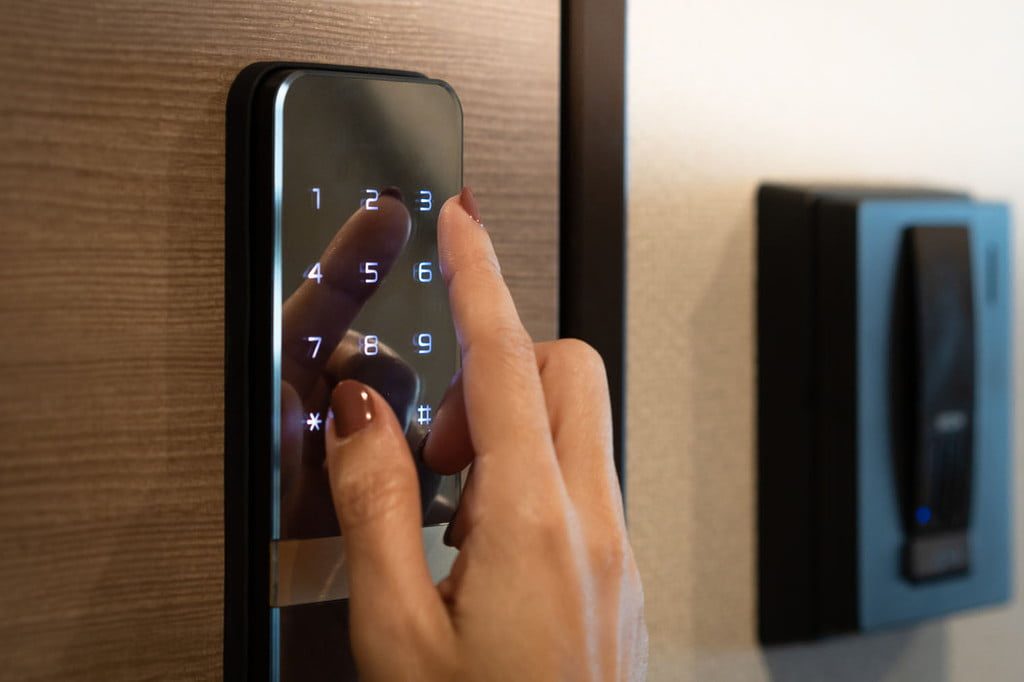
Keyless: Does convenience always win?
Keyless locks are the new trend for homes, apartment complexes, rental units, and even cars. But are they the right choice to secure your front door?
Pro: No need to replace keys
When you have multiple people who need to access a door, it’s much more convenient to give out a door code for the front door keypad than to issue multiple keys. While a standard lock may require replacing lost keys or even the lock itself when keys are lost, you simply have to change the code or disable the fob when you want to restrict access to a keyless entry lock. This is certainly convenient in single-family homes, but it offers an even bigger security benefit in multi-unit residences like apartments and condos, where tracking the access of multiple residents is required.
Pro: Convenient security for families
Children, in particular, tend to lose hard keys, so having them memorize a code can save you a lot of time and headache in having to replace keys. As long as children know that they are never to give out the access code, this method is a lot more secure than a standard lock and key where you have to replace the lock when keys go missing. Many keypad entry locks have personalized and simple access codes that even your kids can remember.
Pro: Easy to operate
While standard key locks can be difficult to operate when your arms are full or when it’s dark outside, keyless entry is much easier to use. You just need one finger to enter the code. Not only does keyless entry require less physical effort, but many models also come equipped with backlit keypads for quick and convenient use in the dark.
Con: Diminished reliability in certain conditions
This is a big downfall of keyless entry locks. This type of technology typically depends on the building’s power to be operational for the lock to function properly. When the power goes out, you may not be able to gain access to the building without a hard key. Extreme cold, hot weather, and even wet conditions can negatively impact the battery in some keyless entry technology. Additionally, many keyless entry locks have Bluetooth technology and require internet access to be functional for all of their smart features.
Your family’s safety is a top priority, so the methods of security for your home’s doors are serious considerations. The bells and whistles of smart locking technology can improve the safety of your home. Still, you’ll want to consider other variables before deciding between standard keys and keyless entry. Be sure you’re confident your choice works for you so that you can have some peace of mind.