
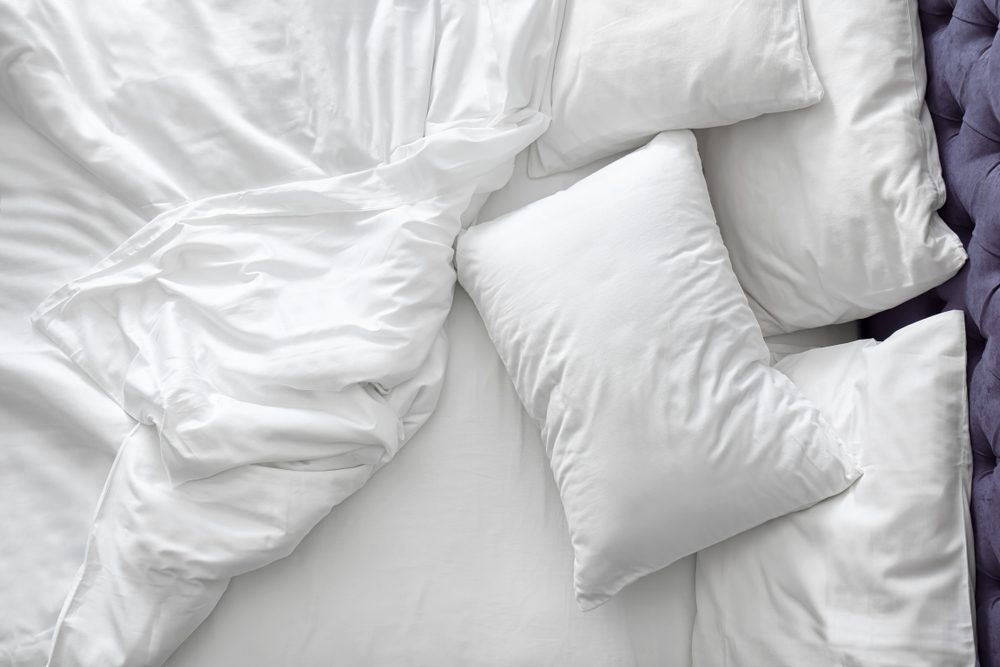
If you’ve ever spent a night in a fancy hotel, you know the indulgent luxury of clean, pristine, high-quality white sheets. They’re crisp, bright, and incredibly smooth to the touch. Perhaps you’ve already decided to duplicate this elegance in your own bedroom and bought white sheets to add to the modern feel of your sleeping space. It’s definitely a trending look. But knowing how to wash white sheets properly is crucial.
Since you likely don’t have access to the same industrial-grade washing machines that hotels have, your white sheets will no longer have that same clean, crisp feeling after a few weeks. Never fear. With this ingenious hack for washing white sheets, you’ll be left with a bedspread that looks and feels amazing after every wash.
What’s the appeal of white sheets?
White sheets can easily be a recipe for disaster. If you eat or drink in bed, sweat at night, or have any pets running around your bedroom room, the sheets will become stained and damaged quite quickly. So, why do white linens remain a popular choice in bedrooms everywhere? It could certainly be because they the classic choice, but there are also a few other benefits you may not have considered.
Elegant, crisp appearance
When white sheets are smooth and crisp, they look and feel amazing. Flat, wrinkle-free sheets give your bed an air of luxury, and slipping between them is like slipping into a cool, smooth cloud.
Easily matched color
Integrating a new color scheme in your bedroom or undertaking an entire remodel is already difficult enough. You shouldn’t also have to worry about buying a matching bedspread. With white sheets, you can match your bed to any decor or color without having to replace your entire set.
Calming color
White is a soothing color that brings about calm and serenity. The neutrality of white bed sheets is not only great for decorating, but it also promotes relaxation, helping you slow down at the end of the day.

Common problems with white sheets
When you first buy white sheets and stretch them over your comfy bed, they’ll be a dream come true. Several months later though, they simply won’t be the same.
Staining over time
While you sleep, you shed skin cells, release body oils, and sweat throughout the night. All of these unpleasant substances soak into the material of your linens and leave behind a yellow tint. Even your skincare and cosmetic products can rub off and stain your sheets and pillowcases. Unfortunately, washing your sheets with laundry detergent and bleach doesn’t always rid the material of those stains.
Dull or dingy coloring
While bleach can neutralize some of those stains, the harshness of the chemical will take its toll over time. After repeat uses of bleach, your sheets will start looking dull, and the chemical can damage the fabric, making it more susceptible to rips and tears.
Chemical smell
There’s such comfort in fresh-smelling bedsheets. If you’re using bleach, however, they won’t have that lovely just washed aroma. Bleach leaves behind a signature chemical smell that you definitely don’t want to breathe in while you sleep.
Rough texture
You spend approximately eight hours between your sheets, so you want them to be soft, snuggly, and comfortable on your skin. Due to the harshness of bleach, however, the fibers in your sheets can become damaged and they will eventually take on a rough texture that isn’t ideal for snuggling.

How to wash white sheets the right way
It may be hard to believe, but you can have gorgeous white sheets without sacrificing color or softness. This cleaning hack will leave you with linens that are as bright, crisp, soft, and cozy, as they were when you bought them.
Step 1: Grab some distilled white vinegar and baking soda, but do not mix them together. Mixing these two products will result in an ineffective clean since the acid and base combination cancel each other out.
Step 2: Turn on the washing machine and use hot water. Hot water is much more effective at lifting stains than cold or warm water.
Step 3: Add half a cup of baking soda to your washing machine’s drum. This chemical has natural whitening properties that also get rid of odors.
Step 4: In the fabric softener compartment, add vinegar, a natural whitener that also softens fabrics.
Step 5: Put your sheets in the washing machine and wash on a normal cycle.

Should you wash white sheets with bleach?
Washing white sheets with bleach can be appropriate, but it should be done cautiously and sparingly. When using bleach, follow these tips:
- Check the care label for any specific instructions.
- Dilute the bleach with water to prevent fabric damage, and pre-soak the sheets to remove stains and brighten the fabric.
- Use the correct washing cycle and add bleach carefully.
- Thoroughly rinse sheets after bleach use and follow proper drying and storage techniques.
Overall, bleach can be effective for white sheets, but moderation and care are key to preserving their quality. Overuse can weaken the fabric and lead to yellowing, so it's best for occasional stain removal or maintaining whiteness.
White bed sheets are classic, elegant, and easy to incorporate into your bedroom decor, so it’s no wonder they are such a popular choice in bedding. Issues with stains and rough texture, though common, can be a thing of the past with the right wash and care routine. With this simple solution, your white sheets will be soft and spotlessly white for years to come.