

There’s nothing quite like sleeping in your own bed. It’s comfortable, it's familiar, and your body is used to its shape and form. Hotel beds are so much more luxurious, though, particularly when it comes to the best pristine sheets.
The good news is that some DIY treatments can make your old sheets feel just like those soft, crisp hotel sheets. You’ll have the best of both worlds since you’ll have your own familiar bed topped with luxurious-feeling linens. We’re going to share some simple things you can do to not only make old sheets new again, but also make them feel like they're the best hotel sheets out there.

Ditch your fabric softener
Even though you’re trying to make your sheets feel softer, there’s a reason your favorite laundry companion has to go. Fabric softeners contain oil, and while it initially feels smooth and soft on your sheets, it leaves residue on the fabric that builds up over time. This can make your sheets feel a bit sticky and less like a crisp hotel sheet. Instead of using fabric softener, try some natural ingredients in your washing routine that will help to get your sheets crisp, soft, and fresh smelling.
Rice water
Rice water is literally the water that’s left in the pot after you’ve cooked your rice. Surprisingly, rice water is a great ingredient to add to your load of sheets since it enhances the crispness of the sheets and helps prevent wrinkles.
White vinegar
Vinegar naturally softens fabric since its mild acidity breaks down the residue that laundry detergent leaves behind. With this more natural approach as a fabric softener, you won’t have to deal with the oils of a chemical softener.
Baking soda
The biggest benefit of baking soda is that it absorbs odors and leaves fabric smelling fresh and neutral. Particularly if you’re using vinegar in the wash cycle, baking soda will combat unpleasant odors.
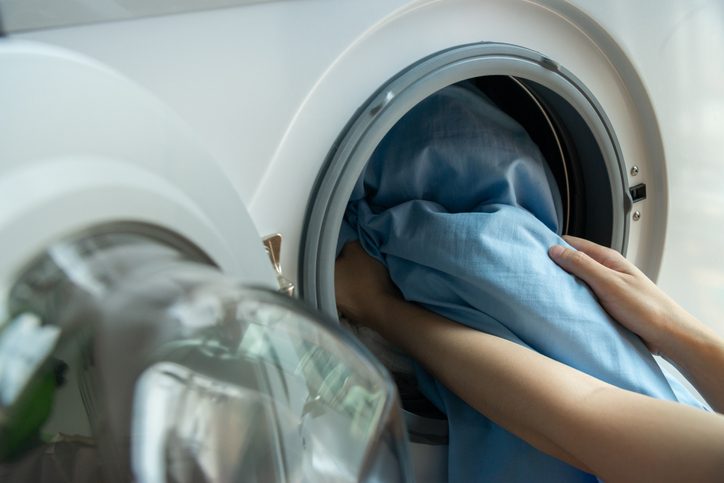
Care for your bedding frequently and properly
Hotel sheets are cared for daily and with proper techniques to make them feel soft and welcoming. While it may be impractical to follow that strict care routine on your own sheets daily, upping your care game will go a long way in making your sheets feel more like hotel-quality fabric.
How often do you need to wash your sheets?
The biggest reason hotel sheets feel so much better than yours is simply that they are freshly cleaned. Sheets that are overdue for a wash don’t feel as nice as they do when you first pull them out of the dryer, do they? Body oils, skin particles, and dirt accumulate on the surface of the fabric every night, so be sure you’re washing sheets once or twice a week to keep them crisp and fresh.
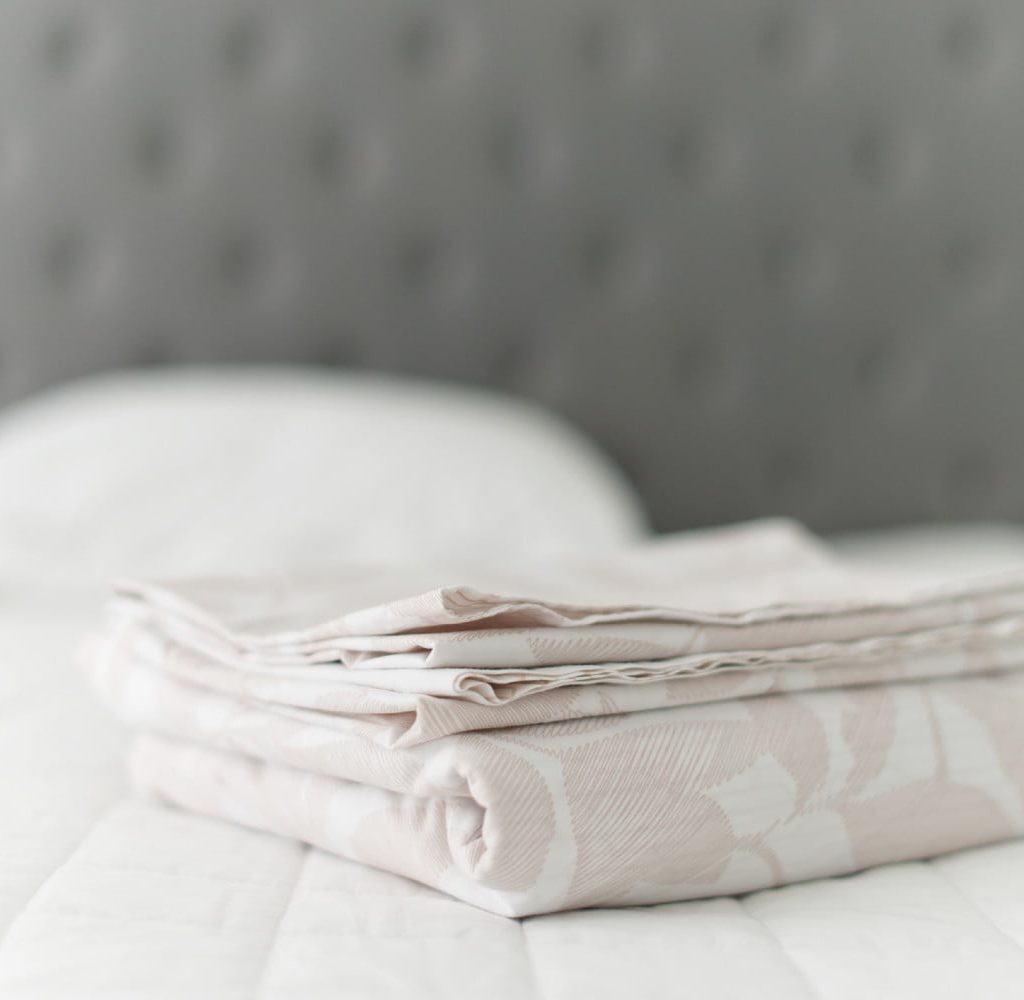
What’s the proper way to care for sheets?
Step 1: Wash them in hot water. Heat kills bacteria and helps keep your sheets smelling and feeling fresh.
Step 2: Use less detergent. Too much detergent can leave a film on your sheets or encourage soap buildup, which doesn’t feel very nice on your skin. Use about half the recommended amount on your detergent label.
Step 3: Iron them and use starch. It’s a lot of work, but starching and ironing your sheets will give them a gloriously stiff and crisp feel, just like in a hotel bed.
Store sheets in a place that’s well ventilated
Make sure your sheets are completely dry before you put them away, and make sure they’re stored in a cool, dry place. Moisture encourages mildew which can be harmful to you and the sheets. Air should flow freely in the storage area, so your sheets don’t have that dank, musty scent. Consider putting dryer sheets inside the folds of the sheet when you’re storing it so that it’s fresh and clean smelling when you pull it out.

Make your bed properly every day
Making your bed keeps your sheets looking smoother and feeling softer for longer. When your bed is left in disarray, the sheets crease, and the fabric becomes worn in those spots. Your skin will certainly feel the difference on your sheets. Beyond simply making your bed every day, making your bed properly goes a long way in creating that hotel bed feel.
Step 1: Put on a mattress pad. Having a bit more cushion underneath you as you snooze will enhance the smoothness of your sheets and make you feel like you’re sleeping on air.
Step 2: Use more sheets and tighten them up. Typically, hotels put one fitted sheet over the mattress pad, two flat sheets over the fitted sheet, and tuck corners under the mattress tightly. You then sleep snugly between the two flat sheets.
Step 3: Smooth your sheets as you’re putting them on the bed and pull them tight over the edges. This creates both the look and feel of a pristine hotel bed. When you slip in between those tightly tucked sheets, you’ll get that signature cocoon feel, just like you get in a luxury hotel bed.
Getting a good night’s sleep is important to your health, energy levels, and productivity. To get a good night’s sleep, though, you need to have a comfortable bed. Making your sheets feel like high-quality hotel bedsheets can up your sleep game tremendously, and you can do it with just a few simple updates to your sheets’ care and maintenance routine. With our tips, you can sleep like royalty every night.