  1. Home
  2. Hacks & How-to's
  3. Home Maintenance
  4. News

These are the household products Reddit agrees you should always buy brand name

Here are the household products worth your investment

Add as a preferred source on Google

Household products can add up, especially when you consider all the different types you need to keep on hand as a homeowner. It’s a highly lucrative field, and many manufacturers make knock-off versions that promise the same high quality as the original at a fraction of the price. But which products should you spend a little extra money on? What items have a reputation that stands the test of time? The Reddit subgroup r/frugal asked that very question, and plenty of people weighed in on the best household products that you should never skimp on.

The question was posed: “What everyday items should you not get the cheaper versions of? Sometimes companies have a higher price for their products even when there is no increase in quality. Sometimes there is a noticeable increase in quality. What are some everyday purchases that you shouldn’t cheap out on?” The poster of the question added his opinion, writing, “One that I learned recently: bin bags,” to which we enthusiastically agree.

ozgurcankaya / Getty Images

Painting products for the win

One of the highest-ranked answers to this very important question came from user u/bluemercutio. “As I’m painting the kitchen right now, I’d like to add masking tape,” they wrote. “The cheap stuff I still had in the basement is total crap compared to the roll of professional masking tape the plasterer left me.”

For anyone who has tackled painting, you know taping is a big part of the process, and going the cheap route only makes for more work (and a bigger headache). Many agreed, adding, “That and the actual brushes and rollers. Goes on much more nicely and looks better,” as well as high-quality paint itself. You’ll be looking at the finished product of your painting project for years to come, so it’s worth spending a little more for quality.

Image used with permission by copyright holder

Don’t skimp on kitchen items

There were many comments for kitchen products in all of their various forms. One Redditor (who knows from experience) wrote, “The blister on my finger is telling me oven mitts. Just learned that lesson.”

One helpful person responded that perhaps investing in a pair that was not necessary made for the kitchen works much better. “Go to a hardware store and get [a good pair of] leather welding gloves,” u/Walt_the_White wrote. “It’ll be good for way, way, way, way hot and give you five fingers worth of grip.”

Others added in that good kitchen shears, drain clog snakes, sponges (everyone agrees the Scrub Daddy is the clear winner), and knives (“Knives…..chef, paring…any kitchen knife”) are also products that are worth the investment.

While it’s always good to try and save money where you can, these items for the home are arguably worth the cost. If not, you end up spending more time and likely more money fixing the issues a subpar product delivers.

Julie Scagell
Former Author
The Easiest Way to Set the Table
Cutlery, Fork, Spoon

Have you ever wondered why the fork sits on the left and the knife on the right? Or why Europeans eat “Continental style,” holding the fork in their left hand and the knife in their right, while Americans cut, switch hands, and then eat? It turns out there’s a reason for all of it, and once you understand the history, setting the table suddenly feels far less mysterious. Before beautifully layered place settings and Pinterest-worthy tablescapes, dining was far more practical. Medieval feasts were less about etiquette and more about survival. Plates were often shared, forks were nonexistent, and eating with your hands was the normal standard. Tables were filled with trenchers (pieces of bread used as plates), and the idea of “proper placement” simply didn’t exist.

By the mid-to-late 1800s (around 1860–1870), European dining evolved again as meals began to be served in courses. This shift introduced what became known as the Russian style of dining, where utensils were laid out intentionally and used from the outside in. The fork stayed in the left hand, the knife in the right, and the table itself began to reflect structure, rhythm, and order. This approach eventually became the “Continental style” still used across much of Europe today.

Read more
5 tips to de-clutter your kitchen for the holidays
kitchen holiday

'Tis the season for holiday gatherings, which means your kitchen needs to be organized to avoid unnecessary stress. Here are some handy tips to follow.

1. Refresh your fridge and freezer

Read more
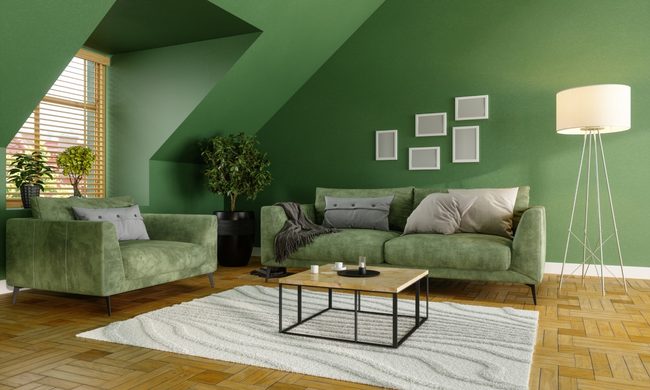
Color Drenching: The bold hue movement that is sticking around in 2026
Green living room walls with velvet green sofas

What is color drenching?Color drenching is an interior design trend where a single color is used on every surface in a room. This includes walls, trim, doors, and even the ceiling, creating a cohesive and immersive atmosphere. The technique can make a small room feel larger or a spacious room feel cozier, and it often extends to furniture, radiators, and cabinetry for a bold, unified effect.

While the term color drenching is relatively new, the concept has deep roots in design history. The look can be traced to historic European interiors where monochromatic schemes added depth and luxury. Even in the Victorian era, richly saturated jewel tones were often used in grand spaces such as libraries and parlors. It reappeared during the 1960's and 1970's as well. Designers have long understood that a single, enveloping hue can create a striking sense of mood and continuity.

Read more