
Recently, there has been a boom in ethical and green cleaning. The reasons are simple enough. Green and ethical living are healthier for ourselves and our homes and are more sustainable for the planet.
Nothing is better than the assuredness that our homes and lives are healthy and safe from toxic chemicals.
If you’re looking to get into a greener lifestyle, one of the first places you should begin is with your cleaning supplies. Standard cleaning solutions are toxic, wasteful, and bad for your health. Thankfully, there are several ways to implement green cleaning techniques into your lifestyle without breaking the bank or making drastic changes!

Ditch disposables
One of the greatest issues with everyday cleaning practices is the number of disposable products that are used. Paper towels are one of the most used disposable products in every household. According to a study in 2017 by the EPA, 3.8 million tons of paper towels (not including bath tissue) was generated and used.
While some brands offer recyclable paper towels, these may not be the most sustainable options for green cleaning.
Use reusable washcloths
A solution for this paper towel problem is simply to purchase and use reusable washcloths. Washcloths are easy to clean and generate the least amount of waste. Keep washcloths in your cleaning arsenal to wipe down counters and clean up spills.
The great thing about washcloths is that they’re durable and take months to years to begin “falling apart.” Unlike paper towels, washcloths aren’t a single-use cleaning tool.
Avoid plastic packaging
This can be tricky, but thankfully many companies are slowly shifting to less plastic in their packaging.
When choosing your cleaning tools, buy from brands that sell their cleaning products in cardboard boxes or aluminum.
Choose eco-friendly cleaning tools
Bamboo is a common reusable and eco-friendly material in green cleaning products. It grows quicker than trees and does not take millions of years to biodegrade like plastics.
You can opt for biodegradable sponges for dish cleaning as well as to cut back on harsh micro plastics.
Look for all-natural cleaning products
Aside from plastic-free packaging and eco-friendly solid materials, look for solutions that don’t include harsh chemicals. Bleach and ammonia are some of the most popular, but you should also consider avoiding chlorides and formaldehyde.
Most green cleaning solutions are made with organic and non-toxic chemicals. By reading the ingredient list on the back, you can get a good idea of what is in the product.
Baking soda and vinegar are some of the main ingredients in natural cleaners and are often safe on the skin or around pets.
Best store-bought natural cleaners:
- CleanCult multi-purpose cleaner
- BlueLand multi-surface cleaner
- TruEarth laundry soaps
Be aware of greenwashing
Something to consider when it comes to transitioning to eco-friendly and green cleaning products is to be aware of greenwashing. Greenwashing is when a company claims to be 100% eco-friendly and all-natural when they aren’t.
While we won’t dive into any specific brands here, we recommend that you do your research before buying any green cleaning products!
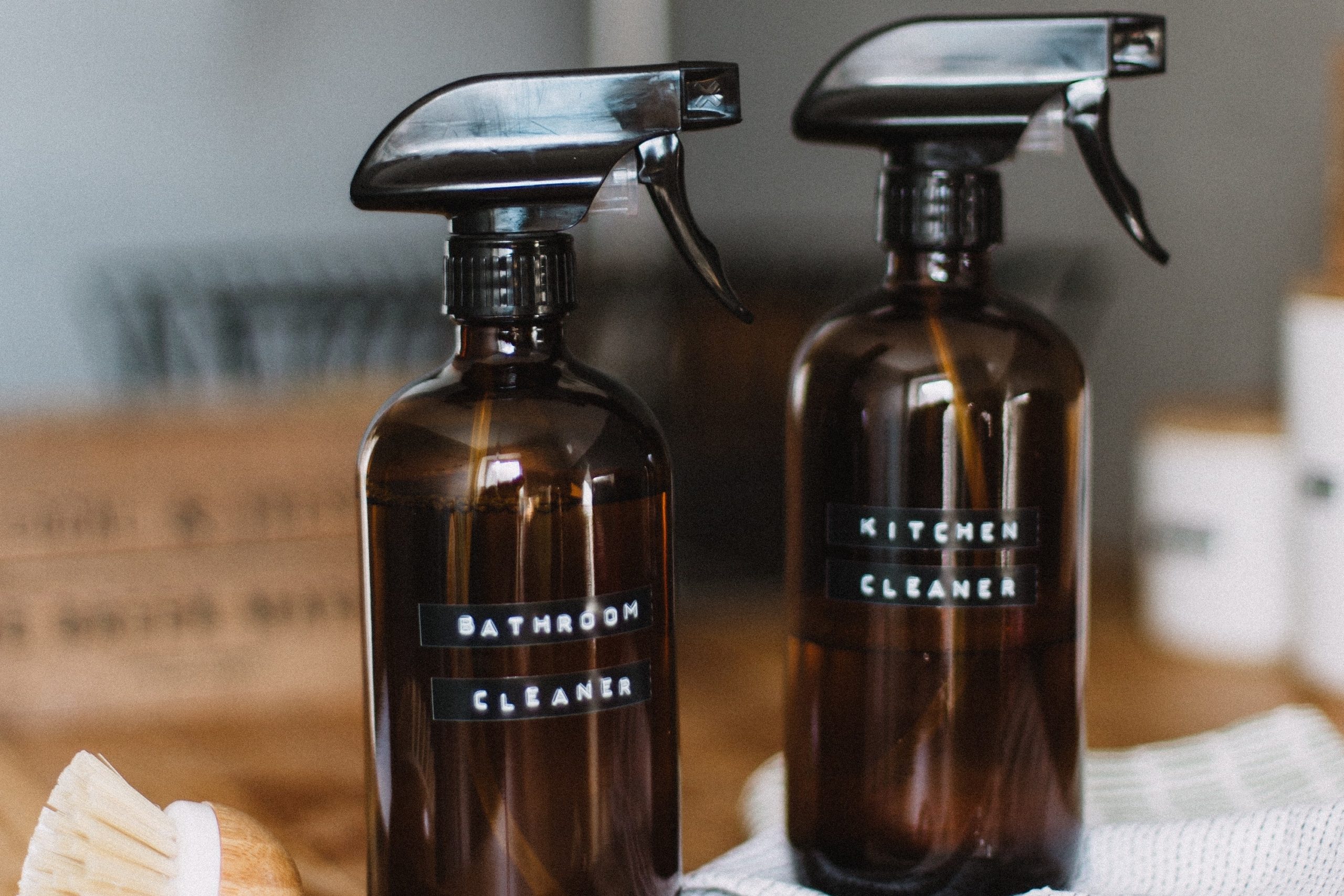
Make your own
If you are interested in saving money and enjoy DIY projects, you might choose to make your own natural cleaning products. When it comes down to it, only a few ingredients are used in most at-home natural and green cleaning solutions.
Best homemade ingredients for natural cleaners
With these three simple products, you can make nearly any cleaning product that you need:
- Baking soda
- Vinegar
- Castille soap
Here are a few ideas you can try out for yourself!
Hand soap:
Making hand soap is really simple. You’ll need Castille soap, water, and an essential oil that you favor. You’ll mix the ingredients according to the amounts given below. Once you’re done, fill up your favorite soap pump and begin using your green, all-natural hand soap!
- ¼ cup Castile soap
- ¾ cup water
- A few drops of essential oils
Sanitizer/all-purpose cleaner:
This sanitizer works well as an all-purpose cleaner. You’ll need white vinegar, water, and essential oil for this project. Mix all of the ingredients according to the listings below and store in a spray bottle(a glass spray bottle or a plastic one). You can spray the solution on counters, sinks, floors, or wherever you see fit.
Be sure to shake the bottle before every use and use a reusable washcloth to wipe down your surfaces!
- ½ cup white vinegar
- ¼ cup water
- 20 drops essential oil