If you’re not getting quality sleep night in and night out, and you’re still using a conventional flat bed, then it might be time to try an adjustable bed. Adjustable beds give you the ability to program the height of your head and legs, allowing for customized positioning that is specific to your comfort level — something you cannot get from a typical bed.
You might be familiar with Tuft & Needle’s quality mattresses, but the bed-in-a-box brand offers more than just pads to rest your head on. In their effort to provide customers with all their sleep needs, the direct-to-consumer brand also sells sheets, pillows, blankets, and, of course, beds. After testing out Tuft & Needle’s Adjustable Bed for a month, I can say with confidence it has noticeably increased the quality of my sleep. If you are in the market for a new bed or in desperate need of better sleep, we’ve broken down the pros and cons of the Tuft & Needle Adjustable Bed to help you decide if it is right for you.
Pros and cons
Pros:
- Instant improvement in sleep versus a standard bed.
- Great for back and side sleepers.
- Compatible with most mattresses.
- Minimalist design.
- Easy assembly.
Cons:
- Not a good option for stomach sleepers.
- Mattress tends to shift on the bed.
- There isn’t a way to add a headboard.
Quality of sleep
With the ability to adjust the height of my head to my desired position, I’ve locked in a sleep sweet spot with the programmable remote control. Now, every night I have consistent and better sleep than on a conventional bed. An added bonus: Being able to set the height of my head slightly higher has eliminated the need for multiple pillows.
This adjustable bed is best for back sleepers and reduces tossing and turning. The bed also works well for side sleepers, but with a more subtle adjustment of the positioning.
That being said, this bed is not a good option at all for stomach sleepers, because the spine will be bent in the opposite direction. I tried sleeping on my stomach a couple of times to test out the experience and woke up with noticeable backaches.
The ability to adjust the positioning of your legs allows for relief of pressure after a long day on your feet. This is especially useful for those who workout and are often nursing soreness. Elevating your legs and feet at night after a run or a competitive basketball game earlier in the day will allow for a swifter, less painful recovery.
Functionality
The Tuft & Needle Adjustable Bed comes with a wireless remote control to increase or decrease the height of your head and legs. The remote allows for up to two presets, so you can lock in your desired sleep position with one of the presets. You may want to use the setting preset to lock in your desired position for reading or watching TV in bed (I personally found myself reading more in this bed).
The range in which the height of the head is adjusted reaches about a 120-degree angle, more than anyone would need. At its peak, the bed can lift your legs just under a foot higher, also giving you more than you’ll need.
Most mattresses will work with this bed even if they aren’t made specifically for an adjustable bed. Tuft & Needle recommends its Original or Mint mattress to pair with the base. I’ve tested it with my hybrid (foam and innerspring) mattress and did not have any issues.
The bed base comes in a few sizes — queen, king, California king, and split king. The split king bed base has two separate zones so that you and your spouse do not have to agree on the positioning. It is equipped with two remote controls, one for each side. Each side is the same size as a twin XL.

Design
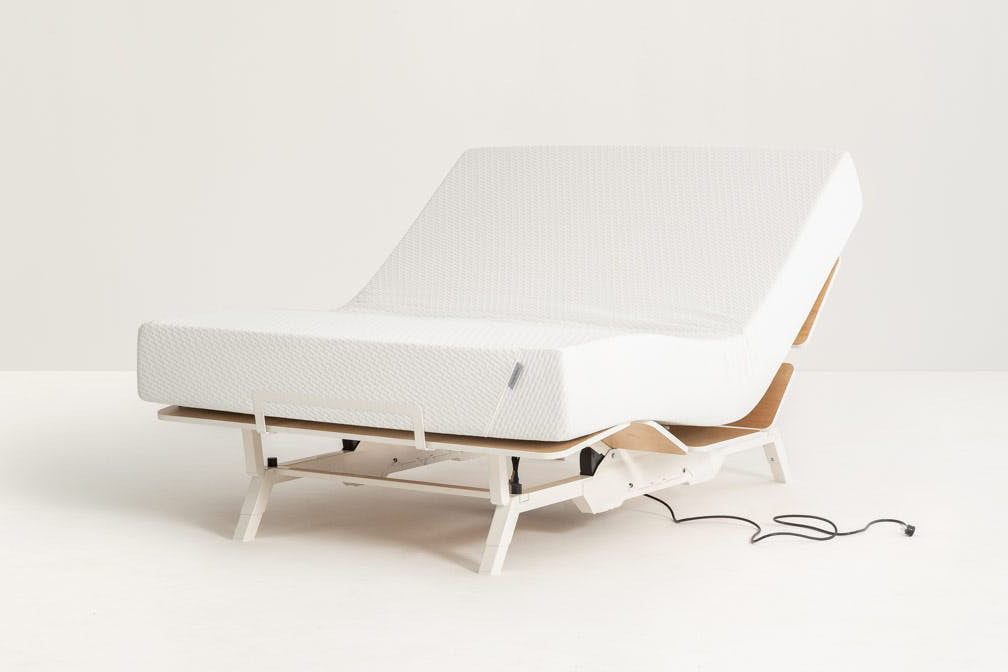
Minimalist designs often result in a lack of functionality, but with this bed, you can (mostly) have it all. Marie Kondo would likely approve of the aesthetics. The design is extremely basic without compromising the ability to have a fully functioning electric adjustable bed. The sleek birch-veneered wood panels, with white trim as the base, add a nice touch, while the white stainless steel frame under the base is a bit bulky. Luckily, it is mostly unnoticed once the mattress and bedding are on top.
While the sleek wood panels keep the bed base minimalistic, its smooth surface led to an unexpected issue: The mattress will slide a couple of inches in either direction after a couple nights of sleep. The bed has a guardrail (or retainer bar, as described in the manual) at the foot of the bed to keep the mattress from sliding down, but the design didn’t add a similar solution to the sides of the bed. My mattress has never moved more than an inch or two, and it is easy to shove it right back in place, so this isn’t a deal-breaker, but it does appear to be an oversight by the manufacturer.
The minimalist design is nice and can make a room feel more spacious than a bulky traditional bed. One downside to this bed is that there aren’t any brackets to attach the frame of the bed to a headboard.
Shipping, warranty, and returns
Tuft & Needle promises to deliver the bed within a week or two. The bed base comes with full warranty coverage for the first three years, then a limited warranty for the next seven years. The electrical aspects of the bed are excluded from the limited warranty.
Like most direct-to-consumer mattress brands, Tuft & Needle’s return policy is generous. Customers have up to 100 nights to test out the bed and decide if it’s right for them with free returns.
Pricing
This adjustable bed retails for $995 for the queen size, but is often discounted in the $800 range. The king and California king retail for $1,295, and the split king retails for $1595. All sizes are often discounted.
The concept of an adjustable bed is not new, and we often see them in hospitals and some hotels. In fact, they were heavily marketed on TV commercials throughout the ’90s. In recent years, however, mattress and other furniture brands began competing for adjustable bed consumer dollars, which has led to the prices dropping from north of $3,000 to half of that. The Tuft & Needle adjustable is more affordable than many of its competitors while offering comparable quality, features, and aesthetics.
Should you buy it?
For most people, yes.
If you’re in the market for a new bed or are having trouble sleeping at night, we highly recommend you consider purchasing the Tuft & Needle adjustable bed. It is great for back sleepers and reducing tossing and turning. For those interested in relieving pressure in the lower extremities, the adjustable leg functionality really comes in handy. The minimalist design works well in smaller rooms. The price is reasonable and even below many of their competitors. With a generous return policy of 100 nights to try it out, you have nothing to lose.
For stomach sleepers and those looking for more detail in the aesthetics of their bed, then this isn’t a great option.