Having a comfortable outdoor space is great for lounging in the sun, having lunch in the fresh air, and hosting outdoor parties. A spacious, updated deck is a fantastic addition to your home — it’s a multi-use space that can be an entertainment hub or your personal, private oasis. To keep your deck in prime lounging condition, act quickly when the boards start to show their age. By tackling minor issues now, you can prevent more costly repairs down the road.
Wood deck repair is hard work if you’re doing it on your own, but it’s not impossible with the right tools and a bit of DIY experience. With this guide, you’ll learn the best ways to repair deck boards that are damaged, unsafe, or just plain unsightly so you can host your next party with confidence.
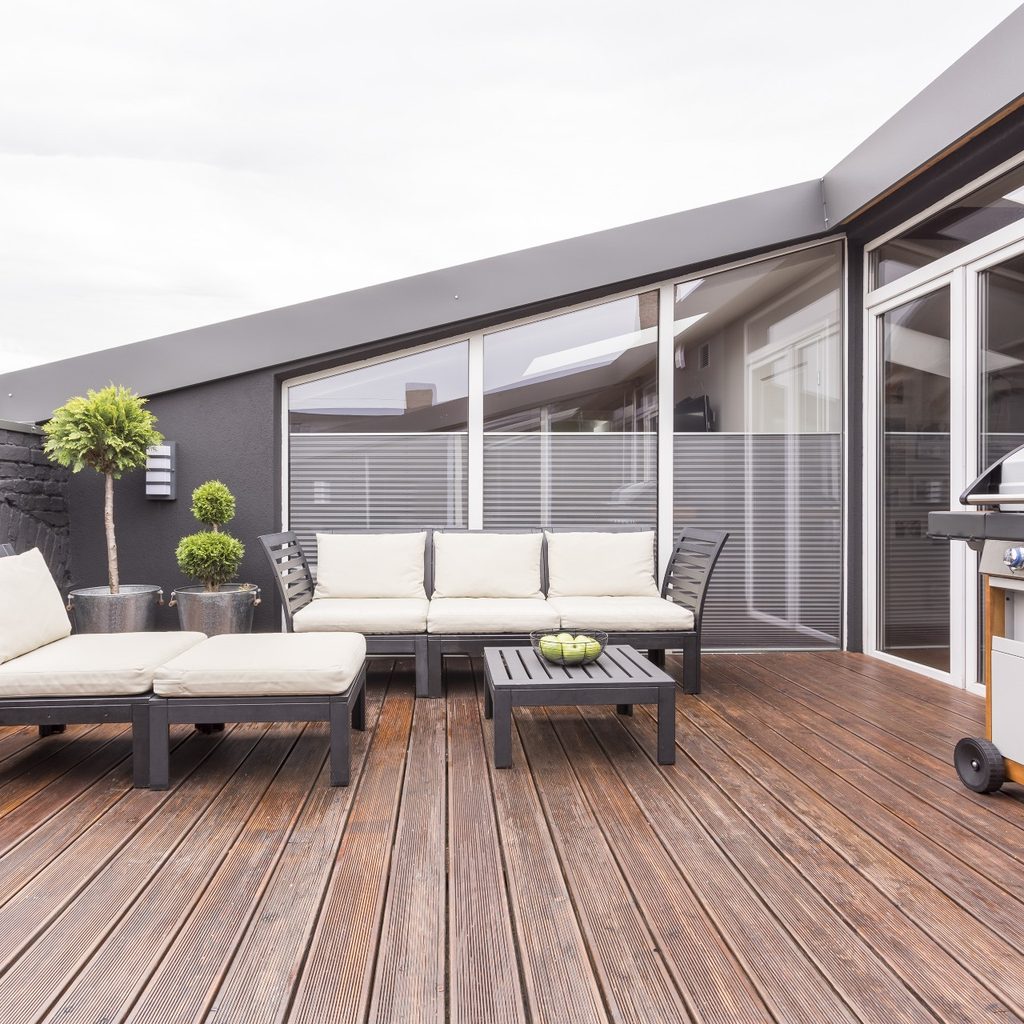
Repairing cracks on deck boards
Since wood expands and shrinks due to both moisture levels and temperature changes, cracks on your deck boards are inevitable. Cracks are unsightly but they can also be safe, potentially causing injury on bare feet. Luckily, there is a quick and simple fix to repairing minor cracks that are less than 6 inches or so in length. Before beginning the repairs, clean your deck thoroughly. We also recommend staining the deck after the repair is complete to give it a fresh and uniform color.
What you’ll need:
- Latex wood filler
- Putty knife
How to repair cracks:
- Use the putty knife to fill the crack with wood filler. Smooth it out so the filling is flush against the board.
- Allow the putty to dry completely before walking on it or cleaning it.
Replacing damaged deck boards
Over time, your deck’s boards can become damaged by water, weather, or even insects. Serious damage can present in the form of rotting pieces of wood or deep, large-sized cracks. If the damage to the board is too extensive to repair, it’s time to replace the entire board.
What you’ll need:
- Wooden replacement board
- Hammer
- Prybar
- Circular saw or jigsaw
- Electric drill
How to replace deck boards:
- Remove the damaged board by lifting the nails with a hammer and prying it up with a prybar. If you must, you can use a circular saw or jigsaw to carefully cut out the damaged board.
- Accurately measure the new board and cut it to size using your circular saw.
- Put the new board in place and drill it into the joist. Use the same screw holes to avoid weakening the joist, but use larger screws to be sure the board is securely in place.
Dealing with small damages or stains on deck boards
Whether from spills, scrapes, or other mishaps, small stains and damages can be an eyesore. The good news is, as long as the board is not structurally unsound, you can simply flip the board over to expose the clean underside instead of replacing the entire piece.
What you’ll need:
- Hammer
- Prybar
- Electric drill
How to flip a deck board:
- Carefully pull up the piece of board with a hammer and prybar.
- Flip it over and drill it into the joist using the same screw holes but larger screws.
Tips for keeping your deck pristine
Once you’ve repaired or replaced your damaged or unsightly deck boards, be sure to keep up with your deck’s maintenance and care to prevent future damage or cosmetic issues.
Avoid excessive moisture
Water causes wood to expand, contract, and possibly crack, and it also increases the risk of wood rot. Avoid excessive moisture by redirecting your rain gutters and sprinklers so that they don’t pool onto your deck. Additionally, be sure to move deck furniture around occasionally so that moisture doesn’t get trapped underneath the furnishings.
Allow direct sunlight
Be sure to trim bushes and other foliage to expose the deck to the sun as much as possible so it can evaporate excess moisture.
Sweep frequently
Leaves and other debris, if left sitting on your deck, can decompose and stain your wood. Rotting debris also attracts bugs and mold which can further eat into your deck. Rid your deck of debris as often as possible to keep it stain and bug-free.
Stain and seal your deck periodically
Stain and seal your deck every one or two years to keep it looking fresh and new. Be sure to pressure wash the deck prior to staining to keep it smooth and free of debris.
Paint your deck for a dramatic facelift
Since your deck is exposed to the elements, it will certainly become weathered over time. But, as long as the deck is structurally sound, you can simply give it a paint job so it looks brand new.
Your deck is incredibly convenient for entertaining as well as just spending some time outdoors. If your deck is a high-traffic area, you’ll inevitably start to see damages. Fear not — with these quick fixes, your deck will be looking good as new before you host your next gathering.