
Poor indoor air quality is a common problem, and breathing contaminated air can aggravate allergies and trigger asthma attacks. The air inside a house can be filled with contaminants, including dirt, dust, and chemicals from carpet and cleaning products. Surprisingly, energy-efficient homes actually contribute to the problem. While they prevent drafts and air leakage and keep utility costs down, these homes often have poor airflow, which allows indoor contaminants to build up.
Ventilation and filtration can improve indoor air quality, but adding indoor plants to a home has long been a strategy for many homeowners. This is largely because of a 1989 NASA study that found that plants could help alleviate indoor air pollution. Since then, other studies have found that the amount of house plants homeowners typically have won’t move the needle, but green walls can improve the health index of a building’s interiors.
And, of course, house plants offer other health benefits as well, such as helping to reduce anxiety. They can beautify your living areas, make you feel happier and more relaxed, and improve your memory, concentration, and productivity. These pros are especially welcome for those who work from home. So, while indoor plants aren’t the most effective method of cleaning the air, they do contribute to a healthier environment.
 What is the best indoor plant?
 What is the best indoor plant?
Plant species vary in terms of their ability to remove toxins from the air. Some plants, like bamboos, ivies, and rubber plants, can remove a wider range of toxins than other species.
Of course, the more plants you have, the more you have to manage the amount of moisture in the air. Bringing plants into your home will increase the amount of humidity and therefore also increase the risk of mold and mildew forming. Make sure that you remove any excess water on a regular basis and that your plants can drain well.
If you have pets or small kids, be extra cautious when selecting plants for your home. Some species are toxic to dogs, cats, and children, and many curious minds (and tongues) might try to sneak a taste. Remember, too, that some plants, such as ones with long, thin leaves, will be sure to attract the attention of a playful pet or a curious child. A dog, cat, or child may climb or jump to get at the plant, knock it over, and event up making a mess.
Looking for some other ideas for beautiful indoor plants? Try these:
Golden pothos (devil’s ivy)
Golden pothos, which is often referred to as devil’s ivy, is one of the best indoor plants when it comes to removing toxins such as formaldehyde, benzene, carbon monoxide, xylene, and toluene from the air. Golden pothos can thrive in a wide range of conditions and may even reach lengths of up to 8 feet. If a plant grows too large, you can trim the tendrils to make them more manageable. This plant is also good for those struggling to maintain their green thumb — you only have to water golden pothos when the soil is dry.
Be aware that this species can be toxic to certain pets.
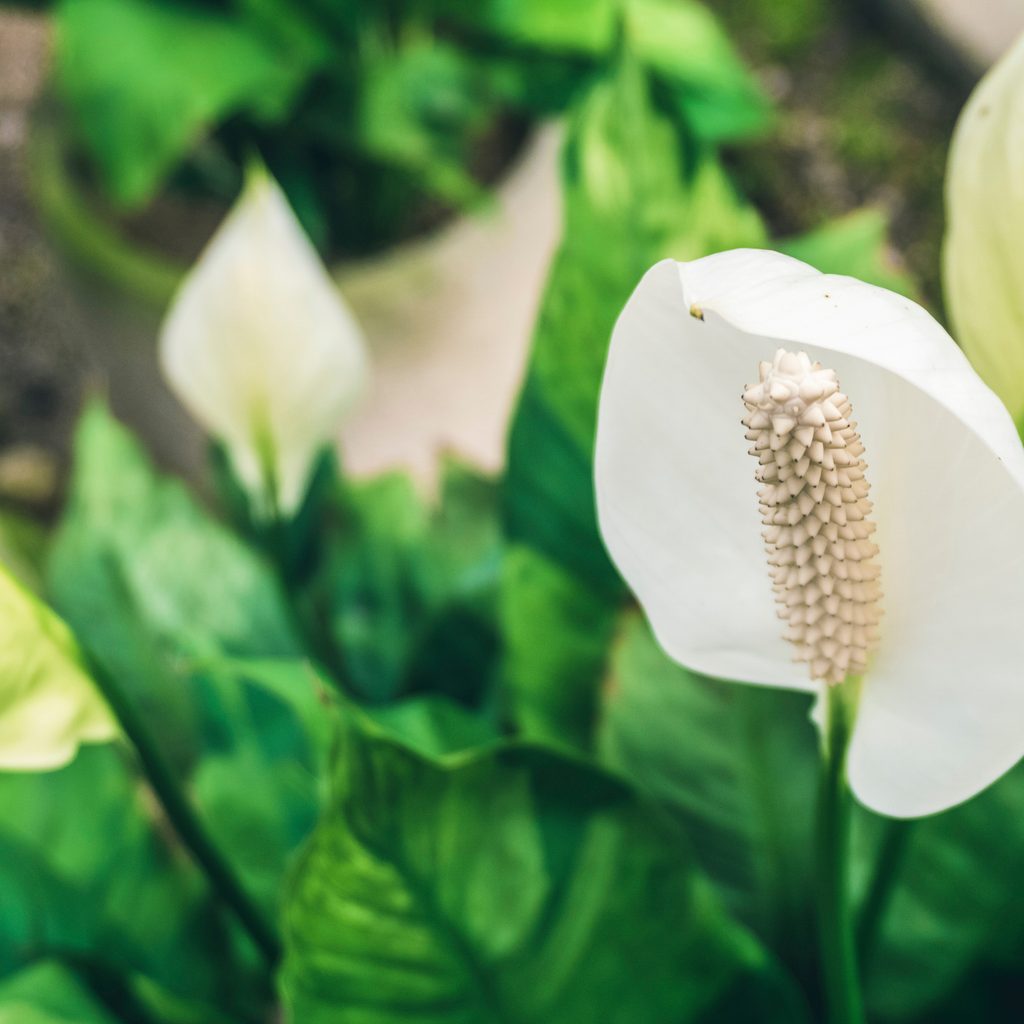
Peace lilies
Peace lilies can absorb formaldehyde, benzene, xylene, ammonia, trichloroethylene, carbon monoxide, and other toxins. Peace lilies are easy to care for, growing in a variety of light conditions and only needing minimal amounts of moisture.
Peace lilies are not a good species for homes with pets or children, however, since they are toxic. They can cause swelling, burning, and skin irritation in adults so, if you decide to grow peace lilies, wash your hands after touching them.

Spider plants
Spider plants can remove formaldehyde, xylene, and benzene from the air inside your house. They come in hundreds of species and are easy to care for. They only need water two or three times per week, but you should wait until the soil is relatively dry before watering again. Spider plants generally grow well in bright, indirect light.
We recommend hanging spider plants in baskets to keep them out of reach because it’s easy for a small child or curious pet to pull on the leaves and bring them tumbling down.
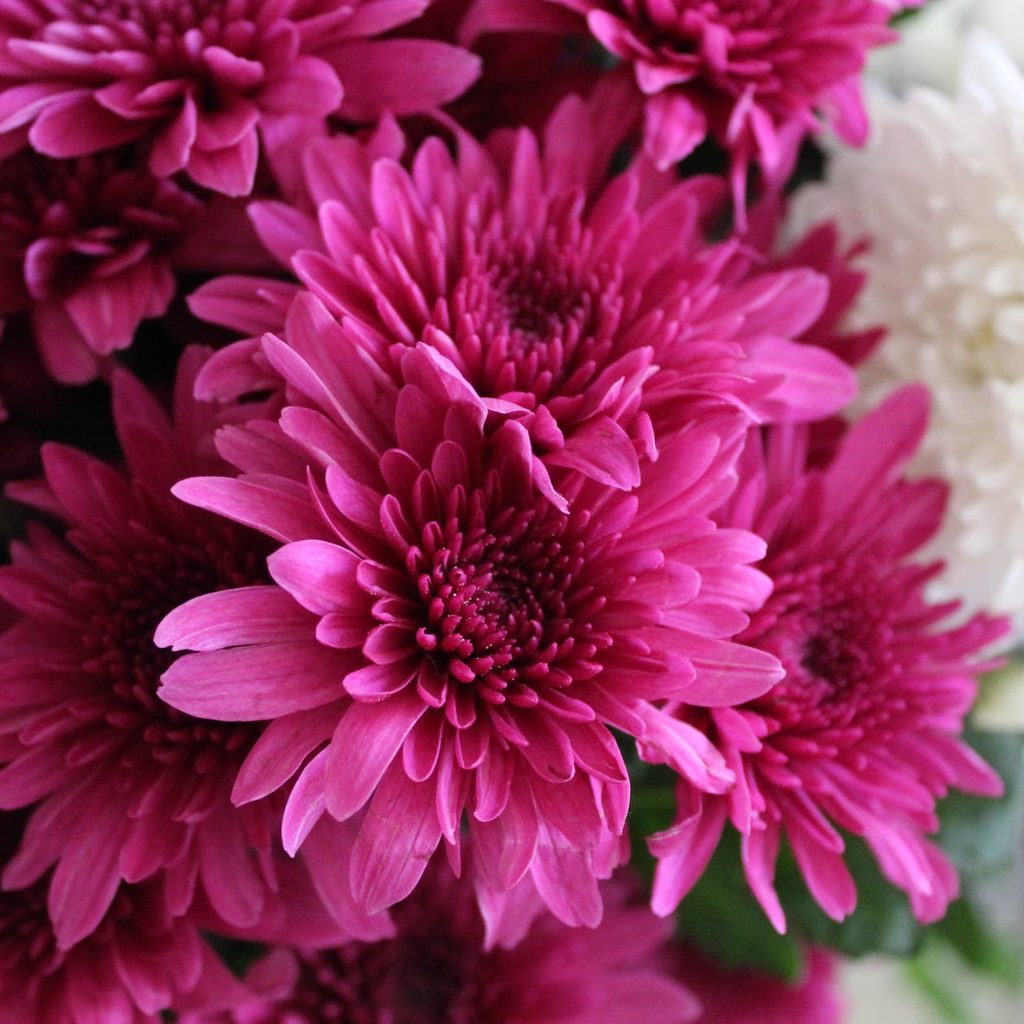
Chrysanthemums
Chrysanthemums can do an excellent job of removing toxins, including formaldehyde, benzene, xylene, and ammonia, from the air. That being said, they can only purify the air when they have flowers, and flowers only bloom for approximately six weeks.
Their beauty comes at a price: These plants require more work than some other flowers. You will have to check the soil frequently and make sure that it stays damp at all times. Be aware that this flower can be toxic to dogs and cats.
Plants may not be as effective at purifying the air in your home as other methods, but they do offer a lot of health benefits. With a few well-chosen indoor plants, you can improve your physical and mental health.