If you’re looking for some summer gardening ideas to spark inspiration for your next landscaping DIY project, we’ve gathered a few amazing recommendations that will undoubtedly turn your neighbor’s heads.
Landscaping isn’t just about making your property look appealing. Though, we can’t deny that we love a solid landscaping layout that can truly transform a home’s curb appeal! But in addition to aesthetics, landscaping is also about protecting your garden, cleaning up the environment, and creating an outdoor oasis where you and your household can retreat.
Use starter fertilizer
Depending on the condition and nutrients of your soil, a starter fertilizer can tremendously boost healthy plant growth. The fertilizer will add necessary nutrients to the soil, which will allow your landscape to remain vibrant all season. Before you begin planting, test your soil with any standard soil testing kit to determine the natural levels of nitrogen, phosphorus, and beneficial fungi.
Most lawns can benefit from a starter fertilizer that includes all three of these critical nutrients. Spread your starter fertilizer on the ground and till it so that it mixes in with either the natural soil of your lawn or the potting soil you plan to use to ensure your landscape will remain lush and lively all season long.
Buy in bulk
When it comes to saving time and money, you can’t go wrong with buying in bulk. Rocks, gravel, soil, and fertilizer can often be purchased in bulk quantities to be dumped at your planting site. Buying in bulk will save you money and allow you to spread the materials throughout your garden or landscape more efficiently.
Re-use leaves and grass
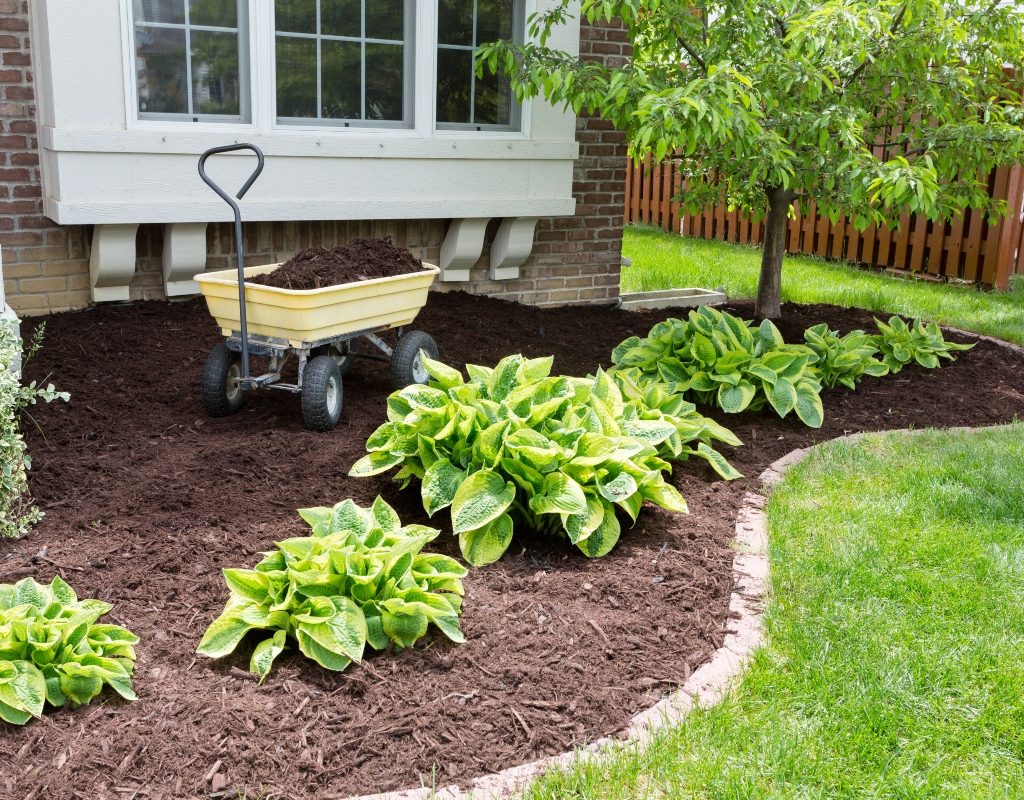
It can be tempting to toss old leaves and grass into bags to send to the landfill. However, these clippings can make a fantastic mulch or fertilizer for your yard when reused.
You can use a bagging mower or leaf shredder to grind up fall leaves. After, use them as mulch to protect your garden during the winter or toss them into a compost pile. During the summer, use smaller quantities of shredded leaves as a light fertilizer for your yard.
Using a mulching mower for grass clippings will also save you time and money. These clippings can be used as mulch to protect your plants and act as a natural fertilizer.
Plant your annuals in visible locations
Planting annuals in highly visible locations will add a pop of color to your landscape throughout every season. While many people love the look of perennials in their flower beds, annuals and evergreens can act as constants within your new landscaping. They add continuous color throughout each season, often allowing your garden to remain aesthetic and lush even in the dead of winter. For best results, add them around mailboxes, patios, and fence lines.
Choose variety
As you begin planning your landscape design, don’t forget to choose variety. Different colors, styles, and plant types will create more depth to your yard. Opt for perennials as well as annuals and don’t neglect to choose both flowering and non-flowering plants. Aside from flowers, shrubs, succulents, fruit trees, garden vines are also wonderful ways to decorate a landscape.
Use more than plants
If you want to elevate the look of your landscape, try using more than just plants to add a bit of visual interest. Structures like stone pathways, arbors, decks, and fences allow your property to look more put together. These structures also remain all year round, so even as the seasons change, you can maintain an elegant look on your property.
Have a water feature
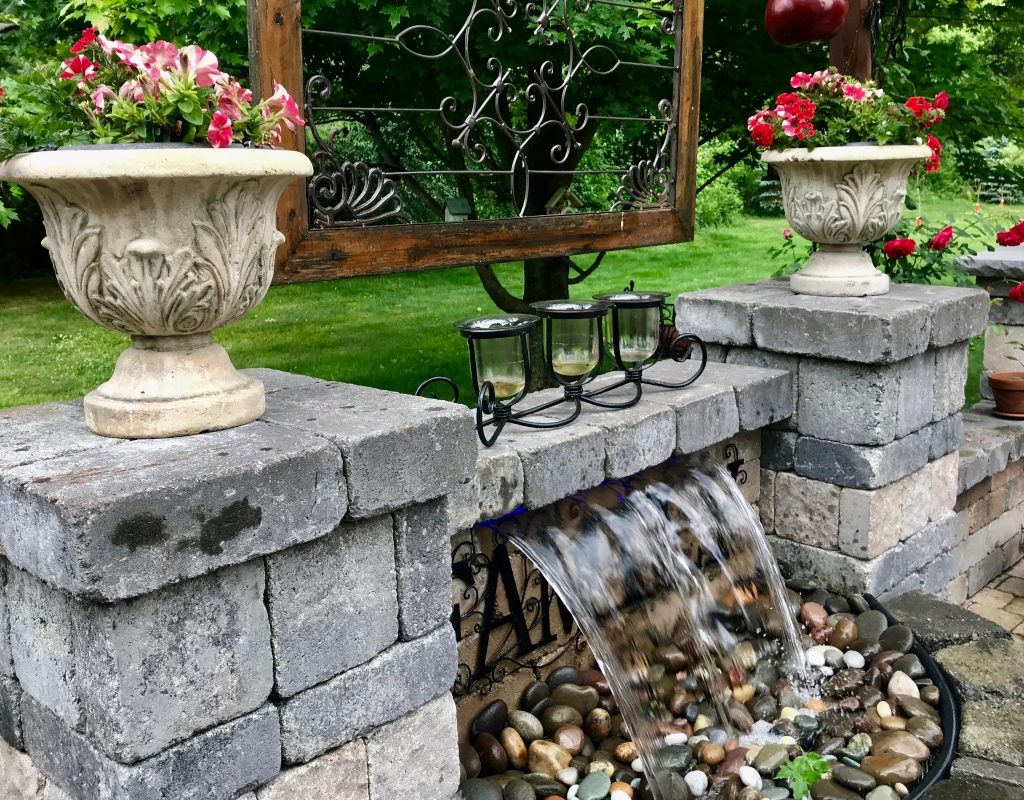
Waterfalls, ponds, and small fountains act as a focal point within your landscape. They draw the eye and provide a soothing, pleasant appeal to any space. Installing a water feature can be daunting for beginners, though it’s much easier to do than you think!
Start with a simple pond and work your way up to more advanced features. Even a small birdbath can act as a simple water feature that not only invites a bit of nature into your garden but also provides room for a soothing, outdoor oasis.
Know your zone and weather conditions
Before you begin planting or laying out the plan for your new landscape design, it’s best to look into your zone’s temperatures and weather conditions to see which plants are more likely to thrive in your local environment. For example, where one plant may do well in zone 3 (an area near the border of the United States and Canada), a different plant may perform better in zone 10 (on the tip of the Floridian peninsula).
Additionally, consider the lighting on your property. A plant that enjoys high light won’t do well if planted in an area shaded by a tree for most of the day. Planning for the weather conditions and lighting will allow you to find plants that will thrive in your new landscape.
Start small
Another good tip is to start small. It can be tempting to go all-in and begin changing the entire landscape all at once. Keep in mind that landscaping can be a lot of work. Maintenance, preparation for the changing seasons, and purchasing materials to sustain your foliage can be a hassle if you aren’t used to it. Starting small will give you a chance to become comfortable with the new changes.
Landscaping is a wonderful way to add curb appeal to your property. It adds color, vibrance, and a stunning aesthetic for any outdoor retreat. Take time to thoroughly plan your landscape design from layout to planting before starting the process. Then, with the proper summer gardening tips, you can create a gorgeous landscape that will completely transform the look of your garden.