Some folks argue that natural cleaning products are better than chemical products when it comes to your health. Others insist natural products are not as effective as their chemical counterparts for a good clean. At the end of the day, though, we can all agree that what we’re after is a sparkling clean bathroom. So, here are five safe and natural hacks you may not know about that will help you save time and money.

Preventing steamy mirrors
Who hasn’t stepped out of a nice, hot shower only to be met with fogged-up mirrors? Then you have to take a hair dryer and blow on your mirror for several minutes before you can see yourself again. Who has time for that? Here are a couple of different solutions that will help remedy this problem.
Take a bar of soap and gently rub it across your mirror. You want to leave behind a light haze, not any soap chips or chunks. Next, take a soft, cotton cloth and buff the mirror until it looks normal again. Though it will look like it did before this process, the soap actually leaves behind an invisible film. The next morning when you finish your shower, you’ll step out to a nice, shiny mirror with no fog! Tooletries suggests the same process but trying shampoo, instead.
Another method to try is shaving cream. It’s a great deterrent to moisture so just lather up your mirror, wait a couple of minutes, and then wipe clean with a soft towel or cloth. You will probably have to re-apply the shaving cream every few weeks, but it’s an easy and cost-effective solution.
Getting rid of mildew from shower curtains
A half cup of baking soda added to your laundry detergent can rid your shower curtains of mildew. Wash on the gentle cycle and then add a half cup of vinegar in the rinse cycle. Finally, lay your shower curtains flat on a rack to dry. An additional hint is to add some towels in the wash with your shower curtains. They will help rub the dirt and soap scum off the curtains.
If your bathroom usually stays damp, you can help prevent the growth of mildew by soaking your shower curtains in a saltwater solution. Just add a cup of salt to enough water to cover your curtains and let them soak for a few hours. They’ll be clean and smell fresh when you hang them back up.
The Maids has a few tips on how to get rid of mold from the shower curtain. “Spray a solution of two parts hydrogen peroxide and one part water onto the shower curtain. Let the hydrogen peroxide sit for five to ten minutes. Rinse thoroughly.”
Shower head cleaning
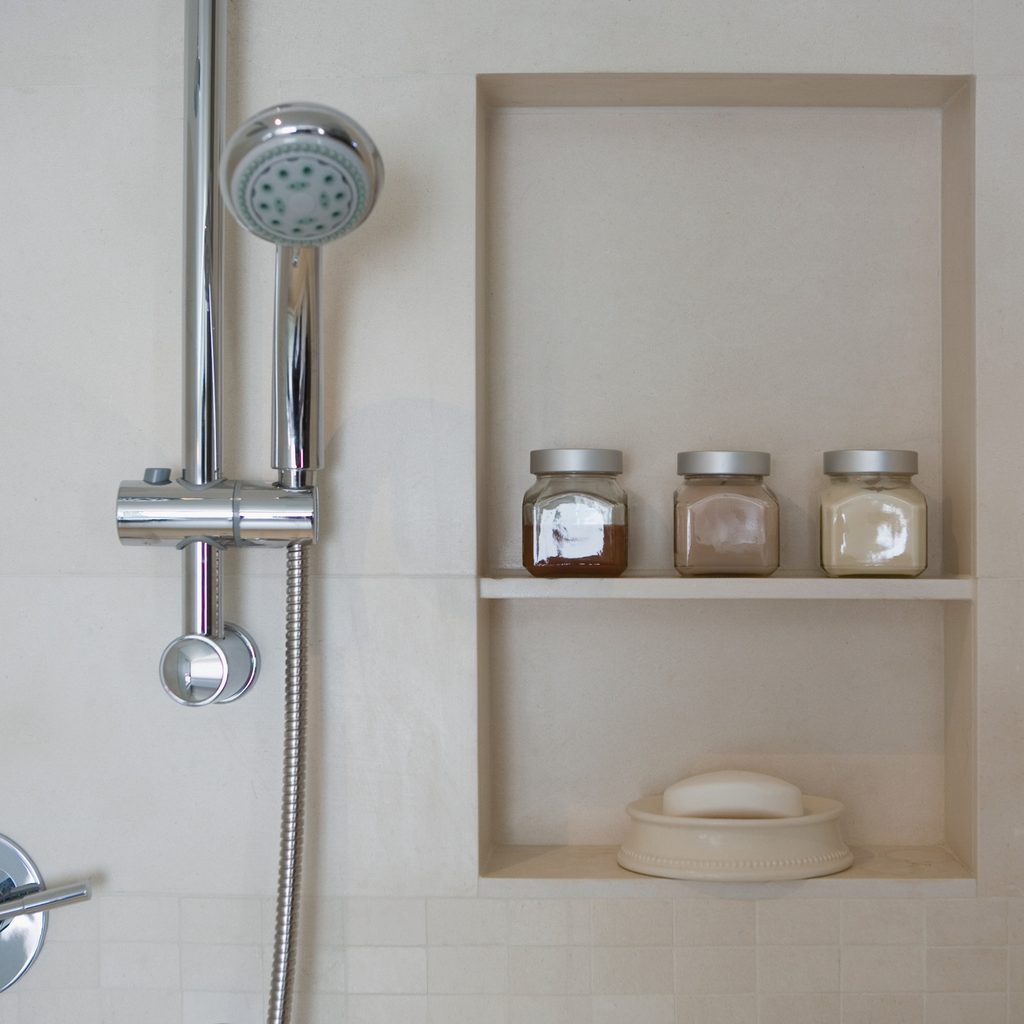
Use a plastic food bag to soak your shower head overnight to get rid of limescale and soap scum. Just fill the bag with white vinegar and a few drops of lemon oil, then secure the bag on your shower head with a rubber band. The next morning, remove the bag and wipe your shower head clean.
You can also use two teaspoons of baking soda and half a cup of vinegar poured into a sandwich bag to deep clean your shower head. Submerge the showerhead completely in the bag and tie it with an elastic band. By the next morning, all shower scum and debris will be gone. After deep cleaning your shower head, HGTV suggests keeping a spray bottle with only white vinegar on the side to use when you regularly clean the bathroom.
Toilet brush
If you hate that grimy pool of water in the toilet brush holder, this hack is for you. Never put a dripping wet toilet brush back into its holder. It is unsanitary and could be a breeding ground for bacteria and germs. Once you’ve thoroughly cleaned your brush, wedge it underneath the toilet seat and let it drip dry. This hack became one to talk about when a British mom posted it on social media, reported News.com.au.
Clean and disinfect your floor
Remember watching housewives on old TV shows use a mop and mop bucket to clean their floors? Well, things have changed a little since those days! One of the latest inventions to help with that chore is the e-cloth. These mops are engineered to clean and disinfect your floors at the same time — using only water! This microfiber mop system not only saves time and money, but it also is a must for families with pets or little ones.
Even as you clean your bathroom’s grossest areas, the task should not drain your energy or require a ton of money and products. These hacks will help your bathroom stay clean and spotless, smell fresh, and have a little sparkle.