
The curb appeal of your home is important. You want your yard, fence, and gate to look immaculate. If your once-pristine fence gate is getting a bit older, you may be starting to experience the woes of a sagging gate. These woes include difficulty opening the gate due to the bottom dragging on the ground, and you might even see some visual sagging that makes your gate a bit of an eyesore. Luckily, there are some easy ways to fix your yard’s sagging gate on your own without the expense of hiring a professional.
There are, however, some things you need to figure out before you can determine how to fix a sagging fence gate. The first step is to determine what is causing it to sag.

Why is your gate sagging?
Your yard’s gate sees a lot of action. This repeated use, along with the effects of weather and gravity itself, causes any gate to sag after a while. Determining the cause of your sagging gate will help you to find the right fix. Below are some possibilities.
Hinges are loose or damaged
Your gate’s operation is only as good as its hinges. Examine the hinges to see if they are bent or damaged in any way. If they are, you can simply remove the hinges and replace them with new ones. Keep in mind that your old hinges could have been too small for the size and weight of your gate, which may be the culprit in the sagging motion, or you may just need a third hinge at the midpoint.
What you’ll need to replace hinges:
- Buy at Amazon and drill bits
- Screws, washers, and nuts
- New hinges
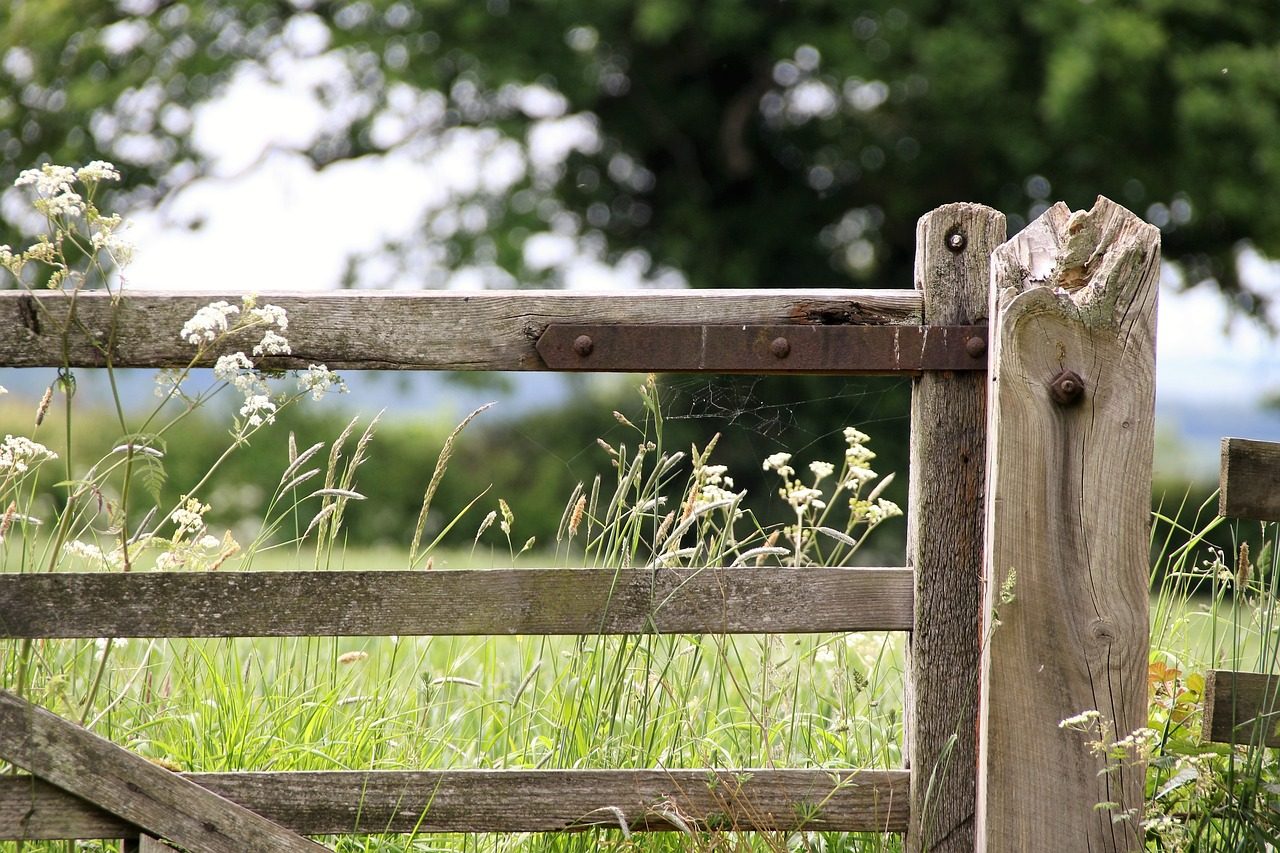
The best method for replacing your gate’s hinges is to first unscrew the hinges from the post and completely remove the hinge. Once removed, you can unscrew the hinges from the gate itself. Then, you can measure and drill new screw holes in both the post and the gate and attach the new hinges.
Gate posts are damaged or deteriorated
If you’ve determined that your hinges are still in good shape, the next step is to examine your gate posts. Upon inspection, you may find damage from insects or even rotting in the posts. These issues damage the overall integrity of the post or force the post to loosen in the ground, causing your gate to give way to sagging. If this is the case, you’ll need to replace the post.
What you’ll need to replace your gate post:
- Drill and drill bits
- Buy at Amazon
- Post hole digger
- Concrete mix
- Level
Remove the old post and dig a new hole (or enlarge the existing hole) for the new post. You’ll want the new hole to be a depth of at least 3 feet so the new post stays firm in the ground at a straight angle. You can rent or purchase a post hole digger to make the job easier. Then, set the new post in concrete and, with a time limit of about 20 minutes or so before the concrete begins to dry, use a level to be sure the post is sitting at the correct angle and make adjustments if necessary. Let the post settle for a couple of days before re-installing the gate.
Gravity is doing its job
If you’ve determined that your gate’s hinges are still intact and your gate post is in good condition, there’s a good chance that gravity is simply causing your gate to sag. In this situation, an anti-sag gate kit will work nicely to realign your gate and lift the dragging corner off the ground. These kits include a cable and fittings, a turnbuckle, metal corner brackets, as well as any screws, bolts, and nuts you’ll need. They are inexpensive and can be purchased online or at your local hardware store.
What you’ll need to install an anti-sag gate kit:
- Anti-sag gate kit
- Drill and drill bits
- Buy at Amazon
- Wrench
- Pliers
First, you’ll install the metal brackets, one at the top corner of the gate near the top hinge and the other on the bottom corner on the opening side of the gate. Unscrew the turnbuckle as far as it goes and hook it onto the top bracket. Thread the cable through the bottom bracket’s hole and pull it as tight as you can before securing the ends of the cable with clamps. Using a wrench or a screwdriver, tighten up the cable by turning the turnbuckle until the bottom corner of the gate has lifted off the ground. Note that as time goes on, you may need to re-tighten the turnbuckle.

At the end of the day, the condition of your yard’s gate contributes not only to your convenience in entering and exiting your yard, but also to your home’s curb appeal and overall value. A sagging gate is as unsightly as it is inconvenient, so you want to fix whatever issue may be causing it to sag before the damage increases and the problem becomes a bigger and pricier one.