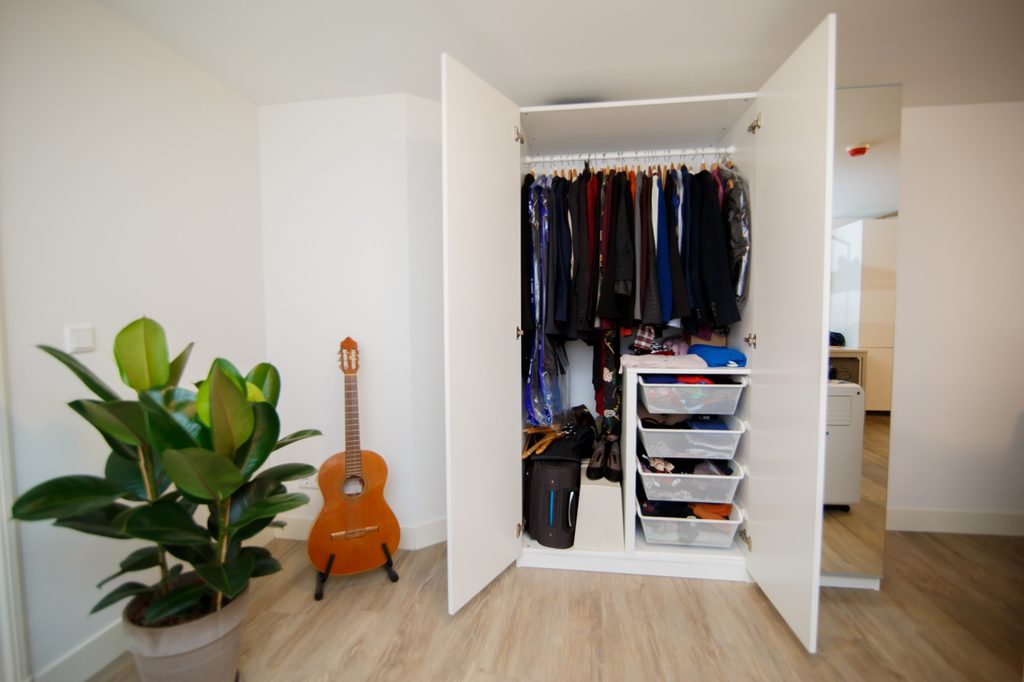
Having a clean, organized space is like a breath of fresh air to the soul. When that space is small, though, it can be difficult to keep it tidy and free of clutter. One of the toughest places in the home to keep organized is the closet. Particularly when your closet space is limited, things can get out of control quickly, leading to an overstuffed and overcrowded closet space that makes putting laundry away a total nightmare.
The good news is that we have some small closet ideas to maximize closet space so you can invite better organization into your home. Whether you have a grand walk-in or a simple, small closet to store your clothing, we’ll help you wrangle that messy closet by maximizing the space you’ve got.
How to maximize small closet space to tackle an overcrowded wardrobe
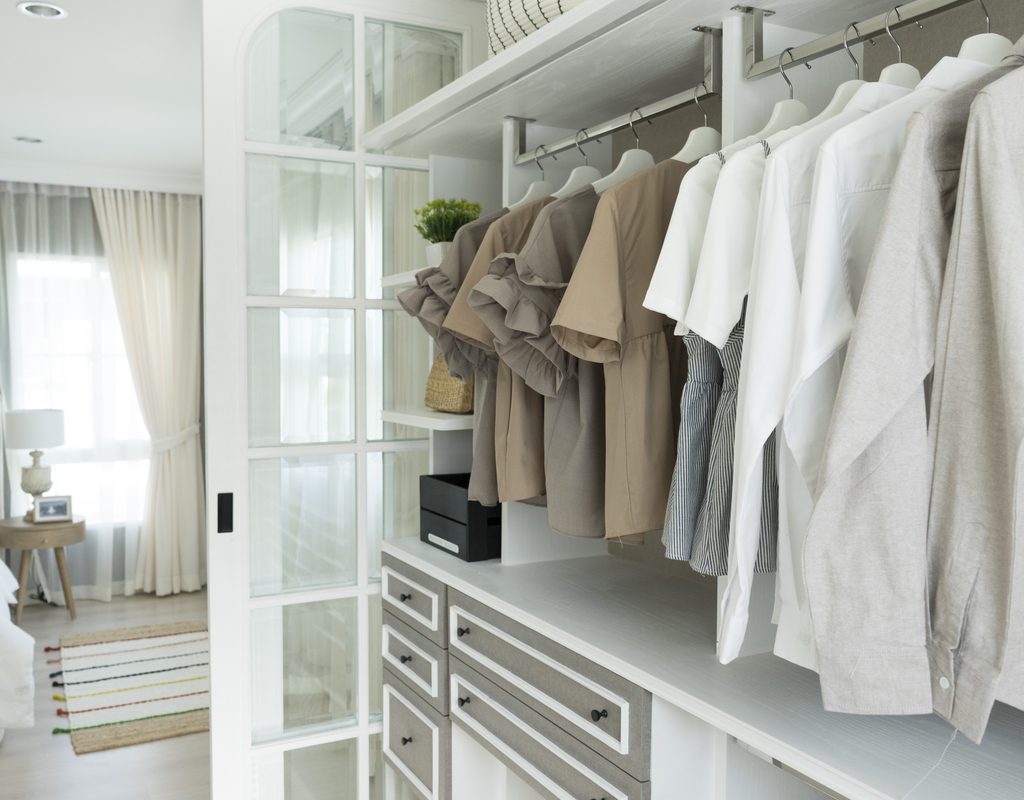
Before you start installing shelves or adding storage solutions to your small closet, it’s crucial to simplify and declutter your closet’s contents. Here are a couple of tips for minimizing the clutter and giving your closet a clean look overall.
Tip #1: Purge without mercy
This first step may seem like a no-brainer, but it’s incredibly important. Go through each clothing item and accessory, and really ask yourself if you need it. Fill up some garbage bags or totes with discarded items, and either donate them or toss them. If you really want to free up space, you’ll have to be merciless with your decisions.
Tip #2: Unify and organize your hangers
It may seem like an odd tip for maximizing space, but the reality is that if all of your hangers are the same brand and style, they make your closet look and feel more organized. Your hangers will look straighter and your clothing will all hang the same way. If you have several clothing items that are the same length and size, hang them together so that they create an equal block of space beneath them. This will help when you start utilizing floor space.
How to use space on the floor of a closet to maximize your storage potential
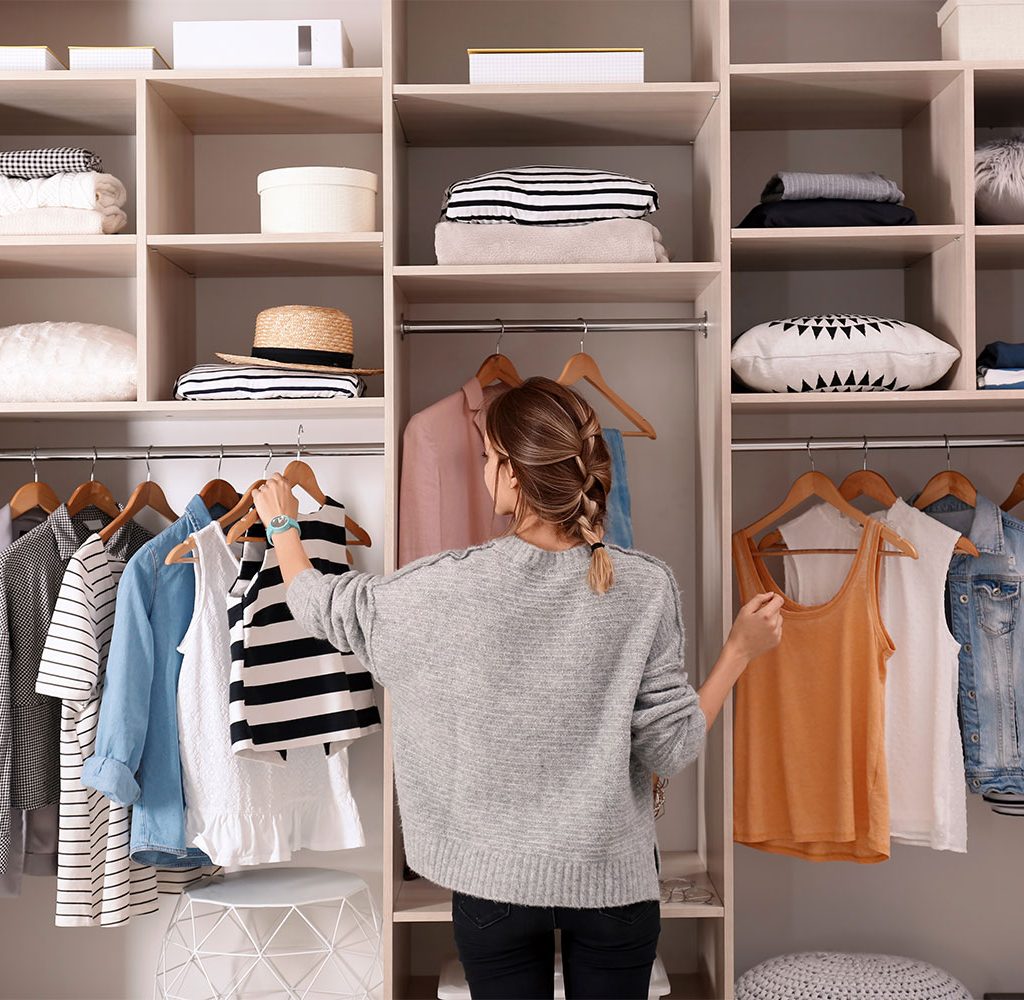
Speaking of the closet floor, it’s one of the most underused or improperly used areas of the closet. It’s often packed with unwanted items and collects storage items that don’t belong anywhere else. Clear out the floor of your closet to make way for these floor storage tips.
Tip #3: Line the floor with shoe cubbies
Shoe cubbies are great for closet storage. They’re inexpensive and compact, and they allow for tons of storage on the often unused floor. Put as many cubbies as will fit on the floor, and load them up with shoes, socks, hats, or other accessories.
Tip #4: Add a short dresser
A chest of drawers fits nicely into most closets. If you have one that’s short and wide, you can also hang clothing items above it. Use the drawers for storing intimates, accessories, or even shoes.
How to use space at the top of a closet to create additional room for organization
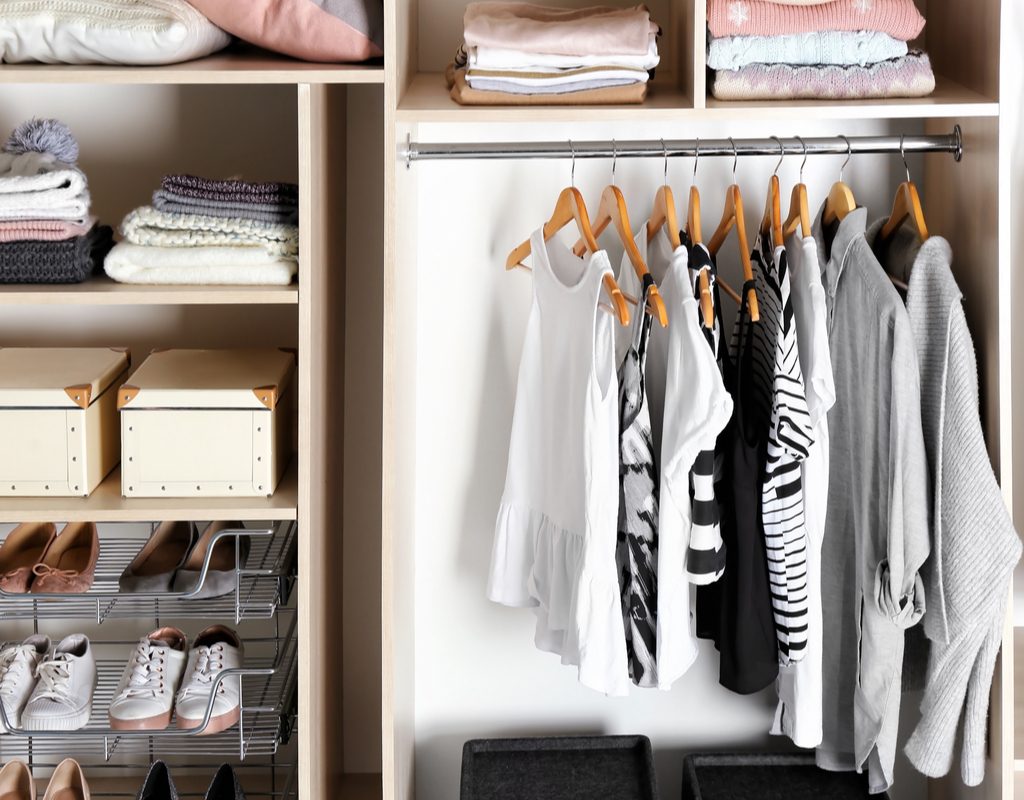
Most standard closets come equipped with a long single shelf above the hanging bar. As it comes, the shelf isn’t all that useful. Even if you use it to house sweaters, shoes, or hats, there’s often a huge space above your items that goes unused. Here are some tips to maximize the shelf space.
Tip #5: Make that single shelf stackable
There are a couple of ways you can stack items up without them falling over. If you’re storing accessories like hats and gloves, for example, you can put everything in clear stackable bins that can go all the way up to the ceiling if needed.
If you’re using the shelf for shoes or folded clothes, you can get a second or third layer of shelving in by installing cabinet shelf organizers. These handy inserts are usually used in kitchen cabinets, but they serve nicely in your closet to allow you to fit a second row of shoes above the included shelf.
Tip #6: Set up shelf dividers
Shelf dividers are great for keeping stacks of clothes contained on your closet shelf. Clip them onto the existing shelf so that they stand perpendicular to it. They’re a great way to keep the folded piles of clothes from toppling over, and they allow you to have more items in each pile.
Small closet storage ideas that will help you wrangle a messy wardrobe
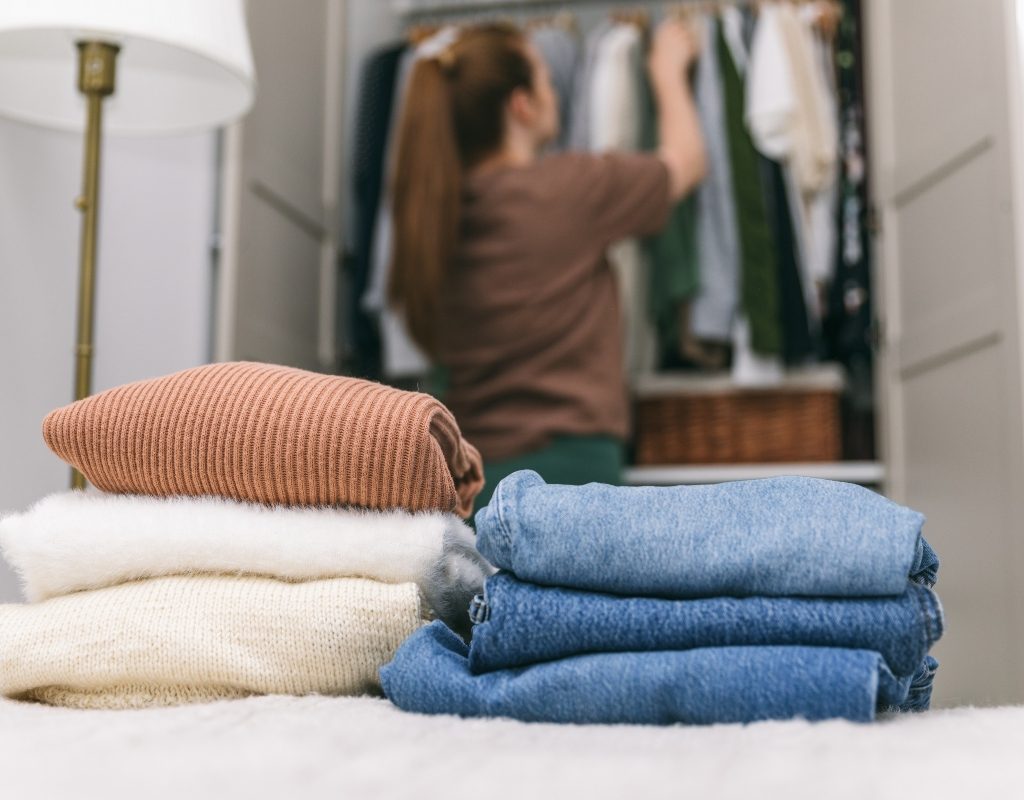
Some closets are so tiny that your storage solutions are limited. In these situations, it’s possible that shoe cubbies, dressers, and shelf extenders simply won’t fit. If this describes your closet, don’t worry. We’ve got some expert tips for maximizing even the smallest closets.
Tip #7: Use your luggage as storage
If your luggage is being stored inside your closet, whether on the shelf or on the floor, use the empty space inside of it. Store seldom-used purses, totes, and backpacks so you can use the rest of your closet space for the items you need more often.
Tip #8: Use closet corners
The corners of your closet often go unused simply because there’s nothing that can be stored there. If you install small corner shelves, however, you can use that space for shoes, accessories, or small bins.
Tip #9: Install hooks
Hooks are your best friend when you have a teeny-tiny closet. You can install them on the inside walls, on the inside of the door, or even on the outside of the door. Use them to hang purses, scarves, jackets, belts, or other bulky items that take up valuable closet space.
Tip #10: Separate your clothing by season
Another way you can make the most of a small closet is by storing clothing when it’s out of season. Take time to divide your clothes into summer and winter attire. Then, store clothes that you won’t need for the current season by putting them in vacuum-sealed bags or storage totes. These totes can be moved to the attic, basement, or storage unit until you’re ready to swap out your seasonal clothing. Each season, you’ll rotate your closet and pull out the opposite season’s clothes to fold and hang as usual. This is a solution for saving precious closet space without having to purge too much of your wardrobe.
Your closet contains everything you wear, which makes it valuable real estate in your home. Make the most of the space in your cramped closet by using all the space available. With these simple tips, you can take advantage of previously untouched space and create a closet that’s tidy, accessible, and filled to the brim.