
Cleaning the house is not usually an enjoyable process. Where some people find joy and peace in having a tidy home, others see nothing but frustration. Whatever the reason may be, some people just don’t like cleaning and, consequently, don’t do it as often as they should, leaving their spouse or roommate to pick up the slack. If you live with someone who never cleans, you know just how annoying this can be. But what can you do about it? Check out these creative house cleaning tips that will encourage everyone in your home to do their part.

Turn it into a party
How can you get someone who hates cleaning to do their share of the housekeeping? Take that tedious chore and turn it into something fun! Put on some upbeat music and throw a dance party while you sweep the floor. Or make a cocktail for yourself and your spouse or roommate and drink every time you cross something off your cleaning to-do list.
When you’re able to take your time and really enjoy yourself while cleaning, the whole process becomes more bearable. Remember that cleaning should be a continual process, not something you do the night before you have guests visiting. So set aside time for a weekly cleaning party; eventually, this fun tradition may become something that your housemates actually look forward to.
Multitask
People often procrastinate cleaning because they feel they don’t have enough time. You can combat this by encouraging your family member to multitask. If they’re walking to the kitchen from the living room, ask them to bring their dirty dishes with them. If they hate ironing, they can hang their shirts in the bathroom while they’re showering for an instant steam.
@emma__cox What should I hand him next???? #cleaningtiktok #cleaninghacks #husbandandwife #husbandhack #swiffer
This tip is perhaps best displayed by this humorous TikTok from @emma__cox. In the video she explains that her husband paces a lot while talking on the phone. She decides to make the most of this situation by handing him a Swiffer mop and sitting back while he does the rest.

Make it a competition
This is a fantastic idea for adults and children alike. If you want to encourage someone to clean, turn the chore into a competition! Changing how they view cleaning can make the task go by faster and make it more fun too. You can structure the competition in one of two ways: the winner completes a task the quickest or gets the most chores crossed off their to-do list.
The most important part is the prize. You could let the person who wins the competition choose where to order takeout, what movie to watch during movie night, or a fun activity to do together the following day. Get creative with what you offer the winner and choose something that the participants will actually want.
Keep cleaning products where you use them
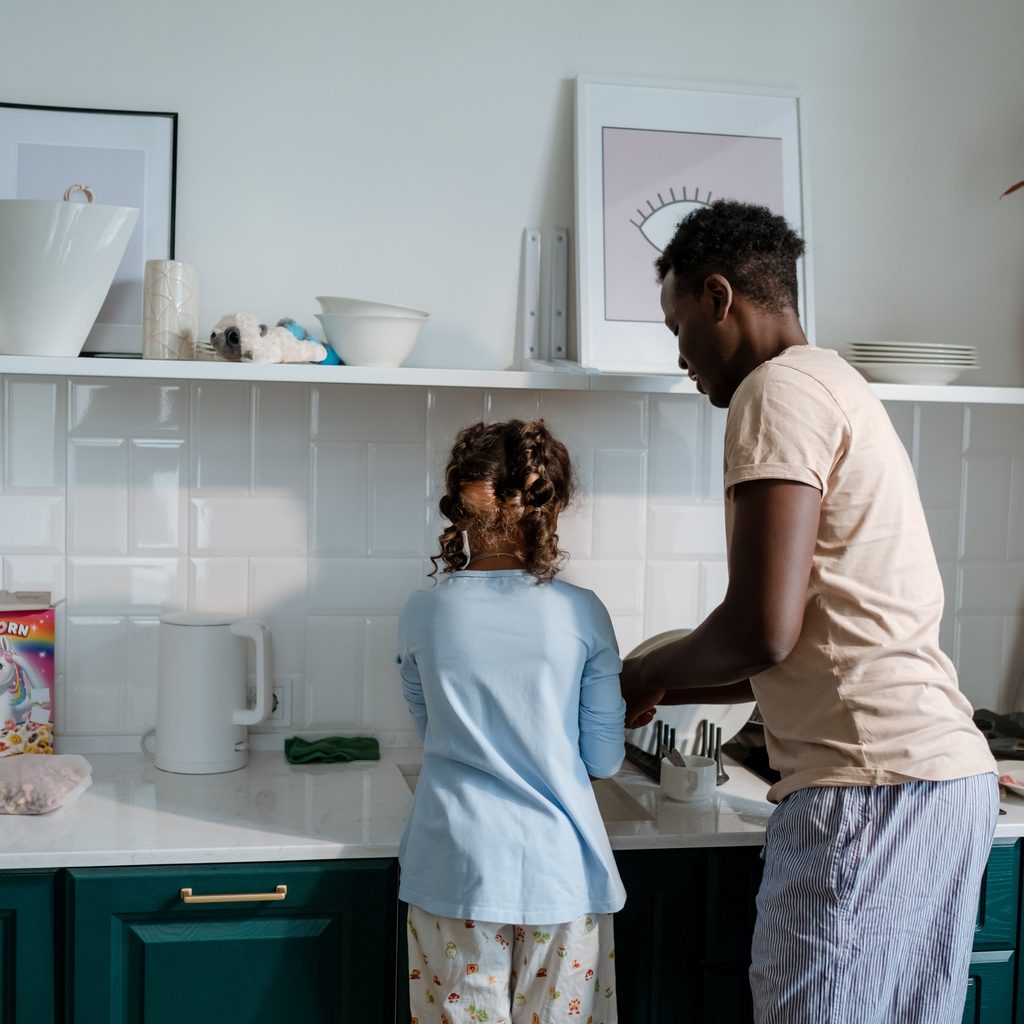
Instead of storing all of your cleaning supplies in one place, keep your tools in the room where you use them. Store your toilet bowl cleaner under the sink in your bathroom and your furniture polish in the living room. This way, there’s no excuse not to clean when you’re in the room.
@lifewithhopee honestly the best tip ever #showertok #bathroom #cleantok #cleaning #thatgirl #motivation #cleaninghacks #productivity #routine #tips #newyear #clean
This TikTok video from @lifewithhopee offers a helpful hack for cleaning your shower, simplifying the process so much that even lazy housemates can do it. Fill the handle of a scrub brush with dish soap and vinegar. She recommends that people keep the brush in the shower to use it to clean while they have a hair mask in.
Make cleaning as simple as possible
To make it easier for people who hate cleaning, try to make each task as simple as possible. Remind your family members that everything doesn’t need to be perfectly cleaned. You don’t need to dust behind the fridge every week; just tackle the visibly dusty areas to make cleaning less intimidating.
If a chore has multiple steps, break it down into simpler, easier-to-complete tasks. Doing this can make big, complicated projects a lot simpler and much less overwhelming for everyone. Instead of trying to clean the entire house in one day, decide which tasks need to be done and schedule a time to complete each of them.
Cleaning your home doesn’t have to be a chore. With these five cleaning hacks, you can get even your laziest family member to start enjoying cleaning (or at least complain less). The key is to make the process as fun and straightforward as possible. Turn cleaning night into a party or competition. Store your cleaning supplies where you use them, encourage multitasking, and simplify larger projects. In doing so, you can eliminate all the excuses and make cleaning the house a more enjoyable process for everyone.