With their earthy colors and wonderful textures, natural sisal rugs exude timeless beauty, versatility, and durability. Typically offered in an understated palette of neutrals, from sandy tans to rich browns, sisal carpet enhances design styles from traditional to modern.
Incredibly durable, sisal rugs can be a beautiful addition to your home, but you must clean them correctly to keep them looking beautiful for years to come. While these intricately textured rugs don’t show day-to-day dirt and dust, they aren’t ideal for every situation. Before purchasing a sisal rug for your home, make sure you have all the facts.
 What is sisal carpeting?
 What is sisal carpeting?
Both stylish and eco-friendly, sisal rugs are made from the natural plant fiber sisal, which comes from the cactus plant Agave. If you’re looking for a truly sustainable ‘green’ carpet, adding a sisal rug to your home makes perfect sense.
Of the three natural rug fibers—sisal, jute, and seagrass—sisal typically has a smaller textured weave and is softer on bare feet. Its resilient nature makes it perfect for high-traffic areas of your home.
Although beautiful and durable, the cleaning of natural fiber rugs, including sisal, can be challenging. In certain rooms and/or scenarios, you should avoid having a sisal carpet altogether:
- Because natural fiber rugs can be rough on tender skin, it’s best to avoid them if you have small children in your home.
- Sisal rugs and pets don’t mix well, particularly with cats who will use the carpeting as a stand-in scratching post.
- Not a big fan of cleaning? With sisal rugs, it’s all about upkeep (and they also tend to shed when they’re new).
- Using the room to watch television or play games on the floor? The rough feel of sisal may not be to your liking.
- Love red wine and tomato sauce? Not near your sisal rug! Once it stains, it’s extremely difficult to clean.
- Have a lot of houseplants? Avoid sisal carpeting as overflowing water will stain it.
- Most importantly, despite being made from a natural fiber, sisal is extremely absorbent and will hold onto liquids, making it prone to mold and mildew if the rug doesn’t dry completely. Bottom line: don’t use sisal carpeting outdoors.
Cleaning sisal rugs
 Cleaning sisal rugs
In general, sisal is easy to maintain if you follow a few basic rules. While sisal responds well to vacuuming, it is important to avoid getting your sisal carpeting or rug wet. Water and other liquids may result in warping and discoloration.
General cleaning
- Shake. For large amounts of dirt or debris, take the rug outside or in the garage and shake vigorously to remove excess dirt.
- Beat. To remove finer dirt and ordinary dust, hang the rug in an open area outdoors and use a rug beater to beat the dust out, working from top to bottom.
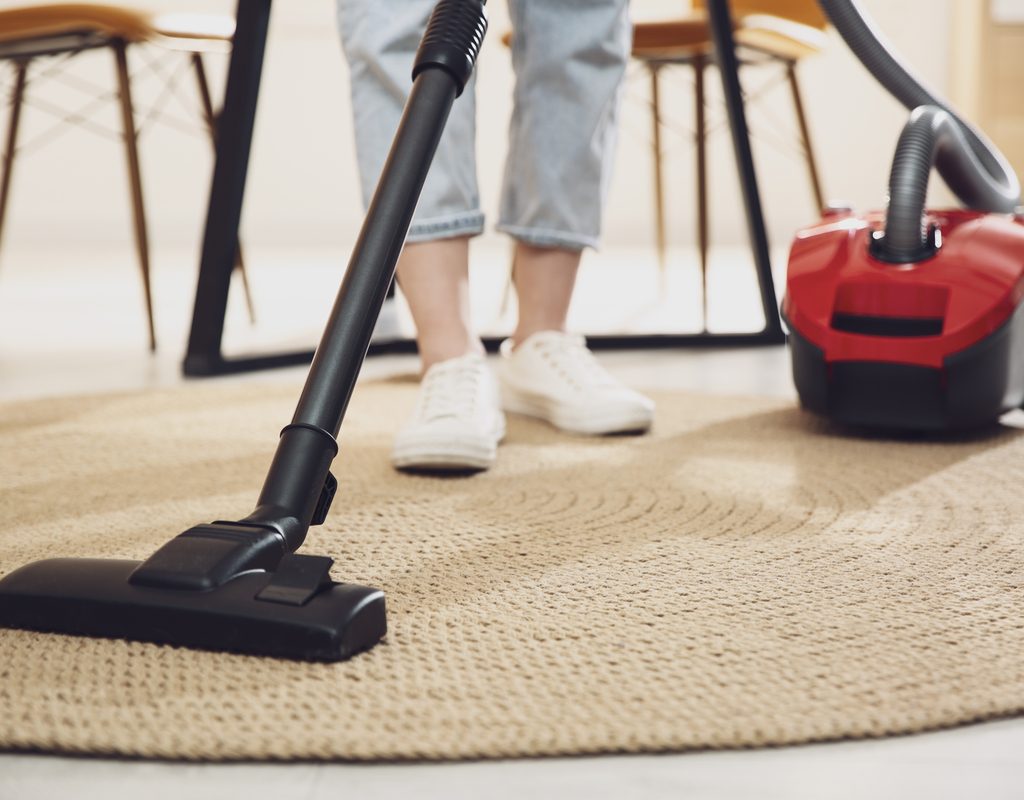
- Vacuum. Vacuum your sisal rug every week, even if you don’t see any dirt. Consistent vacuuming will help prevent messy buildup. Using the suction-only setting of your vacuum, go with the grain of the rug to remove deep-set dirt and particles. Using the beater bar will cause undue wear and tear to the rug’s fibers.
Spot cleaning
- Blot. As we’ve previously stated, moisture is very bad for sisal and can lead to warping and browning of the fibers. Blot any spill or stain with a dry, clean towel as soon as possible and avoid rubbing since that will spread the moisture more.
- Treat. See a stain happen? Treat it quickly! Use a brush or sponge to apply a small amount of a mild fabric detergent or liquid dish soap directly to the spot. Immediately blot with warm water and a clean, dry cloth. Continue blotting with water until any sudsing has stopped.
- Dry. Don’t allow moisture to ruin your sisal rug! As soon as the stain is removed, use the low-heat setting on your hairdryer to help dry the rug faster and avoid warping or water-marking stains.
- Protect. The best offense is a good defense. Using a fabric protectant made just for sisal can make it less likely for wet spills to stain the surface of your valuable rug.
Although it may seem that sisal carpets are a bit temperamental to care for, their understated beauty and ability to enhance a room have made them a popular choice for homeowners and decorators alike. With care—and by avoiding water—your sisal carpet can be one of the focal points of your room for decades to come.