Gardening is beneficial for families, as it relieves stress and therefore boosts mental health, allows everyone to connect with nature, encourages bonding, and nurtures patience and responsibility. It is relaxing, somewhat physical, and produces beautiful flowers or edible vegetables for you and your family. If you are a seasoned gardener, you are undoubtedly aware of the tools needed to be a successful home gardener. If you are just starting out, you may be overwhelmed by the number of various gardening tools on the market. Don’t worry, though. We have broken it down to the five absolute necessities that you need to have a bountiful garden.
If you’ve decided to start a garden but don’t know how or have the tools, don’t let that stop you. You don’t have to spend hundreds of dollars at the gardening store to have a successful garden. With a handful of key tools, you can start a garden and produce whatever kinds of plants you want (depending on location.)
Must-Have Tools
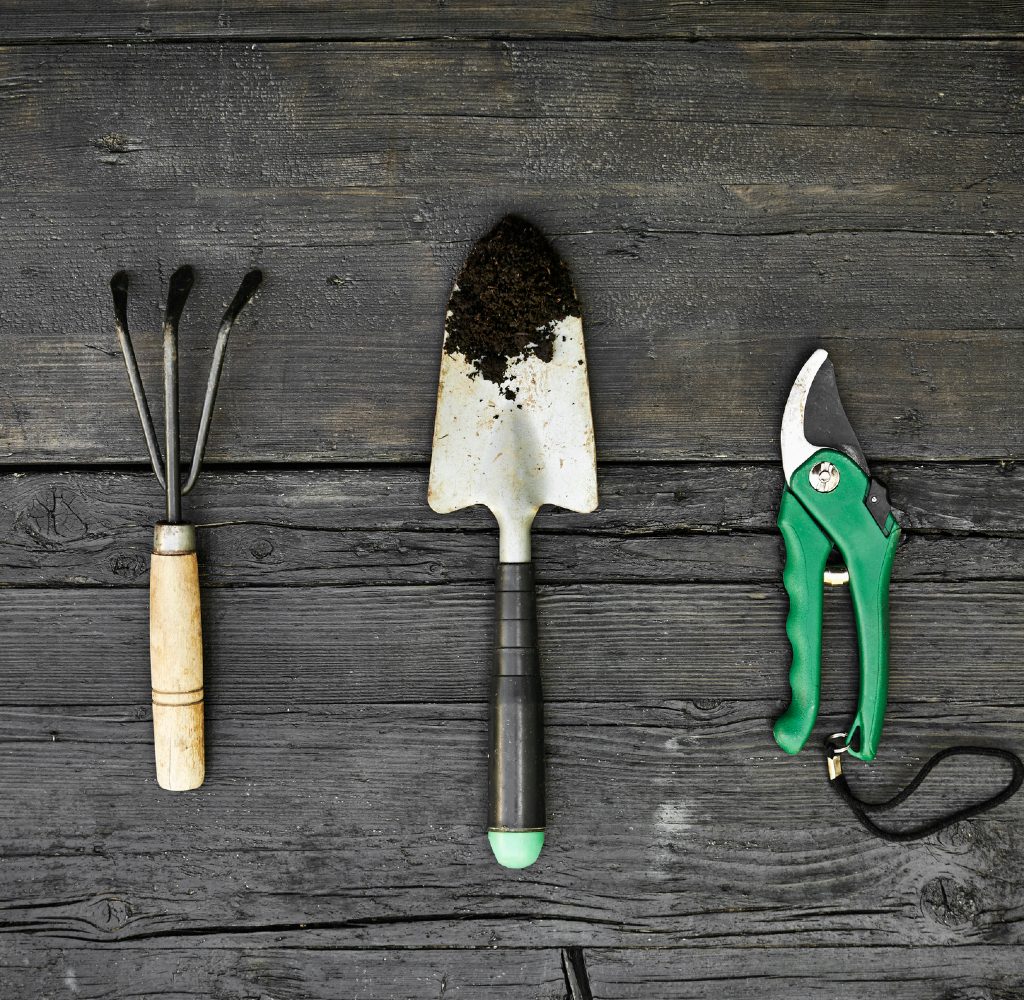
There are five gardening items that are absolutely necessary for a beginner gardener; a trowel, pruning shears, garden hose or watering can, garden rake, and angled shovel. A trowel is needed for several everyday gardening tasks such as breaking up clumps of soil, digging small holes, digging up weeds, and transplanting seedlings. Make sure the one you buy has a wooden handle and a sturdy metal blade. Pruning shears are used for harvesting fresh produce and cutting back bushes. Small branches (less than two inches in diameter) can be trimmed with these handheld shears. Anything larger than two inches will require a bigger set of branch shears.
A hose and/or watering can is needed for keeping your plants hydrated. Be sure to get a hose that reaches from your outdoor faucet all the way to the garden and consider adding a spraying attachment so you can control the flow of water. Use a watering can to get to plants you can’t reach or if you’re just container gardening. A good tip is to water early in the morning because temperatures are lowest at this time of day. Also, avoid evening watering because it can make the soil too wet and create a perfect environment for bacterial to breed.
A garden rake is a metal rake with uniform tines that allows you to create a level soil surface while also removing weeds. An angled shovel will be useful for digging holes, moving soil, and relocating plants. The angled shovel head is helpful when completing all of these tasks.
Tools to Make Gardening Easier
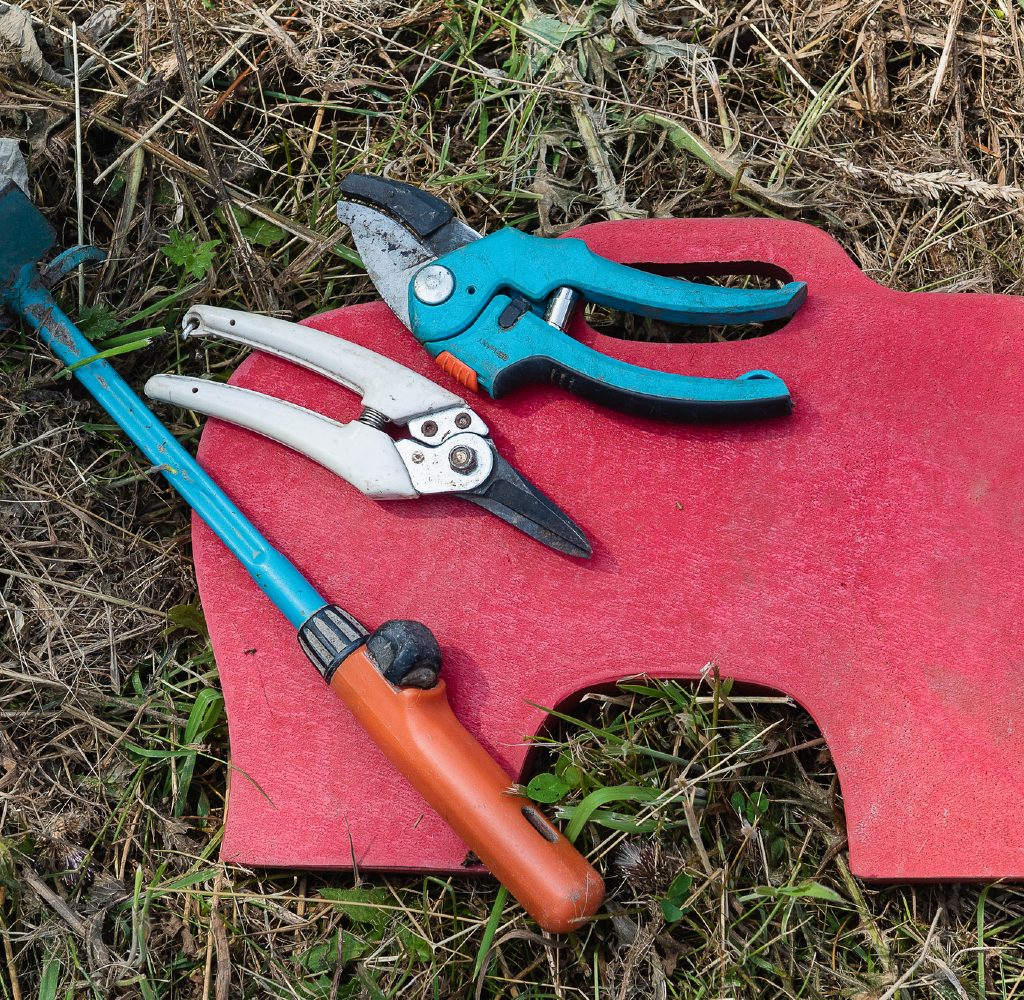
Some other garden tools are not absolutely necessary but will make your gardening life more comfortable. A garden hoe comes in handy when the soil you are working with is full of clumps and weeds that the garden rake won’t get through. Use the hoe to cultivate tough and overgrown land since it will help you chop and remove tough areas. Garden gloves are not required but certainly protect your hands while digging in the dirt. They keep your hands clean and protect them from cuts while working. Look for gloves that are water-resistant and have cinched wrist areas to keep soil out.
A kneeling pad will save you knees while spending time out in the garden. They are soft enough to protect your knees and small enough to move around with you. The pad will also keep your pants (or bare knees) from being dirty all the time. A sprinkler will help with watering when you don’t have the time to stand outside with the hose. You can set the sprinkler up and let it go for 20 minutes or so and then move it to the next area that needs watering.
Tips for Buying Garden Tools
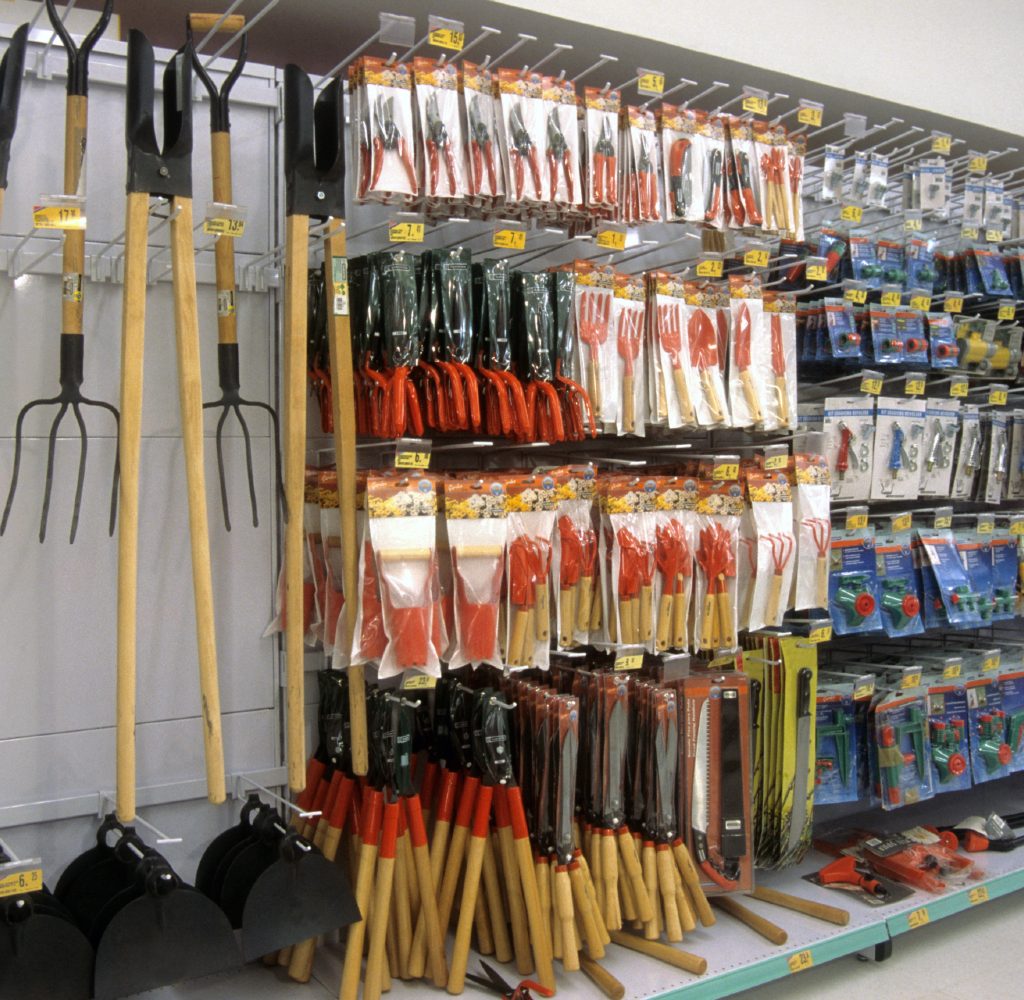
Obviously, you cannot start digging holes or raking soil in the isles of your local hardware store’s garden section. But you can take the time to handle the tools you are thinking about purchasing. It’s an excellent idea to mimic the actions you will be performing with the tools so you can see if they feel too heavy, or if the handle is too long, or if the instrument is too big, etc. Specific tools are designed to be easier on your hands or back. For example, D-shape handles on short-shafted tools like shovels and digging forks are easier on the wrists.
It is a good idea to choose tools with wood or coated-metal handles because they are strong, but not too heavy. Wood such as Ash and hickory are the most durable, while Douglas fir is a cheaper and less sturdy type of wood. Also, avoid painted handles; the paint will just wear off and is often used to disguise low-quality wood. As a general rule, the closer and tighter the grain, the more durable the wood.
Tips for Storing Garden Tools
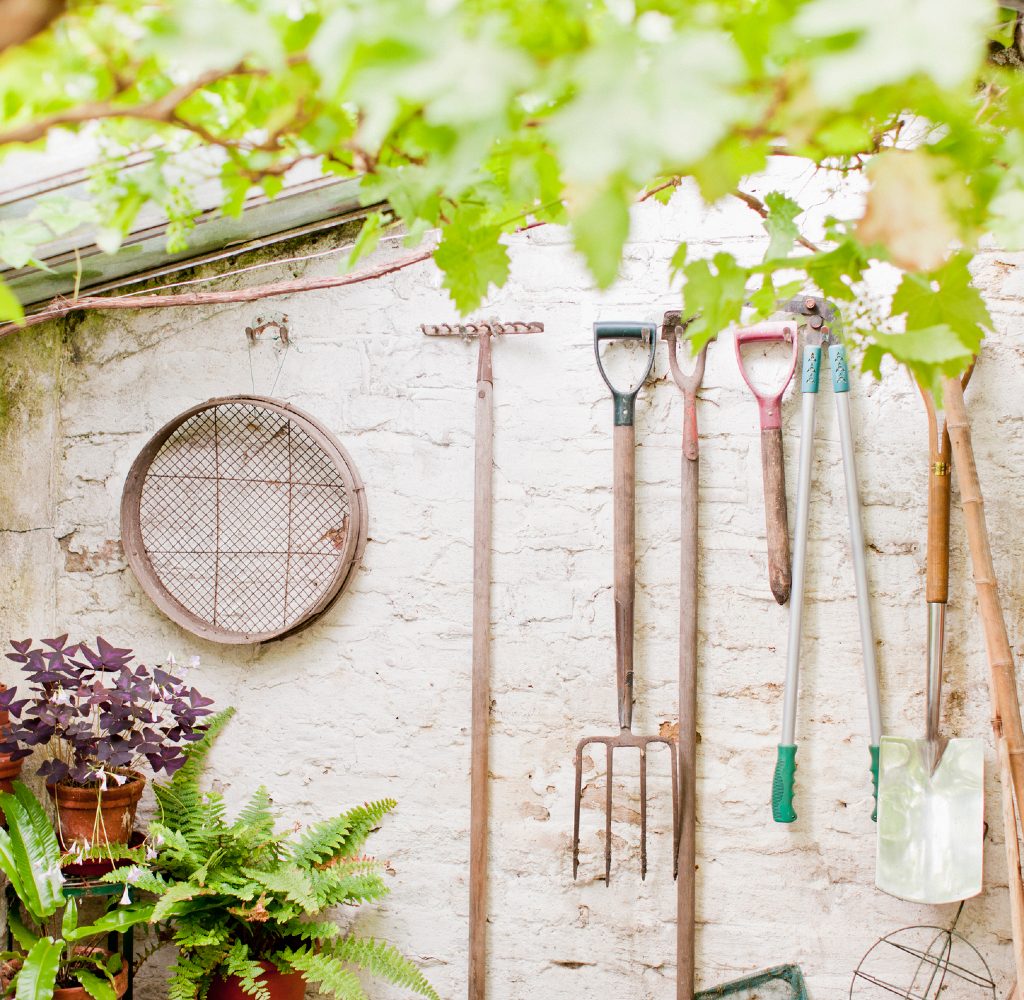
Storing your garden tools properly will help them last longer and help you stay organized. Hang long-handled tools on a peg rack to protect the edges from dulling. Short-handled tools can be stored in a garden bag, which is convenient since you can carry it wherever you need it. If you have a shed, storing your garden tools will be a no-brainer. If you don’t have a shed, create a garden box for extra soil, pots, and utensils so you can easily find the items you need. You can purchase a plastic tub at a hardware store or DIY a wooden box and keep it in your garage. You could also build a garden bench that acts as a work surface and storage area.
In the meantime, take a look at our list of the best hose hangers, to keep your space free from tangled messes.