
Who’s never dreamed of having a trampoline in their backyard? If you own property, you can finally make that dream a reality for your kids. But there’s one fundamental question: Should you choose an above-ground trampoline or splurge on a built-in trampoline? Though the two have many similarities, they have a few major differences that could make or break your decision. Built-in, in particular, can be an excellent way to combine fun and style in your yard. Keep reading to learn about the basics of built-in trampolines, their pros and cons, the installation process, and more.

Built-in trampolines vs. above-ground trampolines
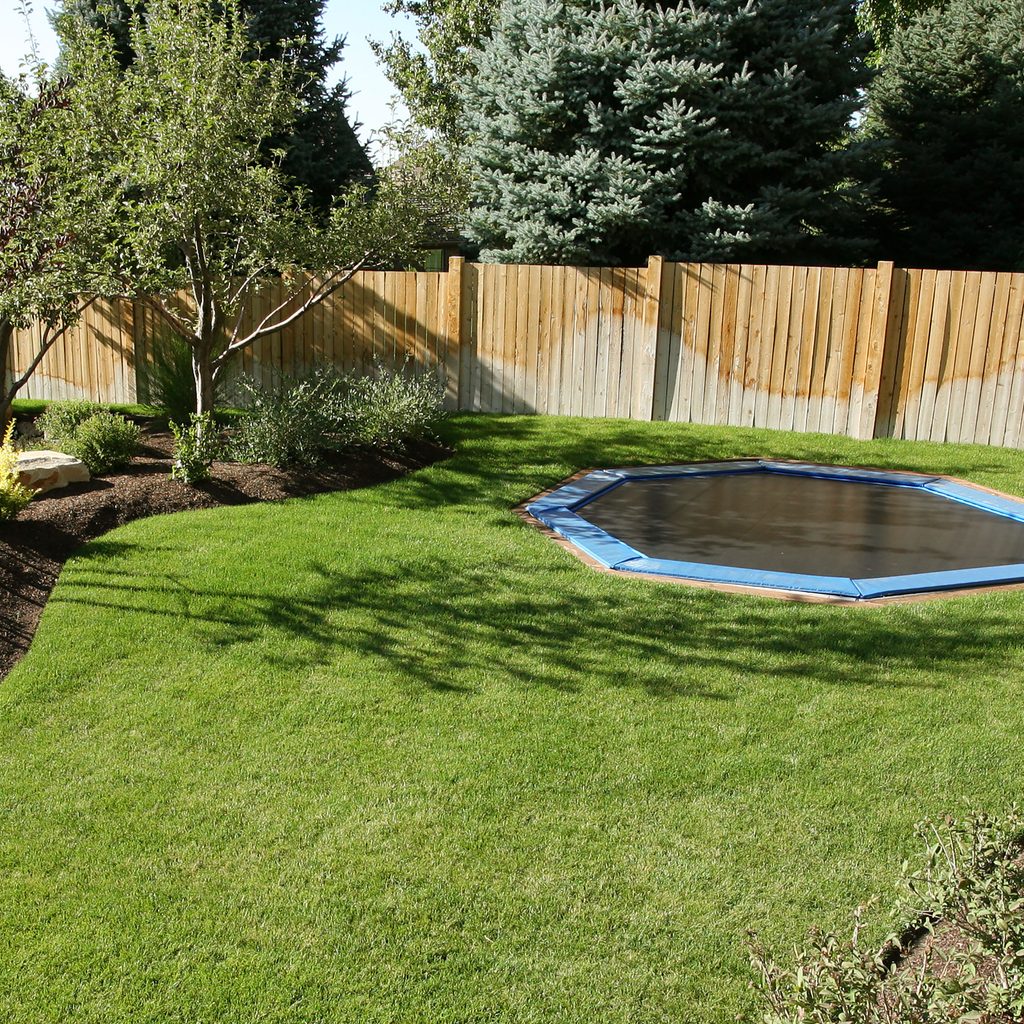
Before we can look at the basics of built-in trampolines, it’s essential to know how they compare with other trampolines. There are two main types of backyard trampolines: built-in and above-ground. The main difference between the two is their positioning. Built-in trampolines are installed below the ground, so the trampoline’s surface is level with the lawn. These tramps can be concealed when not in use. Above-ground trampolines sit on top of the ground and are typically what people think of when they imagine a backyard trampoline. While they are harder to hide in your yard, you can easily move them if needed.
Built-in trampoline pros and cons
Built-in trampoline advantages
- More aesthetically pleasing: This is the biggest draw of built-in trampolines; they look much more stylish than above-ground options and can blend beautifully with your landscaping.
- Easy to access: Since they’re level with the ground, built-in trampolines are easier to get on and off, especially for small children.
- Safer: Built-in trampolines can be safer than other types because they’re anchored to the ground and cannot tip over. There are additional features that you can add to make them even safer.
Built-in trampoline disadvantages
- Expensive: The biggest con of built-in trampolines is that they’re more expensive than above-ground options, mostly because of the extensive installation process. To install one of these trampolines, you’ll need to dig a large hole, build a retaining wall, and ensure the space has proper drainage and airflow.
- Immovable: If you move to a new home or renovate your yard, taking your built-in trampoline with you will be a significant challenge.
- May not be as bouncy: If the trampoline doesn’t have proper ventilation, it will not feel as comfortable or bouncy as an above-ground trampoline.
How are inground trampolines installed?
Installing a built-in trampoline is a much more intensive project than assembling an above-ground trampoline.
First, you’ll need to find a trampoline brand. You could place a normal trampoline in the ground, but it’s best to use one with a galvanized steel frame that won’t rust.
Next, you’ll need to dig a hole in your yard large enough to accommodate the trampoline you’ve purchased. Before digging, call 811 to check for utility lines in the area. This information will let you know where it’s safe to install the trampoline. You should also learn what type of soil is in your yard, as certain soil types require different prep. If there’s a high water table you may also need to add drainage. Then, decide whether you want to hire a professional or tackle the project on your own.
Regardless of who’s completing the work, the steps are the same.
- After digging the hole, you’ll need to add drainage to prevent water from collecting in the pit.
- Then, you’ll need to build a retaining wall.
- Once the hole is all set, you can assemble the trampoline, place it in the hole, and add the finishing touches.

Built-in trampoline FAQs
How much does a built-in trampoline cost?
Adding a built-in trampoline to your backyard can be a costly process. Costs can vary depending on the size of the trampoline and the extent of the project, but you can expect it to cost a few thousand dollars. You can save some money by digging the pit yourself and placing an above-ground trampoline in it. This is only a suitable plan if you have DIY experience. If you’re not handy, trying to complete this project on your own could end up costing you more in the long run.
Are built-in trampolines safer?
Built-in trampolines are generally safer than above-ground ones. They can’t tip over and are easier to climb on and off. And if someone does tumble off the trampoline, it’s a shorter distance to fall and will likely cause less injury. You can also add a net around the trampoline perimeter for extra safety.
How deep do you have to dig for an in-ground trampoline?
The depth of the hole will depend on the size and shape of the trampoline. For smaller trampolines, a 30-ft pit is suitable. With a larger 14-ft diameter trampoline, you may need a hole of up to 36 feet deep.
A trampoline can be a fun addition to any backyard. Both built-in and above-ground trampolines can provide hours of entertainment and physical activity for kids of all ages. Built-in trampolines look better and are safer than other backyard tramps. The biggest drawbacks, however, are the cost and extensive installation process. But if you’re looking for a stylish backyard feature that your kids will love, a built-in trampoline is well worth the extra money.