Want to know an easy way to boost productivity in your home office? The answer may be as simple as making sure the lighting you have is working for you. Studies show that poor lighting can cause eyestrain, headaches, and even drain your energy. Taking stock and ensuring that the sources currently in use are optimal will make your office a nice place to spend time in, and it will be better for your overall health in the long run too.
Access your space
The first step in rethinking your home office lighting is to look at the space and determine what you have to work with. There is no substitute for good natural light, so you will want to pay attention to how much your office gets. If you are fortunate enough to have windows that let in sunlight, count yourself lucky.
Pay attention to where the light is coming from and what direction it shines. A light or sun from a window set behind you will create a glare on screens. In general, it is best to position your desk so that windows are in front or to the side of you. Light-diffusing window shades should be used at times that sunlight is too intense. This will still allow you to benefit from the natural light but ensure it is not overwhelming. It is also important to think about whether you are primarily using the room during the day or night after the sun goes down. If you work late into the night, then that should be a factor in your plan.
Since many offices are in basements, spare bedrooms, or even in a tiny portion of another space, the conditions are not always optimal. If your room is windowless or dark, you will need to make sure to compensate for it. Remember, this is not a cozy bedroom or a living room where you will curl up to watch television. You want to infuse your office with energy and life so that while you are there, you can be your most awake and energetic. This may mean adding multiple lights to make the space feel brighter.
Rethink the standard
It is important to remember that an office requires a unique lighting plan. What suffices in other parts of the home may not be enough in a work environment. For example, many homes today feature recessed lighting, which may be ideal in a living or family room, but an office needs multiple sources. Even if you have those lights on, you still want to create a more custom lighting environment that will serve you better.

The main source
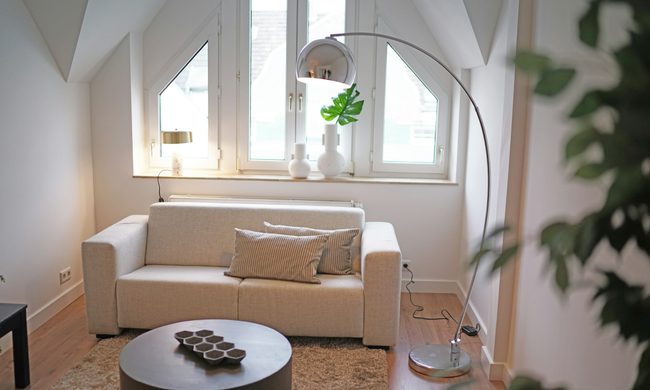
For the overall lighting of the space, indirect is better. What does that mean? Many old offices are lit with glaring overhead lighting that is harsh and creates glares and shadows. Instead, lights with lampshades such as a table or floor lamps will bring a softer, diffused brightness that creates a pleasing atmosphere. The goal is to illuminate the space without shadows and contrast.
If your home office is a tight space or just a part of a bigger one, a hanging pendant light with a shade may be your best bet. This frees up real estate on your desk and still gives you indirect light.
Task lighting
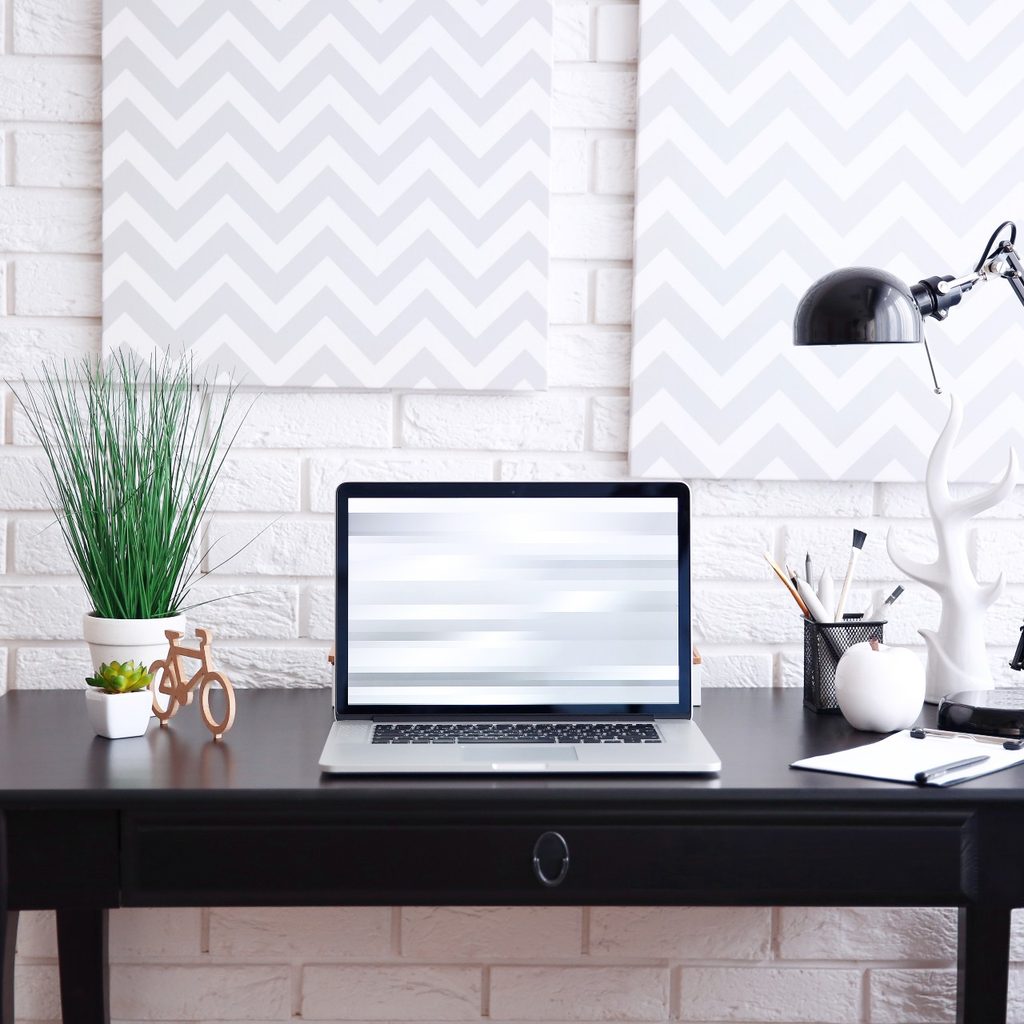
When doing focused tasks such as paperwork, computer work, or reading, it is best to use a specific light dedicated to it. These lights often come with adjustable arms allowing you to focus it exactly where you need it. If your office has multiple workstations be sure to designate a task light for each one.
Accent lighting
Now that you have your main lighting and task lighting sorted out, you may want to add some style. Sconces add interest and can be used to highlight a certain wall or architectural detail. Picture lights can illuminate artwork that is meaningful to you.
As we spend more and more hours in our home offices, it is vital to take the time to personalize the space, so it functions optimally. Lighting is one of the easiest and best ways to revitalize your office and make working a more pleasant experience.