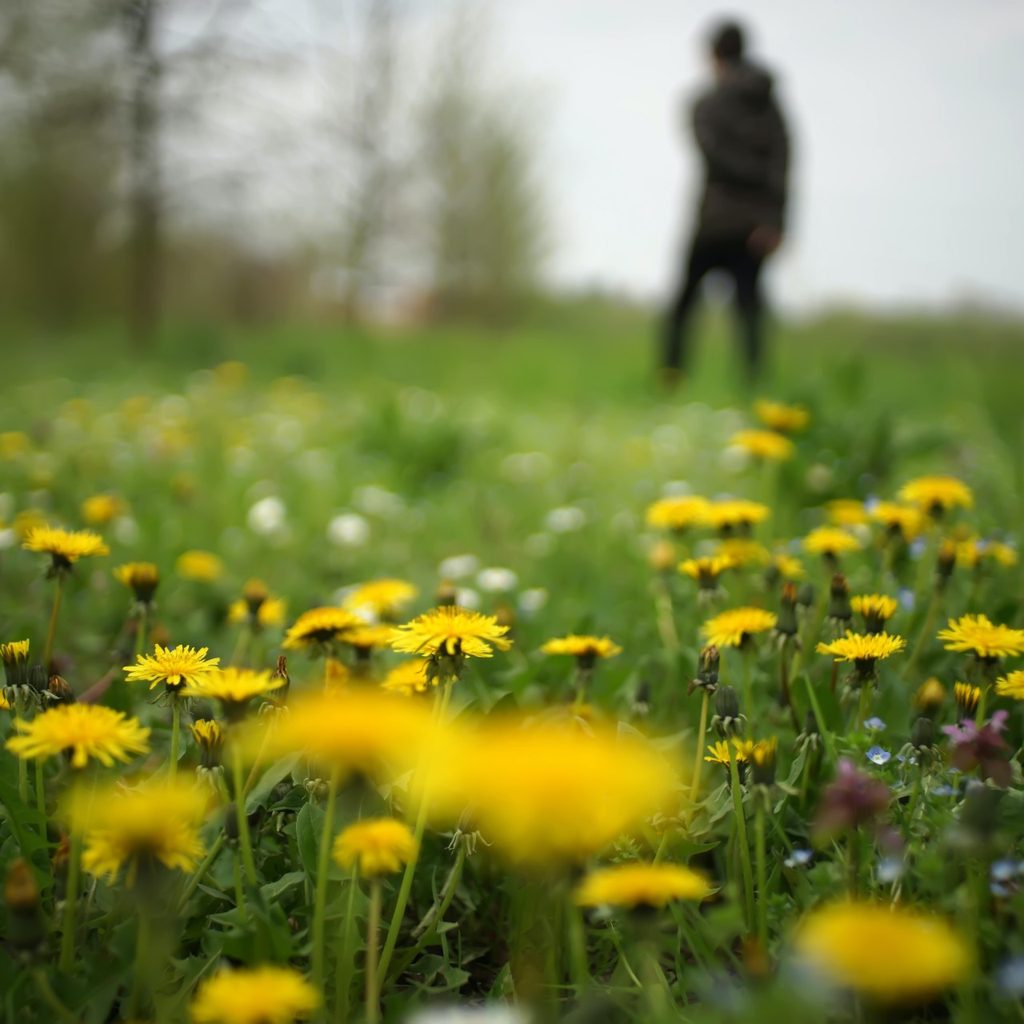
Children of all ages admire dandelions for their bright yellow hues and their fuzzy seed heads just waiting for wishes to blow them away. To many others, these unique flowering plants are extremely annoying as they love to pop up everywhere. These pesky plants don’t shy away from invading space and pushing out other plants and grass to steal their nutrients and water.
Thankfully, there’s a solution to the problem. Herbicides can be an effective method for ridding your lawn of these irritating plants. Of course, there’s no better solution than getting on your hands and knees and just digging them up! Either method you choose must be done at least once a year.

How to control a dandelion invasion
Say goodbye to these stubborn weeds. Remove them in an efficient way without hurting the grass that surrounds them.
Use selective broadleaf herbicide — Using an herbicide removes these intrusive flowers by targeting the weed itself rather than the grass that surrounds it, says Bob Vila. When using a sprayer, make sure to hold the nozzle close to the ground when applying. Available in liquid or granules, herbicides shouldn’t be used in windy conditions to avoid droplets from becoming airborne. This treatment is also effective on dandelions that haven’t developed their flowers yet.
Start digging — Although getting on your knees and digging out these invasive flowering weeds by hand is the most time-consuming and exhausting, it’s actually the most effective method for dandelion control. The best time to do battle with dandelions is during the spring. The earlier in the season you can get a handle on them, the better. There are also several tools available that can help you remove these plants a little easier.
Remember to try and remove the entire taproot of the dandelion when you’re pulling; otherwise, it will just grow right back, says The Spruce. Taproots can run deep and be difficult to remove, so you may want to attempt this when the soil is wet — either wait until after it rains or wet it yourself with a garden hose. Once the weed is completely pulled out, spray some selective broadleaf herbicide in the hole.
How healthy is your lawn? — Another important thing to consider is the health of your grass. A healthy lawn means it’s less susceptible to a dandelion invasion. Do not over water your lawn so the grass will develop a deep root system. Also, make sure you fertilize as appropriate for your climate and the type of grass you have. Last but not least, be careful not to cut your grass too short. Grass should not be cut more than one-third of the length of the grass blades.
Dandelions are bothersome and can be a struggle to eliminate effectively. How do you kill dandelions and not your grass? Hopefully, these tips will get you started on your way to a beautiful, weed-free lawn.