Growing indoor plants in any form, whether it’s tiny plants, edible herbs, or huge tree-like greenery, can be such a rewarding experience. It’s particularly great when your houseplants are low maintenance and you can just enjoy their beauty without too much work. Zamioculcas zamiifolia plants, or ZZ plants, are some of the most easygoing and resilient houseplants out there, and we’re going to talk about how to care for these beauties.
How to care for your ZZ plant
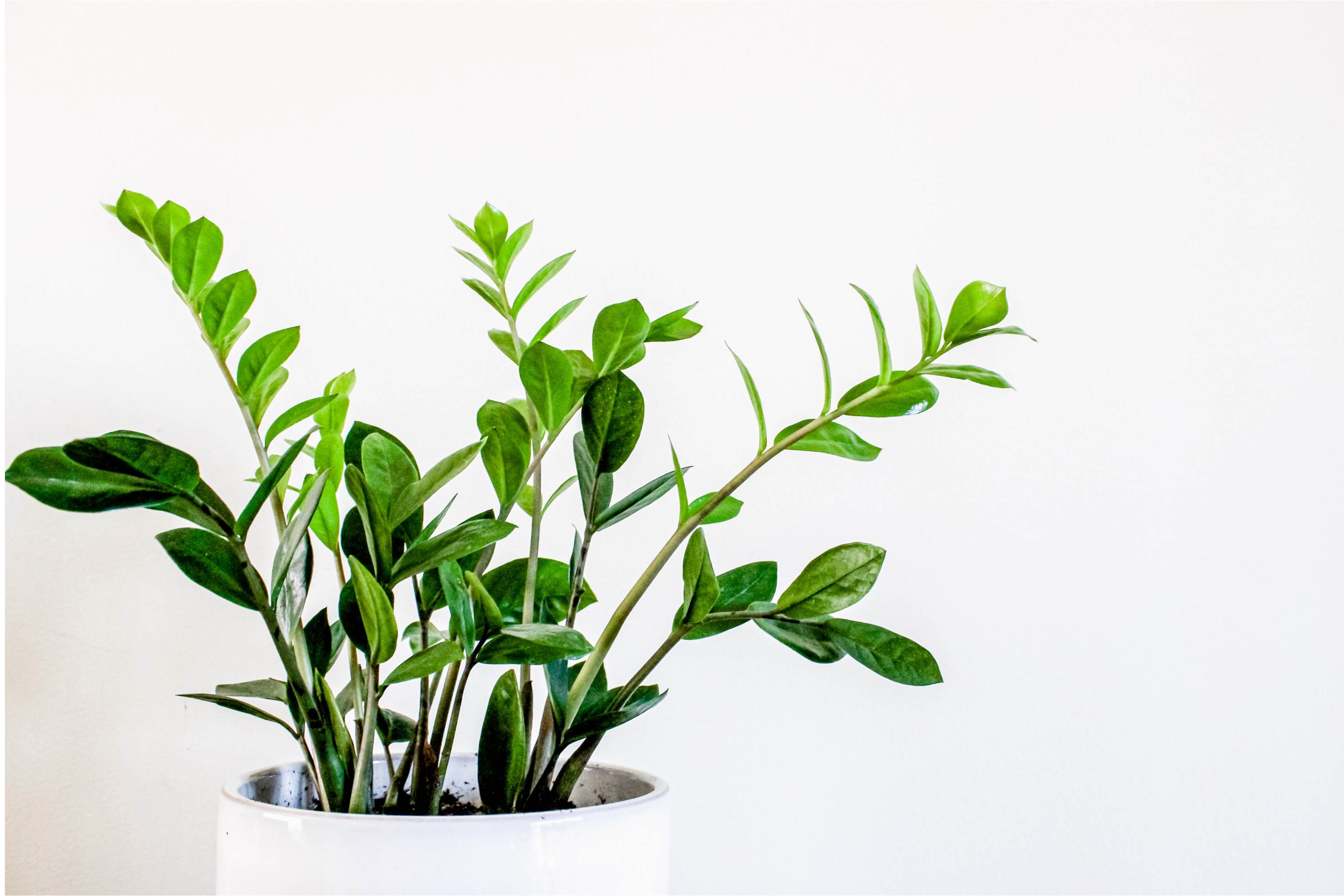
Even though ZZ plants have easy care demands, they can still become damaged or wilted if they are severely neglected. When cared for properly, these striking houseplants can live long lives and maintain those signature emerald leaves plant parents love so much. When a ZZ plant is healthy, it’s often mistaken for an artificial plant due to the perfect, shiny appearance of its oval-shaped leaves. Here are some tips for caring for your ZZ plant to keep it at its peak health.
Does a ZZ plant need sunlight?
A tropical plant native to Eastern Africa, the ZZ plant does thrive in bright light conditions, but it is resilient enough to survive low light as well. One thing that the ZZ plant does not tolerate is long periods of direct sunlight. It’s best to keep your ZZ plant in a room with lots of natural light but not near a window that lets in long hours of the sun’s rays.
How often to water your ZZ plant
ZZ plants are incredibly drought-resistant, which is why forgetful plant parents love them so much. You can forget to water this plant for up to a couple of months without harming it too much, especially if it’s living in lower light conditions. ZZ plants also like to dry out completely between watering sessions, which shouldn’t be more than once every couple of weeks, depending on the conditions in your home. For successful watering:
- Be sure to use a pot and potting soil that has good drainage.
- Check that the soil is completely dry before you water.
- Soak the soil thoroughly until water pours out of the drainage holes.
Do ZZ plants like heat?
Since it’s a tropical plant, the ZZ plant does enjoy warm, humid conditions. However, it is happy in the normal temperature and humidity levels of the average home. That’s the great thing about ZZ plants — they have their preferences, but they’ll survive fine in conditions that aren’t ideal.
Common problems with Zamioculcas zamiifolia plants
While resilient, ZZ plants aren’t necessarily indestructible. Infrequent care and poor conditions may not kill your ZZ plant immediately, but keep an eye out for these common problems and their causes in order to keep your plant thriving.
Yellow, mushy leaves
If you notice that your ZZ plant’s leaves are turning yellow, brown, or if the leaves or stems are starting to get mushy, your plant is getting too much water. Since it requires such infrequent watering, overwatering is a common mistake made with this plant. Pull back on your watering frequency and see if the plant recovers. If it doesn’t, there may be some root rot that needs to be addressed:
- Carefully pull the plant’s root ball out of the pot.
- Examine roots for any mushy, slimy sections and cut them out.
- Repot the plant and refrain from watering until the soil is completely dried out.
Wilting or dry leaves
When your ZZ plant’s leaves start to get wrinkled, wilted, and dry, this is a surefire sign that it’s not getting enough water. Give your plant a good soak, and cut away any dead leaves so the plant can focus its energy on new growth.
Scorched leaves
Direct sunlight has an adverse effect on ZZ plants. It scorches the leaves when the plant is in the sun’s rays too long. Scorched leaves have a yellowish-brown appearance but don’t show immediate signs of wilting. If your plant’s leaves are showing signs of scorching, move the plant to a location that doesn’t get as much sunlight.
Drooping stalks
ZZ plants typically grow straight up, which is why they are so visually striking. If the stalks start to droop downwards, finding the source of the problem can be tricky. Overwatering or underwatering can be the culprit sometimes, but those issues will first present in discoloring or drying of the plant’s leaves.
The biggest cause of drooping stalks is insufficient light. If the plant is not getting enough sunlight, the existing stalks or even new growth could start to lean away in search of the rays it needs.
Slow growth
While ZZ plants are naturally slow-growing, if you don’t see any new growth or height in your plant for several months, your plant is likely not getting sufficient light. Try moving it to a brighter location with more natural light to see if you can prompt some growth.
While the ZZ plant isn’t completely indestructible, there aren’t many houseplants that are as easy to care for as a ZZ. The plant does have some common issues that are most often due to severe neglect or improper care, but it’s resilient enough that even the most inexperienced plant parents will probably successfully cultivate it. With our care guide, your ZZ plant will be healthy and happy for years to come.