Modern homeowners expect their living spaces to be both beautiful and functional. However, keeping hard floors clean sounds much simpler than it actually is when daily life gets in the way. Between work, family, and everything else, crumbs gather beneath the dining table, pet hair drifts into corners, muddy shoes track across the room, and sticky spills make a quick sweep feel like only half the job.
Tackling these messes traditionally forces busy people to juggle multiple tools. You might vacuum first to pick up loose dirt and then follow up with a mop to handle whatever remains. New-generation cleaning appliances attempt to make this routine easier by adding power and automation. Unfortunately, they also introduce a new set of frustrations that drain more of your limited time.
For instance, vacuum-powered cleaners can be susceptible to clogging. Their heavy-duty motors generate considerable noise and require energy to operate. Worse yet, dry debris and dirty water often mix together inside the machine. This turns emptying the tank into a unpleasant chore. Add in filters, rollers, and dust bags that require attention, and maintaining the appliance itself can create more work.
HIZERO approaches these familiar problems from an entirely new angle. Rather than asking how to maximize suction, the company is questioning whether hard floors actually need suction in the first place.
Rethinking the best way to clean hard floors
Most traditional cleaning methods attempt to solve daily messes by simply adding more power. Conventional cleaning has long relied on powerful motors and suction to pull scattered crumbs and tracked-in dirt off the floor. However, a normal afternoon in a modern household rarely leaves just one type of mess behind. You often find dry dust, sticky spills, and pet hair all competing for your attention at the exact same time.
Many wet and dry cleaners still depend heavily on that old-fashioned vacuum technology to do the heavy lifting. And HIZERO believes there is another way to manage these daily cleaning challenges without relying on conventional vacuuming systems.
At the heart of this new approach is No Suction Technology. HIZERO pairs this innovation with a proprietary bionic polymer roller specifically designed to gather both dry and wet debris directly from hard surfaces. Simply put, the roller physically sweeps up whatever is on the floor rather than relying on a loud vacuum motor to pull it in.
Changing how dirt is collected is only the first step. What happens to everything the cleaner collects matters just as much, particularly when maintenance becomes another job of its own. Instead of mixing everything into an unpleasant sludge, the system collects and separates solid debris from dirty liquid as it cleans. Without conventional suction, the system is designed to avoid suction-related clogging and dust blowback while reducing the motor noise typically associated with vacuum cleaning.
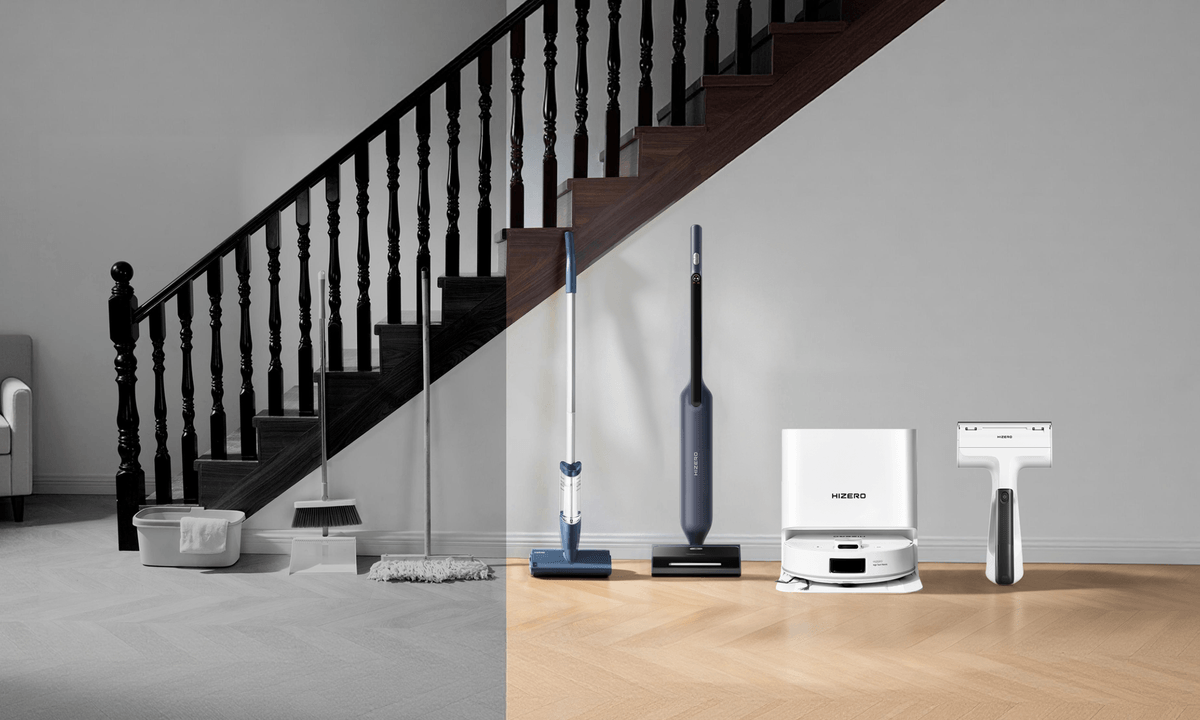
For the person actually doing the chores, the benefit is easy to see. You can handle different types of everyday dirt through the same cleaning process. HIZERO is now applying this core philosophy across its lineup. This includes a manual cleaner designed for quick daily jobs and an autonomous robot built to take the hard work right off your hands.
EAZY by HIZERO keeps everyday cleanup simple
The best cleaning tool is often the one that is ready whenever the floor needs attention. A quick cleanup can become unnecessarily complicated when it means dragging out a heavy appliance, finding a power outlet, or filling cumbersome buckets for a job that should only take a few minutes.
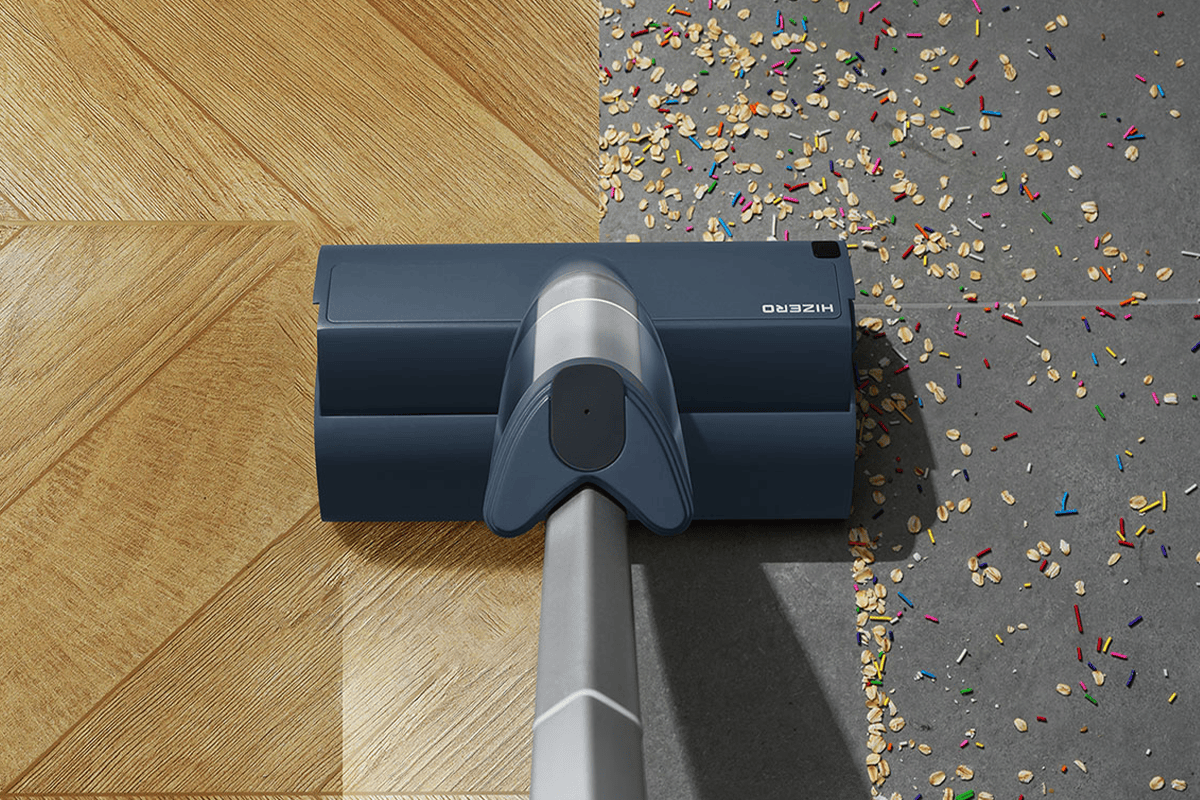
The HIZERO EAZY M101 Bionic Mop strips away some of those extra steps. Because it relies entirely on a manual design, you do not have to think about charging batteries or dealing with noisy motors when you are giving the floors a quick once-over before guests arrive. A single push-and-pull motion sweeps, mops, washes, and wipes all at once without needing a bucket or specialized cleaning solution.
This all-in-one approach is perfect for floors covered in mixed debris. A simple trigger releases fresh water to continuously wash the roller as you move, while the automatic waste separation makes disposal completely painless. Afterward, you simply rinse the mop under running water.
Beyond saving time, the motorless design also offers flexibility in where and when you can use it. You can clean quietly without the operating noise of a motor or take the mop outdoors where access to power may be limited. That practicality carries over to its size and capacity. EAZY weighs 2.1 kilograms and features a 400 ml clean water tank alongside a 485 ml solid waste tray, with a single fill covering up to 155 square meters.
There is undeniable appeal in this kind of simplicity. While most household devices grow increasingly complicated, EAZY keeps the process refreshingly simple. You still do the physical work, but there is less preparation surrounding the job.
Yet even with the easiest manual tools, there are times when you simply want to step back and let a machine do the walking.
Letting a robot take over when you would rather not clean
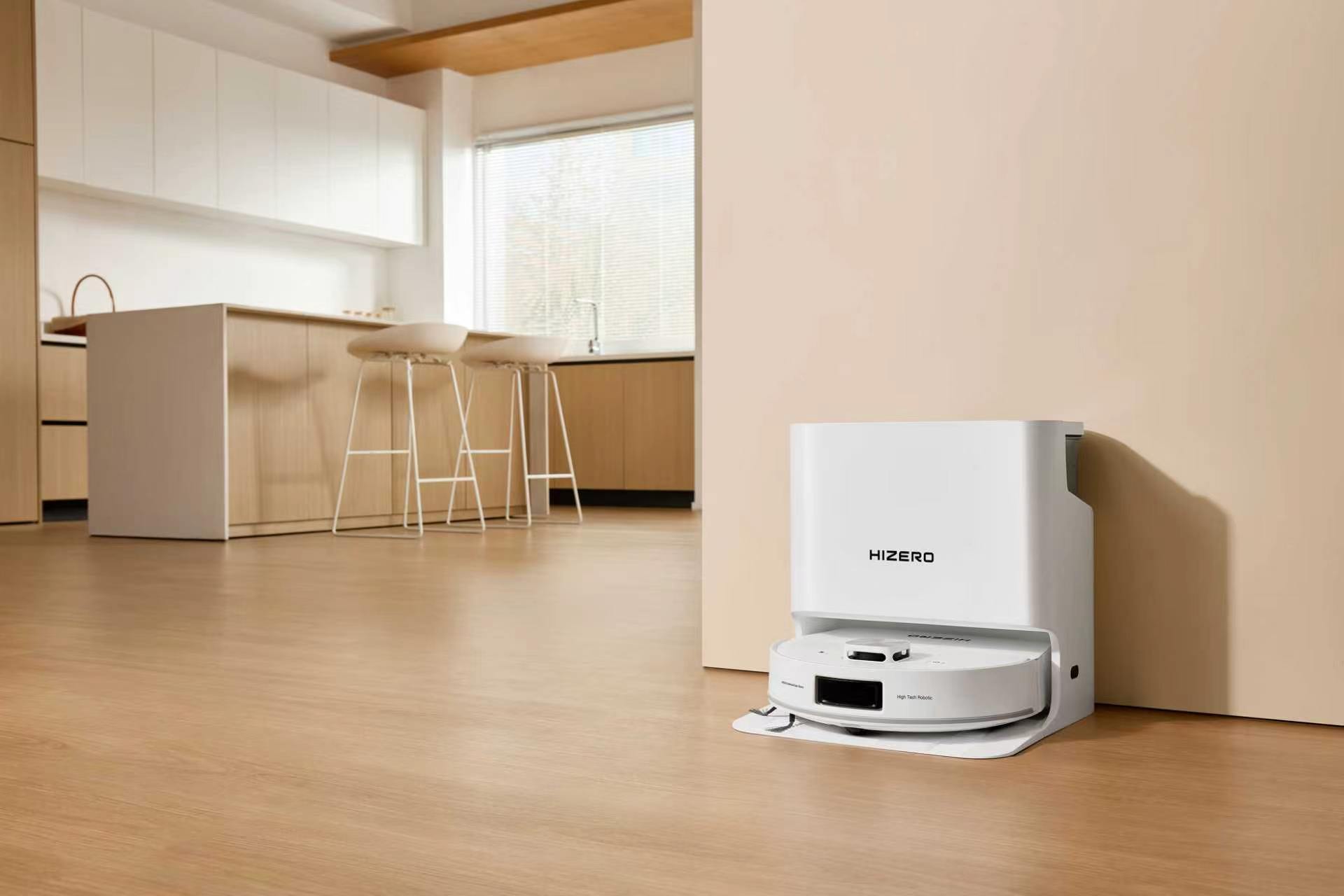
Robot cleaners promise greater convenience, but some of that benefit can disappear the moment the device creates a brand-new maintenance routine of clogged filters and dirty components. With the GLIDE Floor Washing Robot, HIZERO brings the same philosophy into autonomous cleaning. Described as the world’s first no-suction robot cleaner, it is built to remove wet messes, stains, debris, and hair without spreading dirt around.
The design also simplifies what happens after the cleaning is done. Because GLIDE does not rely on a vacuum motor, there are no HEPA filters or dust bags to deal with, reducing some of the maintenance associated with conventional robot cleaners. Its waste intake also uses instant triple automatic separation to manage what it collects.
Since robots are meant to clean while life happens around them, operating noise is crucial for anyone working from home or relaxing after a long day. The GLIDE runs at a quiet 56 decibels and consumes 22 watts of power. It can operate for up to 220 minutes on a single charge. The onboard system holds 300 ml of clean water and 250 ml of dirty water. Its station provides much larger capacity, with a 4,300 ml clean water tank and a 3,800 ml dirty water tank.
While those specifications are impressive on their own, their true purpose is to reduce the attention your floors demand from you. A good robot should get on with its job so you can get on with your life. This makes GLIDE a natural counterpart to the manual EAZY. One lets you handle quick cleaning jobs yourself, while the other takes on more of the routine work. Together, they show how the same cleaning philosophy can work whether you prefer to handle the job yourself or leave more of it to a robot.
The bottom line
The EAZY and GLIDE models represent just the beginning of this No Suction Technology philosophy. HIZERO is building a broader collection of tools around the idea that cleaning should fit more naturally into the way modern homeowners live.
This growing vision includes everything from simple manual mops to hands-free robots, with solutions intended for residential and commercial environments. It also moves beyond the floor to other hard surfaces, including countertops and windows.
More importantly, smart technology matters most when it makes daily life easier. A cleaner can be sophisticated on the inside without making the experience complicated for the person using it. That is where HIZERO’s approach comes together, with technology designed to simplify the cleaning process rather than add more steps to it.
For years, cleaning innovation has largely focused on making familiar technologies more powerful, automated, and feature-rich. HIZERO is questioning whether suction needs to remain at the center of hard-surface cleaning. If that thinking can remove some of the extra steps between noticing a dirty floor and getting it clean, the next meaningful change in floor care may not come from adding more power. Instead, it could come from rethinking the technology we have relied on all along.