There’s no way to underestimate the importance of good closet lighting. After all, what’s the use of keeping your closet organized if you can’t see what’s inside? What’s the use of sorting your clothes and essentials by type or color if this arrangement is barely illuminated? But there are design and safety measures to keep in mind when selecting the right lighting for your closet. Knowing which types work well, or not, could spell the difference between closet bliss and an actual household disaster. For example, incandescent bulbs, including halogen lights, can get very, very hot — not a great idea in a closet filled with clothing and other flammable materials.
But, we’re here to help! We’ll help you choose the perfect closet lighting fixtures that will work in any closet or walk-in closet to add an extra touch of drama. Read on to illuminate your clothes — and everything else — with these closet lighting solutions for any sized space.
Let’s talk safety!
Newer homes usually follow closely regulated building codes for closet lighting, but many older homes can be guilty of non-compliance of even the most minimum of safety standards. Take a look inside your closets … go ahead, we’ll wait. Culprit #1 is the exposed incandescent bulb. If you found one of those you need to change it as soon as possible.
Recessed and surface-mounted incandescent lights must be fully encased in a fixture housing with a cover. If your closet includes an exposed or only partially enclosed fixture, you’ll need to find a glass globe or other appropriate cover or install a completely new fixture.
A few other safety tips:
- Recessed fixtures with incandescent or LED bulbs should be a minimum of 6 inches from closet storage areas.
- Surfaced-mounted fixtures with incandescent or LED bulbs must be at least 12 inches from storage areas.
- Surface-mounted fixture with compact fluorescent (CFL) bulbs require at least 6 inches between the bulb and the storage areas.
- Halogen lights are generally considered unsuitable for closets. This incandescent lighting includes a gas to increase light output, allowing a tiny bulb to produce a surprisingly ample amount of light. Unfortunately, halogen bulbs and fixtures get extremely hot, making them a bad choice for an enclosed space like a closet.
- Fluorescent lights are considered the best choice for closets — not only because they are energy efficient, but also because they are the coolest-running light.
When to DIY it …
We’ve discussed the 411 on bulb choice, but what if you don’t already have a light fixture inside your closet? There are certain instances when it’s fine to install a fixture on your own; other times, a professional electrician is required.
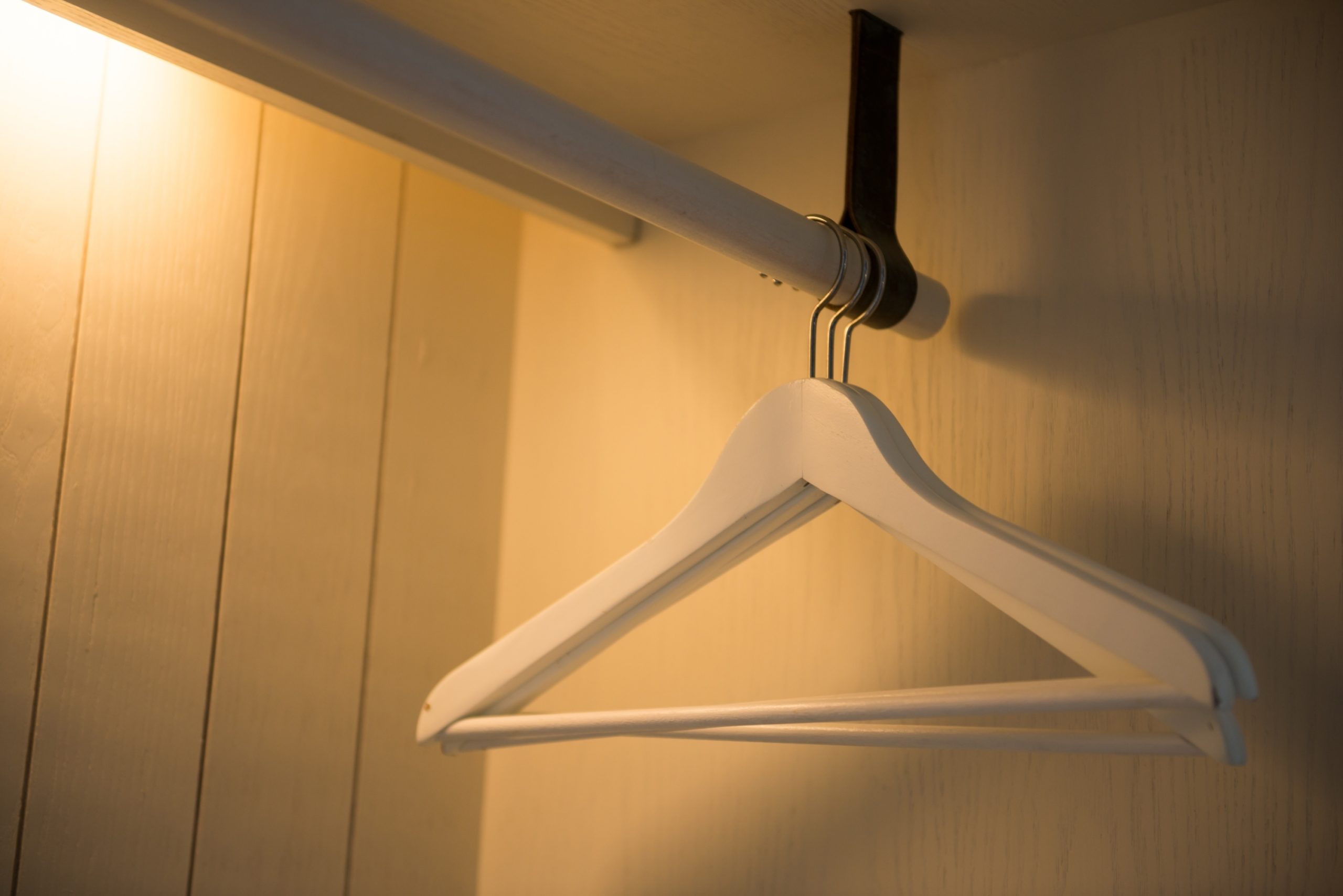
Just about anyone can install a battery-operated light fixture — many can be simply screwed in or stuck in place. Touch-operated models turn on and off by touching the light cover, some models operate via a cord or switch, and some are even motion-activated lights.
Battery-powered closet lights don’t produce a huge amount of lighting so they work best in small closets. However, they are so inexpensive and easy to install that you can actually install more than one. Lights that automatically shut off after a certain length of time can prevent having to purchase lots of replacement batteries for when you accidentally leave the lights on!
When to call in the professionals …
For larger closets, closets that get used frequently, or those that house important items, you may wish to have a fixture wired into an electric circuit. Anytime you are dealing with electricity, it’s always best to hire a professional electrician. In the best-case scenario, an electrician can tap into an existing circuit, install a new fluorescent fixture, and then run a switch outside the closet door that stays lit when the light is left on as a reminder for you to turn it off.
Walk-in closet lighting you’ll love!
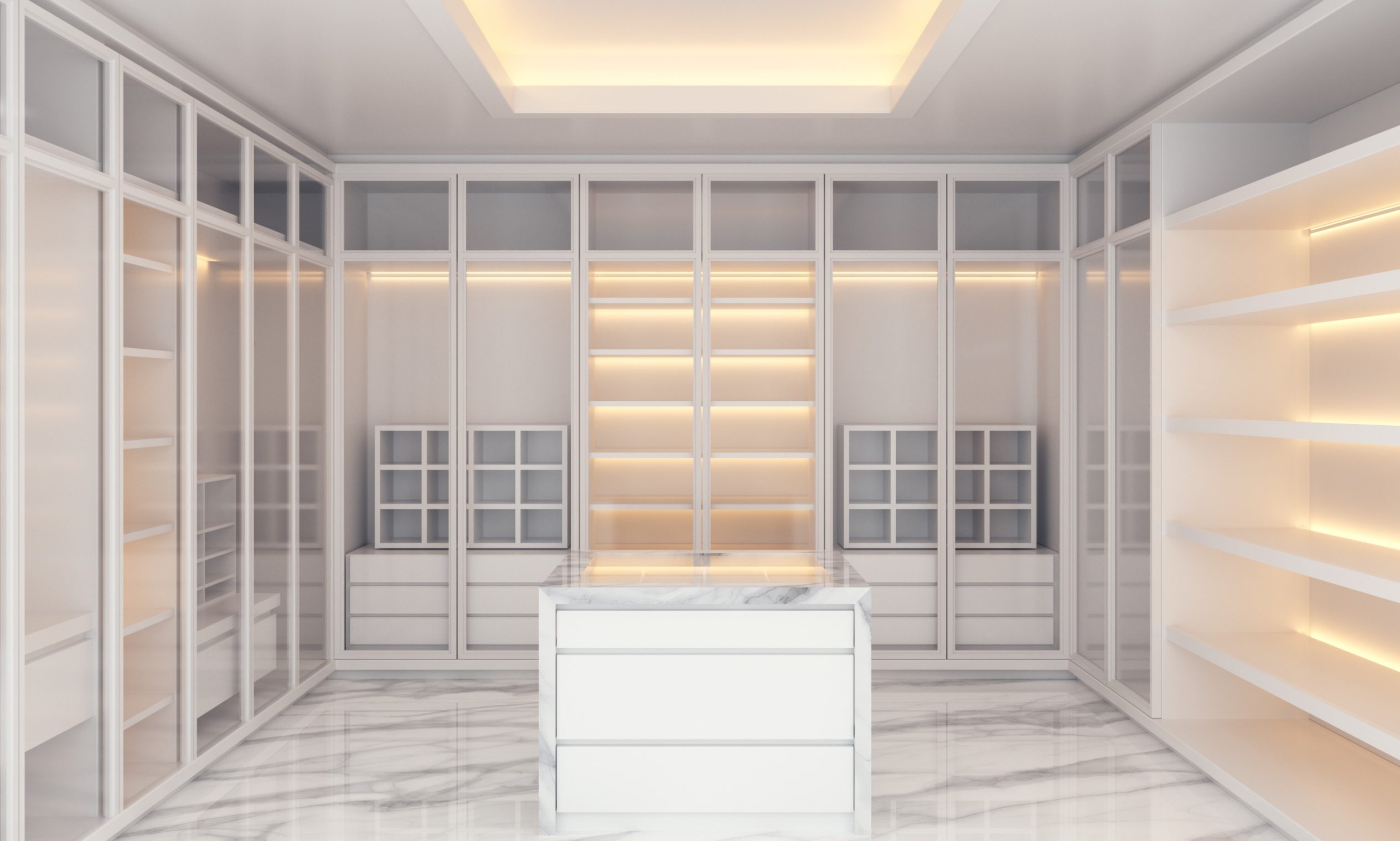
Some walk-in closets can be as large as a small bedroom, so a single light fixture may not be sufficient. With its multiple fixtures and sometimes pivoting design, track lighting is the ideal choice for walk-in closet lighting. Recessed fixtures can also give off the directional light that many people desire for walk-in closets, but go with multiple, low-watt fixtures rather than higher-powered lights to maximize your energy efficiency. Always use an electrician for installation of any new fixture.
Closet lighting can be challenging, but having the right type of fixture and bulb can turn a gloomy closet into a bright, well-lit space that will be easier to navigate, organize, and keep clean.